The oceans are filled with creatures that blur the line between familiar and mysterious. Among them, the Sharptail Eel (Myrichthys breviceps) stands out as a striking representative of the snake eel family. With its spotted body, burrowing habits, and nocturnal lifestyle, it has fascinated divers, scientists, and coastal communities across the Caribbean and Western Atlantic.
Though often mistaken for venomous sea snakes, the Sharptail Eel is a harmless fish that plays a vital role in reef ecosystems. This article explores its biology, ecology, and cultural significance in detail, offering a comprehensive look at one of the ocean’s most intriguing residents.
Sharptail Eel Unique Facts
- Spotted Camouflage – Its body is covered in yellowish spots that help it blend into sandy seabeds and coral reefs.
- Sharp Tail Tool – The eel’s pointed tail isn’t just for show; it’s used to burrow quickly into sand for shelter.
- Crab Specialist – Unlike many eels that eat fish, Sharptail Eels prefer crabs and crustaceans as their main diet.
- Harmless Mimic – Though it looks like a venomous sea snake, it’s completely harmless to humans—an example of Batesian mimicry.
- Nocturnal Hunter – Most active at night, it emerges from burrows to forage under cover of darkness.
- Wide Range – Found across the Western Atlantic and Caribbean, from Bermuda to northern South America.
- Larval Drifters – Their transparent larvae drift with ocean currents for weeks before settling into coastal habitats.
- Burrow Architects – By digging into sand, they aerate seabeds, supporting nutrient cycling and reef health.
- Respected in Folklore – Caribbean traditions sometimes call them “sand snakes,” symbols of mystery and hidden wisdom.
- Diver’s Encounter – Often seen swimming gracefully near reefs; if disturbed, they vanish into sand within seconds.
📜 Taxonomy and Classification
- Kingdom: Animalia
- Phylum: Chordata
- Class: Actinopterygii (ray-finned fishes)
- Order: Anguilliformes (true eels)
- Family: Ophichthidae (snake eels)
- Genus: Myrichthys
- Species: Myrichthys breviceps
The name “breviceps” comes from Latin, meaning “short head,” a reference to its blunt snout. Within the Ophichthidae family, Sharptail Eels are distinguished by their spotted coloration and sharp tail tip, which aids in burrowing.
🌍 Distribution and Habitat
Sharptail Eels are native to the Western Atlantic Ocean, ranging from:
- Bermuda and Florida
- Bahamas and Caribbean islands
- Yucatán Peninsula
- Northern South America
They inhabit shallow coastal waters, typically between 0–9 meters deep, though they can occasionally be found deeper. Preferred habitats include:
- Coral reefs
- Seagrass beds
- Sandy or muddy substrates
Their burrowing behavior allows them to hide from predators and ambush prey, making them an integral part of benthic ecosystems.
🧬 Physical Characteristics
- Length: Up to 102 cm (3.3 ft), though most individuals are smaller.
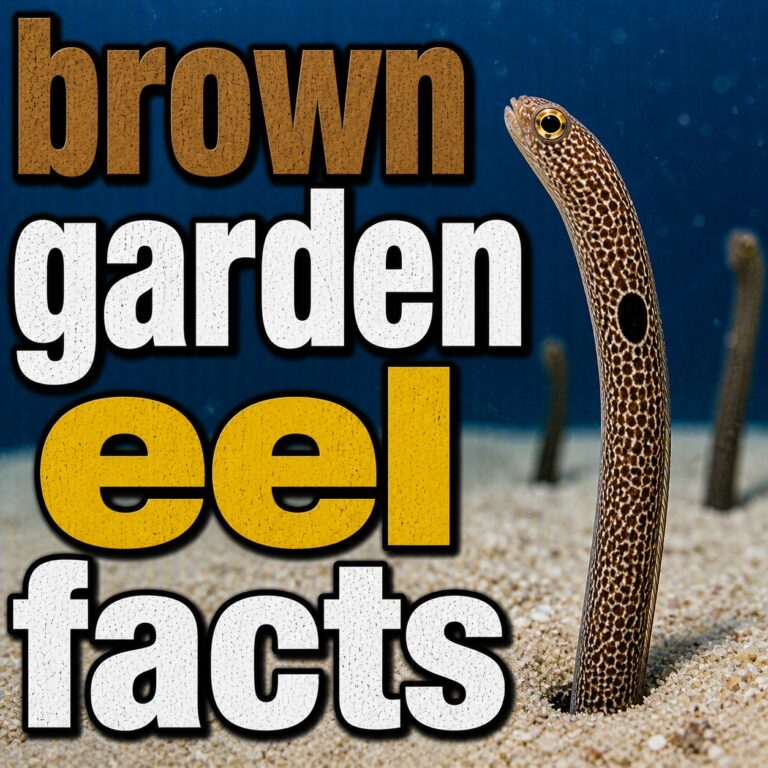
- Coloration: Light brown or grayish body covered with yellow or pale spots. Spots are smaller near the head and larger toward the tail.
- Body Shape: Elongated, cylindrical, snake-like.
- Head: Short, blunt snout with small eyes.
- Tail: Sharp, pointed tip used for burrowing.
- Fins: Reduced dorsal fin running along the back; anal and caudal fins merge seamlessly.
This morphology reflects adaptations for a burrowing lifestyle and nocturnal hunting.
🌙 Behavior and Ecology
Nocturnal Lifestyle
Sharptail Eels are primarily nocturnal, emerging at night to forage. During the day, they often remain hidden in sand or seagrass beds.
Burrowing
Their sharp tail tip is a specialized tool for digging into sediment. Burrowing provides protection from predators and a vantage point for ambushing prey.
Diet
- Primary prey: Crabs and small crustaceans.
- Secondary prey: Worms, mollusks, and small fish.
Their feeding helps regulate crustacean populations, contributing to ecosystem balance.
Predators
- Larger reef fish (groupers, snappers)
- Moray eels
- Marine mammals
🐣 Reproduction and Life Cycle
Like other eels, Sharptail Eels undergo a complex life cycle:
- Spawning: Occurs in shallow waters, often seasonally.
- Eggs: Hatch into transparent leptocephalus larvae.
- Larval Stage: Larvae drift with ocean currents for weeks or months.
- Metamorphosis: Larvae transform into juvenile eels, settling in coastal habitats.
- Adult Stage: Grow to full size, reproduce, and continue the cycle.
This planktonic larval stage allows wide dispersal across Caribbean waters, ensuring genetic diversity.
🧑🤝🧑 Human Interactions
Harmless to Humans
Unlike sea snakes, Sharptail Eels are non-venomous and pose no danger. Divers often encounter them while exploring reefs, where they may be seen swimming or burrowing.
Fishing
They are occasionally caught as bycatch in artisanal fisheries but are not targeted commercially. Their tough skin and bony structure make them less desirable as food compared to other eels.
Cultural Significance
In Caribbean folklore, Sharptail Eels are sometimes referred to as “sand snakes,” symbolizing mystery and transformation. Their resemblance to snakes has fueled myths, though they are generally respected as harmless reef dwellers.
⚠️ Conservation and Threats
Current Status
- IUCN Red List: Least Concern
- Populations are stable, but localized threats exist.
Threats
- Habitat loss due to coastal development and dredging.
- Pollution affecting seagrass and reef ecosystems.
- Bycatch in fishing operations.
- Climate change impacting coral reefs and shallow habitats.
Conservation Measures
- Protecting coral reefs and seagrass beds.
- Reducing coastal pollution.
- Promoting awareness among divers and fishermen.
🧠 Evolutionary Insights
Sharptail Eels exemplify adaptive evolution within the snake eel family:
- Burrowing adaptations: Sharp tail and reduced fins.
- Camouflage: Spotted coloration blends with sandy substrates.
- Mimicry: Resemblance to venomous sea snakes deters predators.
This combination of traits highlights the evolutionary creativity of marine life.
By foraging in the sand, Sharptail Eels help aerate the sea floor, which benefits the health of seagrass beds. They also serve as an important food source for larger predators like barracudas, snappers, and sharks.
Pro Tip for Divers: If you see a Sharptail Eel “disappear” into the sand, stay still! They often poke their heads back out a few minutes later to see if the coast is clear, providing an excellent opportunity for a photo.
📜 Cultural and Folklore Significance
- Caribbean myths: Eels as “sand snakes,” symbols of hidden wisdom.
- Diver lore: Stories of Sharptail Eels guiding explorers through reefs.
- Symbolism: Transformation, resilience, and mystery.
🔬 Scientific Research
Sharptail Eels are studied for:
- Behavioral ecology: Burrowing and nocturnal hunting.
- Larval dispersal: Insights into ocean currents and population genetics.
- Mimicry: Understanding predator-prey dynamics.
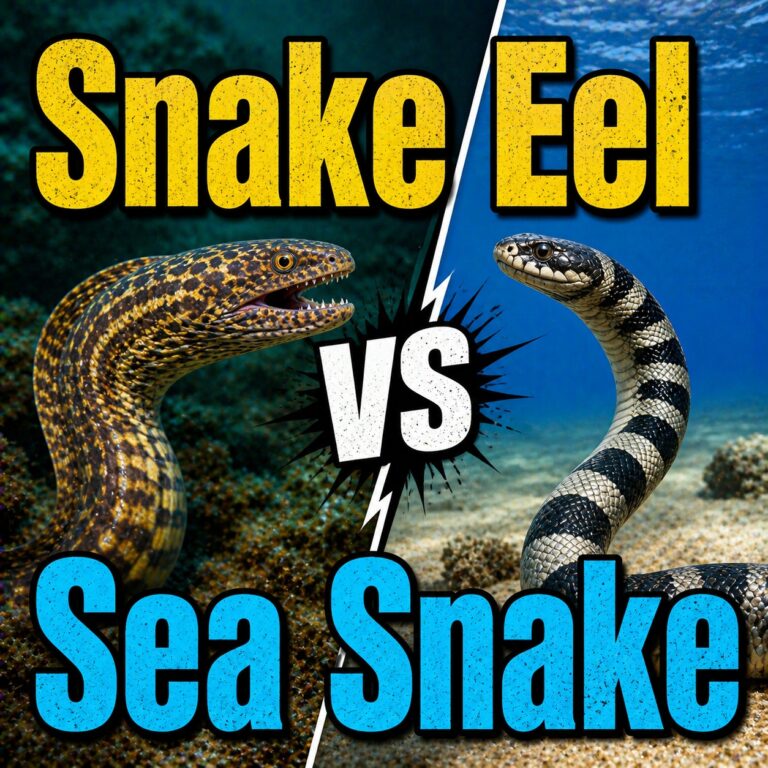
Comparison: Sharptail Eel vs. Sea Snake
It is vital for snorkelers to know the difference between these two animals, as sea snakes are highly venomous while Sharptail Eels are harmless to humans.
| Feature | Sharptail Eel | Sea Snake |
| Breathing | Uses gills (stays underwater) | Uses lungs (must surface for air) |
| Tail Shape | Pointed and hard for digging | Paddle-like and flat for swimming |
| Fins | Has a long dorsal fin on its back | No fins at all |
| Danger | Non-venomous and docile | Highly venomous |
🧾 Conclusion
The Sharptail Eel (Myrichthys breviceps) is a remarkable species that embodies the mystery of the ocean. Harmless yet elusive, it thrives in Caribbean reefs and seagrass beds, playing a vital ecological role. Its burrowing habits, nocturnal lifestyle, and spotted camouflage make it a fascinating subject for divers, scientists, and storytellers alike.
Protecting its habitats ensures that future generations can continue to marvel at this spotted “sand snake” of the sea.
Frequently Asked Questions: The Sharptail Eel
1. Is the Sharptail Eel a sea snake?
No, it is a fish. While it looks like a snake, it has gills to breathe underwater and a long fin running down its back. Sea snakes are reptiles that must come to the surface for air and have paddle-like tails, which the Sharptail Eel lacks.
2. Why is it called a “Sharptail”?
It earns its name from its hard, pointed, and finless tail tip. This tail acts like a biological spade, allowing the eel to dig backward into the sand or gravel with incredible speed to escape predators.
3. Are Sharptail Eels dangerous or venomous?
They are completely harmless to humans. Unlike the sea snakes they mimic, they do not possess venom. They are generally docile and will usually burrow into the sand if they feel threatened by a diver.
4. Do they only come out at night?
Unlike many other eel species, the Sharptail Eel is diurnal, meaning it is active during the day. This makes them a very common sight for snorkelers and daytime scuba divers.
5. How big do they get?
On average, they grow to between 60 and 90 centimeters (2 to 3 feet). While they are long, they are very slender compared to the much thicker Green Moray eel.
6. Why do they have yellow spots on their heads?
These bright gold or yellow spots on a cream-colored body provide excellent camouflage. When the eel pokes its head out of the sand, the spots mimic the dappled sunlight hitting the sea floor, making it hard for predators to see them.
7. Can they swim in open water?
Yes, they can swim using a wavy, serpentine motion. However, they prefer to stay close to the bottom where they can quickly burrow into the safety of the sand if a large predator, like a barracuda or shark, appears.
8. How do they breathe while buried in the sand?
Like other eels, they pump water through their mouths and over their gills. Even when mostly buried, they keep their mouths slightly above the sand or create a small pocket of water around their head to ensure a steady supply of oxygen.