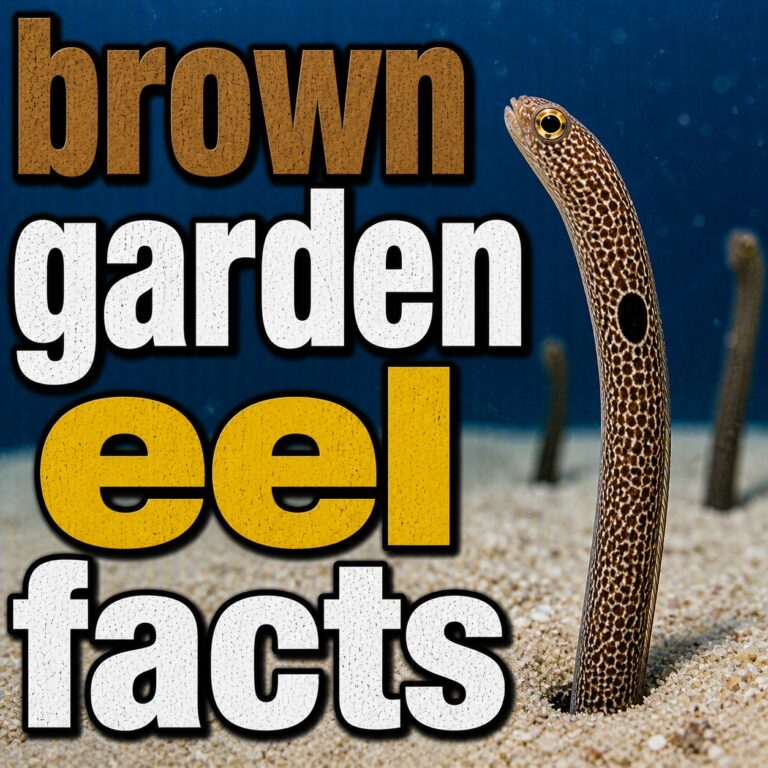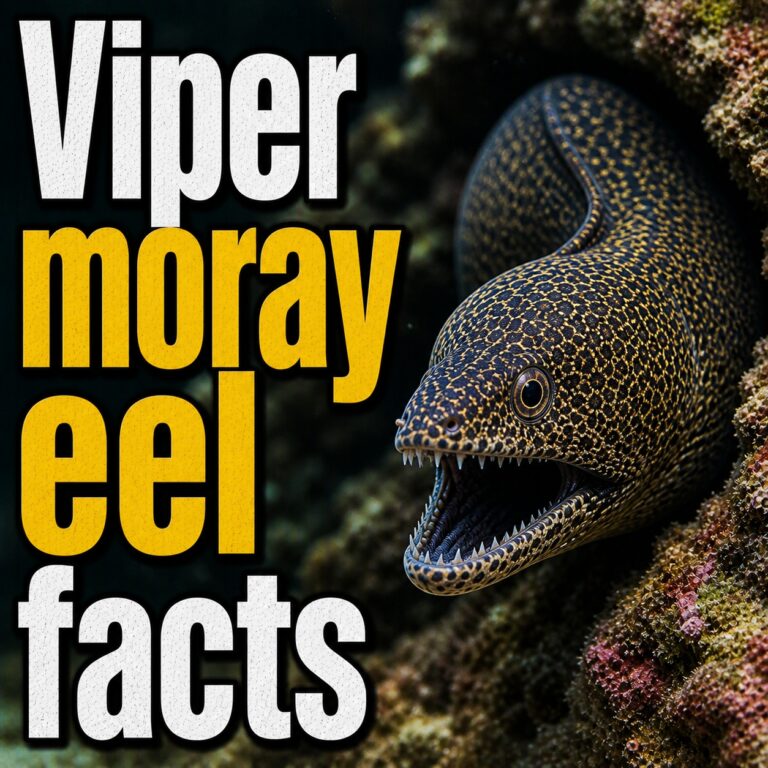
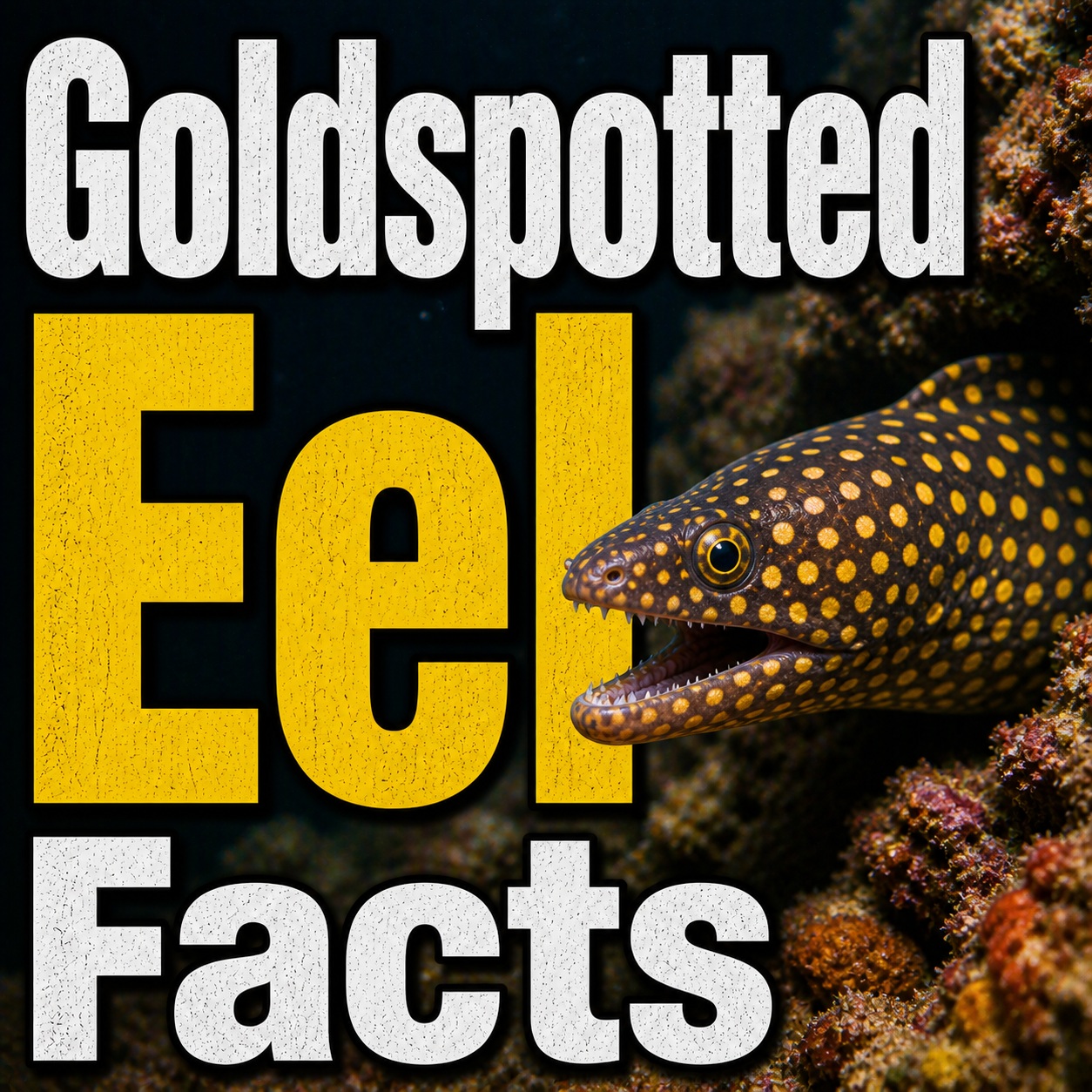
The Goldspotted Eel (commonly called the Goldspotted Snake Eel) is one of the most striking members of the snake eel family. With its pale body covered in dark spots, each centered with a golden hue, this species is both visually distinctive and ecologically important. Found across the Atlantic, it is a nocturnal predator, a burrower, and a harmless reef dweller that plays a vital role in marine ecosystems.
🐍 Taxonomy and Classification
- Family: Ophichthidae (snake/worm eels)
- Genus: Myrichthys
- Species: Myrichthys ocellatus
- Common Names: Goldspotted eel, Goldspotted snake eel, Dark‑spotted snake eel
Snake eels are characterized by their elongated bodies, reduced fins, and burrowing habits. The Goldspotted Eel is one of the most recognizable due to its unique coloration.
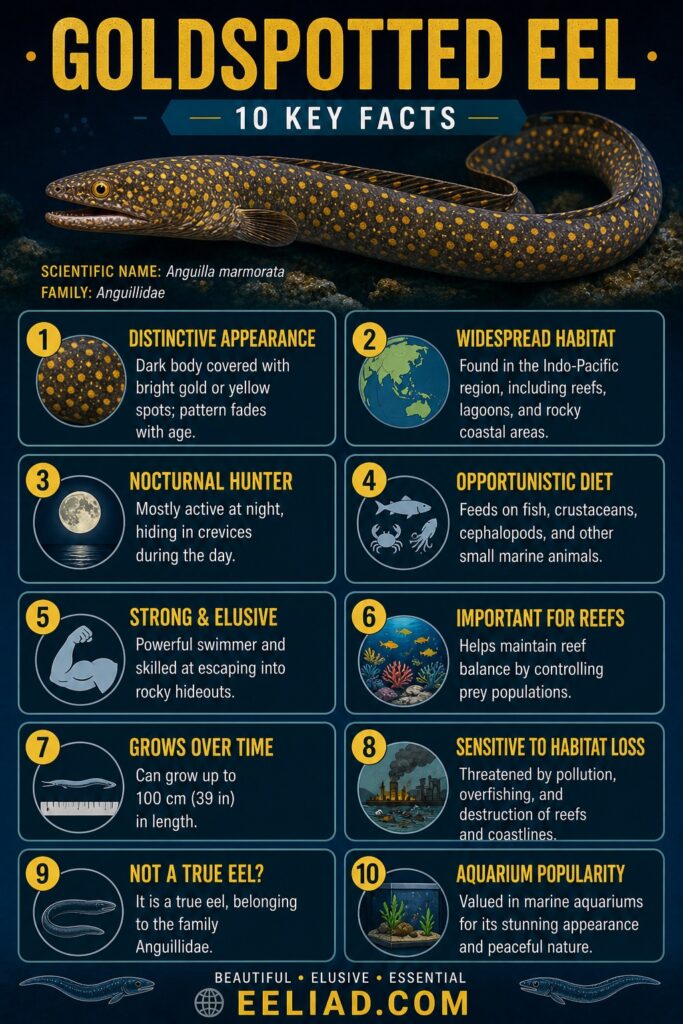
10 Unique Facts About goldspotted eel
The goldspotted eel , often called the goldspotted snake eel, is a fascinating marine creature found in the tropical Atlantic and Caribbean. Unlike typical eels, they are specialized burrowers with unique behaviors and stunning, distinct markings.
Tail-First Burrowing Specialist: Goldspotted eels do not hide in crevices like many morays; they use their hard, pointed tail tip to drill backward into the sand or mud, disappearing in seconds.
Periscopic Hunting Style: They are often found with only their head exposed above the sand, waiting to strike at prey, a behavior that helps them blend into rocky and coral reefs.
Unique “Follower” Association: They act as a “nuclear species” for other fish, such as groupers and wrasses, which follow them to eat prey exposed by the eel’s vigorous, agitated foraging in the sediment.
Distinctive “Goldspot” Pattern: They have a tan to yellowish-green body covered in bright gold spots surrounded by diffuse black rings.
Small-Sized Carnivore: They can reach a maximum length of 110 cm (about 3.6 ft), but are generally found smaller, making them medium-sized compared to other snake eels.
Nocturnal Crustacean Specialist: Though they can be seen in the open during the day, they are primarily nocturnal, foraging for crabs, stomatopods (mantis shrimp), and echinoderms at night.
Marine Habitat Range: They are found in the Western Atlantic, including Bermuda, southern Florida, the Bahamas, and Brazil coast.
Shallow Water Dweller: They prefer shallow tropical waters, generally found in sand-based areas near coral and rocky reefs at depths between 1 and 15 meters (3–50 feet).
Harmless to Divers: They are generally harmless to humans and often indifferent to the presence of divers or snorkelers.
Hardly Seen Despite Abundance: Because of their burrowing nature and nocturnal hunting, these eels are rarely seen by day-diving swimmers unless they are specifically looking for their heads sticking out of the sand.
1. A Member of the Snake Eel Family (Ophichthidae)
The first thing to understand about the Goldspotted Eel is that it is not a “true” moray. While moray eels (Muraenidae) are the most famous eels on the reef, the Goldspotted Eel belongs to the family Ophichthidae, commonly known as snake eels.
- Physical Distinction: Unlike morays, which typically have a thick, muscular build and lack pectoral fins, many snake eels—including the Goldspotted—possess small, delicate pectoral fins just behind their gill openings.
- The Tail Tip: The most defining characteristic of the family Ophichthidae is the hard, pointed, finless tail. While a moray’s tail ends in a continuous fin, the Goldspotted Eel’s tail ends in a calcified spike used for a very specific defensive purpose (which we will explore in Fact 6).
2. The “Gold Standard” of Camouflage
The Goldspotted Eel got its name for its breathtaking coloration. Its body is typically a pale cream, tan, or greenish-yellow, covered in dark, circular spots. At the center of each of these dark spots is a vibrant gold or bright yellow dot, known as an ocellus (plural: ocelli).
Why the Spots?
On a sun-drenched reef or a sandy bottom, these spots function as disruptive coloration.
- Breaking the Outline: The high-contrast “eyes” on its skin break up the eel’s long, serpentine silhouette.
- Mimicking Shadows: To a predator looking down from above, the spots mimic the dappled light and shadows of the sea floor or the small holes in a coral head.
- Aposematism or Crypsis? While the spots help it hide (crypsis), some researchers believe the bright yellow centers might also serve as a subtle warning to predators that the eel is not worth the effort of an attack.
3. Master of the Sandy Substrate
While moray eels prefer to wedge themselves into solid rock crevices, the Goldspotted Eel is a master of the “soft” environment. It is frequently found in sandy flats and seagrass beds surrounding the reef.
The Burrowing Mechanic
The Goldspotted Eel spends much of its daylight hours completely submerged in the sand. Using its pointed, hardened tail, it can “drill” backward into the sediment with incredible speed. Within seconds, the eel can disappear entirely, leaving only its nostrils protruding above the sand to breathe. This ability to vanish into the substrate is its primary defense against daytime predators like barracudas and sharks.
4. The Olfactory Specialist
Eels are famous for having poor eyesight, and the Goldspotted Eel is no exception. However, it compensates with an extraordinary sense of smell.
- Nostril Anatomy: If you look closely at the snout of a Goldspotted Eel, you will notice two prominent, tube-like appendages. these are its anterior nostrils.
- Chemical Tracking: These tubes act like “sniffers,” pulling in water and passing it over highly sensitive olfactory receptors. The eel can detect the chemical signature of a crab or shrimp hiding deep beneath the sand or inside a coral pore.
- Stereo Smelling: By slightly moving its head from side to side, the eel can determine the direction of a scent, much like we use our two ears to determine the direction of a sound.
5. A Strictly Nocturnal Lifestyle
The Goldspotted Eel is a creature of the “night shift.” During the day, it is rarely seen, remaining buried in the sand or tucked deep into the base of a reef.
The Nightly Emergence
As dusk falls, the Goldspotted Eel emerges to hunt. Its hunting style is distinct from the “sit-and-wait” ambush of the moray. Instead, the Goldspotted Eel is an active searcher. It slithers over the reef and through seagrass, poking its snout into every hole and crevice it finds. This “foraging” behavior makes it an essential part of the reef’s nutrient cycle, as it flushes out prey that other predators might miss.
6. The “Reverse Retreat” Defense
Most animals flee by moving forward. The Goldspotted Eel is one of the few vertebrates that often chooses to retreat backward.
The Spike in the Tail
As mentioned in Fact 1, the end of its tail is a hard, calcified spike. If a predator approaches its head, the Goldspotted Eel doesn’t have to turn around—a move that would expose its vulnerable midsection. Instead, it uses its “reverse gear.”
- The Drill: It uses the tail spike to push itself backward into a hole or the sand.
- The Brace: Once inside a hole, it can use the tail to wedge itself firmly in place, making it nearly impossible for a predator to pull it out.
7. The “Crab-Crunch” Diet
Unlike the larger morays that might target fish or octopuses, the Goldspotted Eel has a very specific palate. Its primary prey consists of small crustaceans, particularly crabs and shrimp.
| Prey Type | Hunting Method |
| Crabs | Scent-tracked to burrows; the eel uses its narrow head to reach inside. |
| Shrimp | Ambushed among seagrass blades at night. |
| Small Fish | Occasionally taken if they are sleeping on the sand. |
Dental Adaptation: Their teeth are not the long, needle-sharp fangs of the Viper Moray. Instead, they have smaller, sturdier teeth designed for gripping the hard exoskeletons of crustaceans.
8. The Sea Snake Mimicry Myth
In the Western Atlantic, there are no true sea snakes (which are mostly found in the Indo-Pacific). However, divers frequently panic when they see a Goldspotted Eel, believing they have encountered a venomous serpent.
- Mimicry: This is a classic case of convergent evolution. The eel has evolved a snake-like body and a bold pattern because those traits are efficient for its environment.
- The Diver’s Advantage: For the eel, looking like a snake is a great defense. Most predators have an instinctive fear of long, thin, brightly patterned animals, assuming they might be venomous. Even though the Goldspotted Eel has no venom, the reputation of snakes protects it.
9. Nuclear Hunting: The “Unexpected” Partnership
One of the most fascinating “Wildcard” facts about the Goldspotted Eel is its relationship with other reef fish, a behavior known as interspecific cooperative hunting.
The Eel and the Goatfish
Divers often observe Goldspotted Eels being followed by Goatfish or Bar Jacks.
- The Flusher: As the eel pokes its head into holes to find crabs, it often flushes out small fish or shrimp that were hiding.
- The Followers: The Goatfish hover nearby to catch the “scraps” or the prey that escapes the eel’s jaws.
- Mutual Benefit: While it seems the eel is doing all the work, the presence of multiple hunters often confuses the prey, making it more likely that the eel will also secure a meal in the chaos.
10. The Ghostly Larval Stage: Leptocephalus
Like all members of the order Anguilliformes, the Goldspotted Eel begins its life in a form that looks nothing like the adult.
- The Transparent Leaf: After spawning, the eggs hatch into Leptocephali. These larvae are flat, leaf-shaped, and completely transparent.
- Oceanic Drifters: They spend months drifting on ocean currents, feeding on “marine snow” (falling organic debris). This transparency is their only defense in the open ocean, where they are almost invisible to predators.
- Metamorphosis: Only when they reach the coastal reefs do they transform into the cylindrical, spotted juveniles that we recognize.
Summary of Goldspotted Eel Characteristics
| Trait | Description |
| Scientific Name | Myrichthys ocellatus |
| Maximum Length | Up to 110 cm (approx. 3.5 feet). |
| Diet | Carnivorous (Crustaceans, small fish). |
| Activity Level | Strictly Nocturnal. |
| Primary Range | Bermuda, Florida, Caribbean, to Brazil. |
| Key Anatomy | Hard, finless tail tip; tube-like nostrils. |
Frequently Asked Questions (FAQ)
1. Is the Goldspotted Eel dangerous to humans?
No. They are non-aggressive and have very small teeth. They will only bite if someone attempts to grab them or pin them down, and even then, the bite is minor compared to a moray’s.
2. Can you keep a Goldspotted Eel in a home aquarium?
Yes, they are popular in the reef hobby, but they require a very deep sand bed (at least 4-6 inches) to burrow and a tightly fitting lid, as they are notorious escape artists.
3. Do they have scales?
No. Like most eels, they are scale-less and covered in a protective layer of mucus.
4. How do they breathe while buried in the sand?
They pump water through their mouths and out their gills, even when buried. Their nostrils are positioned at the very tip of the snout so they can stay submerged while still “tasting” the water for oxygen and scents.
5. How long do they live?
In the wild, their lifespan is estimated at 10 to 15 years, though data on snake eels is less comprehensive than that for freshwater eels.
Conclusion
The Goldspotted Eel is a fascinating member of the snake eel family, combining striking appearance with ecological importance. Its golden‑centered spots make it visually distinctive, while its nocturnal hunting and burrowing habits highlight its adaptability. Harmless to humans, it plays a vital role in reef ecosystems by controlling crustacean populations and recycling nutrients.
Though not endangered, protecting reef habitats ensures the continued survival of species like the Goldspotted Eel. For aquarists, divers, and marine biologists alike, this eel represents both the beauty and mystery of the ocean’s hidden predators.