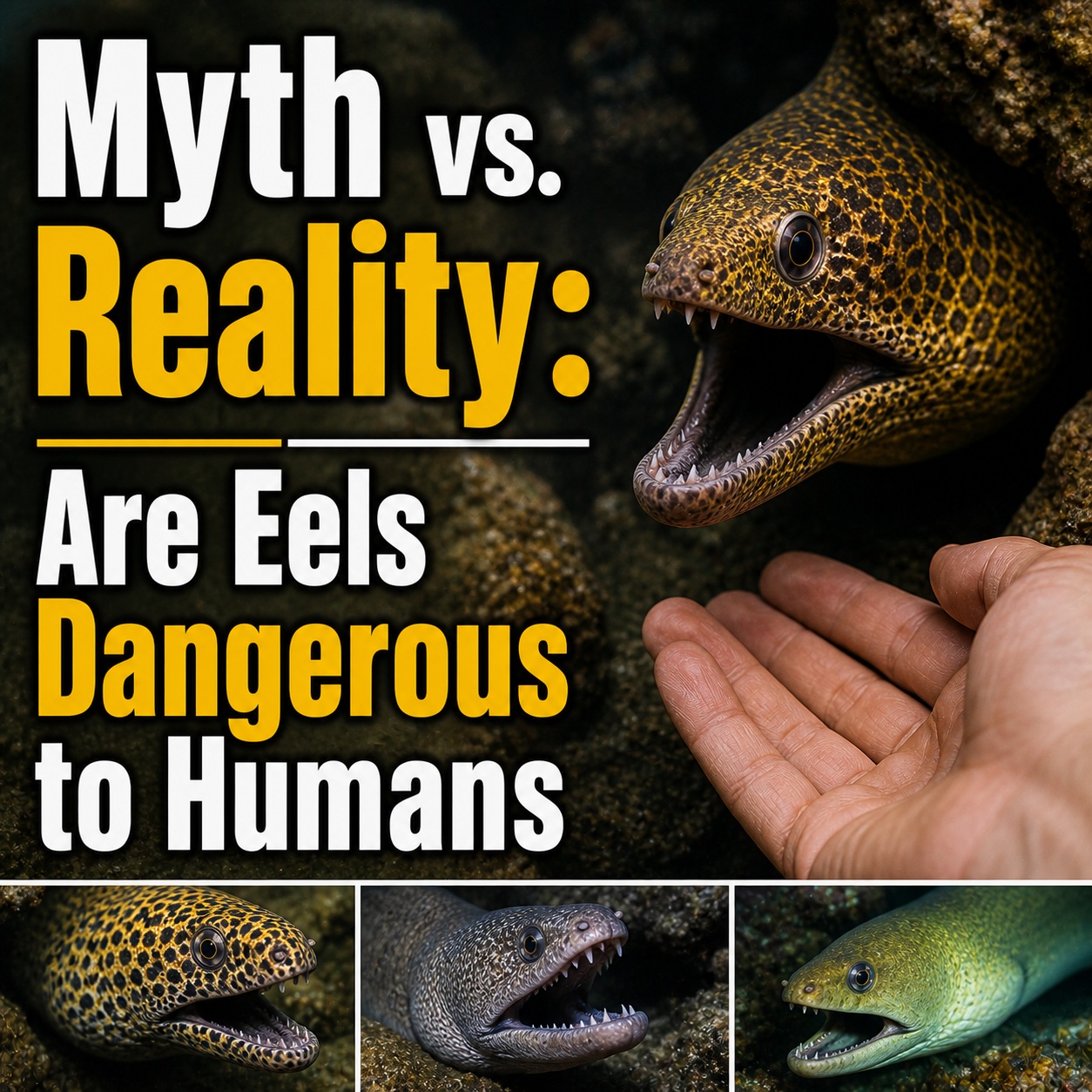
The image of an eel—serpentine, slimy, and often sporting a mouth full of needle-like teeth—has cemented its status as a “villain” in maritime folklore. However, the reality of the danger they pose to humans is more nuanced. While certain species can cause significant harm, eels are generally not aggressive toward humans unless provoked, startled, or mistaken for food.
This comprehensive guide breaks down the three primary ways eels can be “dangerous”: through physical bites, electric shocks, and chemical toxicity.
1. Physical Dangers: The Moray Bite
When people think of “dangerous” eels, the Moray Eel (Muraenidae) is usually the first to come to mind. These are the most common sources of eel-related injuries to divers and snorkelers.
The Mechanics of the Bite
Morays are not inherently aggressive, but they are incredibly defensive. Because they have poor eyesight and rely on a keen sense of smell, they may accidentally bite a hand that they mistake for a fish or a piece of bait.
- Double Jaws: Morays possess a unique “alien-like” second set of jaws in their throat called pharyngeal jaws. Once the front teeth grab a target, the throat jaws launch forward to pull the prey down. This makes a Moray bite exceptionally difficult to “shake off.”
- Infection Risk: A Moray’s mouth is a breeding ground for bacteria. Even a minor bite can lead to a severe secondary infection if not treated immediately with antibiotics.
When Does It Happen?
Most bites occur during “unregulated” tourism activities, such as hand-feeding eels. In the wild, a Moray will almost always retreat into its crevice rather than attack a human.
2. Electrical Dangers: The Electric Eel
Though technically a member of the knifefish family rather than a “true” eel (Anguilliformes), the Electric Eel (Electrophorus) is the most famous biological “weapon” in the water.
How Much Power?
A large Electric Eel can generate a discharge of up to 600 to 860 volts.
- The Goal: They use low-voltage pulses for navigation (like sonar) and high-voltage bursts to stun prey or deter predators.
- Risk to Humans: A single shock is rarely fatal to a healthy adult human, but it can cause significant pain, muscle spasms, and temporary respiratory distress.
- The Secondary Risk: The real danger is often not the shock itself, but the aftermath. A shock can cause a person to lose muscle control and drown in shallow water, or lead to heart failure in individuals with underlying conditions.
3. Chemical Dangers: Toxic Blood
One of the most overlooked “dangers” of the eel is not how it behaves, but what is inside its body.
Ichthyotoxin
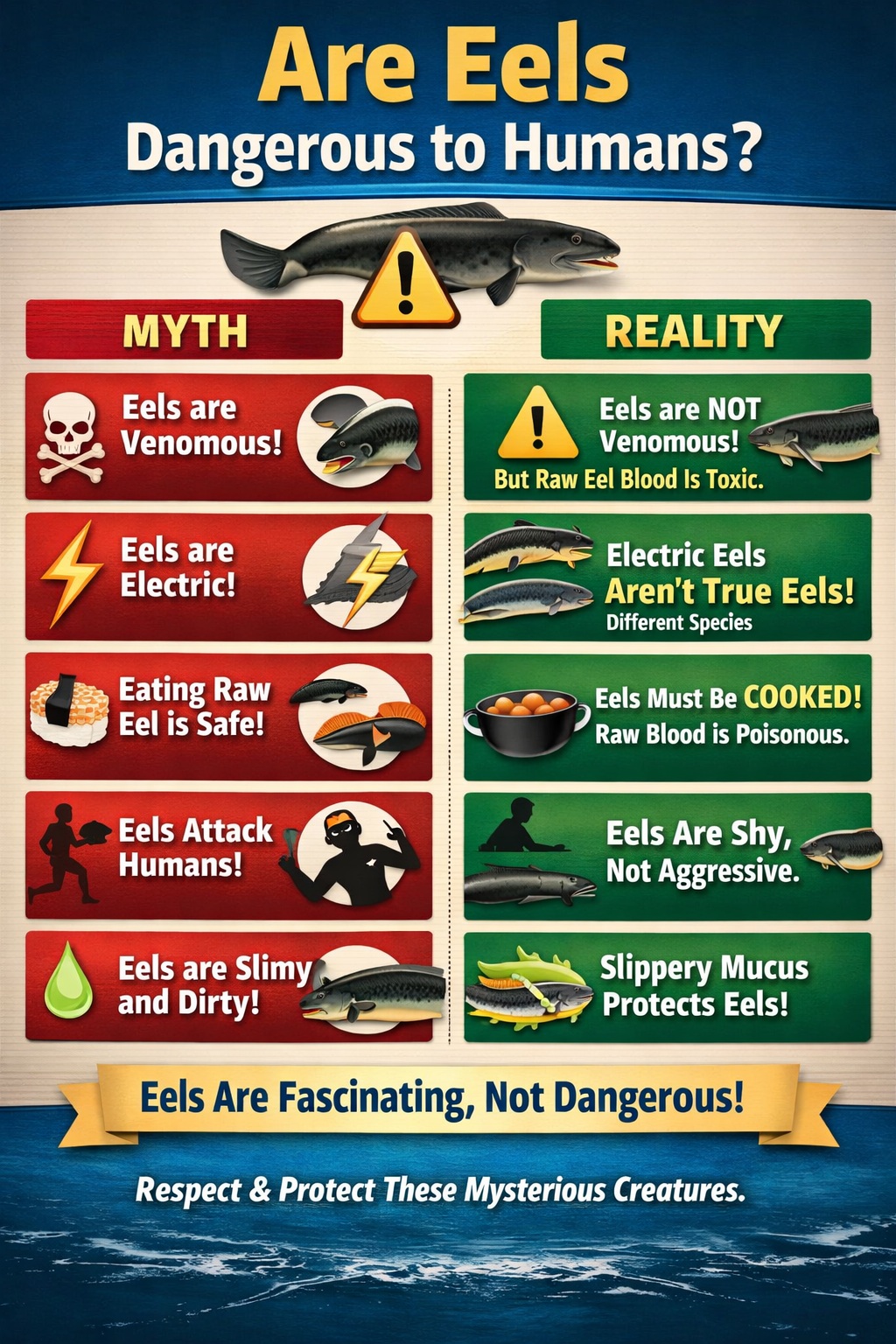
The blood of almost all eels (including common freshwater and saltwater species) contains a protein called ichthyotoxin.
- Ingestion: If a human consumes raw eel blood, it can cause severe muscle cramping, including of the heart and respiratory system.
- Skin/Eye Contact: Getting raw eel blood in an open wound or your eyes can cause intense irritation and inflammation.
- The Safety Valve: This toxin is highly heat-sensitive. Cooking eel to 140°F (60°C) completely neutralizes the protein, which is why eel is a popular and safe food globally when prepared correctly.
4. Are All Eels Aggressive?
In almost every recorded “attack,” the eel was acting in self-defense. Eels generally view humans as giant, noisy intruders rather than prey.
| Species | Primary Threat | Threat Level | Trigger |
| Moray Eel | Physical Bite | Moderate | Hand-feeding or sticking hands in crevices. |
| Electric Eel | Electric Shock | High (Potential) | Accidental stepping or handling in muddy water. |
| Conger Eel | Physical Bite | Moderate | Entanglement in fishing lines or nets. |
| Garden Eel | None | Zero | They are extremely shy and retreat into sand. |
5. How to Stay Safe Around Eels
If you are diving, snorkeling, or fishing, following these three rules will virtually eliminate any danger:
- Keep Your Hands to Yourself: Never stick your hands into dark holes or crevices in a coral reef. This is a Moray’s home, and they will defend it.
- No Hand-Feeding: Feeding wildlife disrupts their natural behavior and teaches them to associate human hands with food.
- Respect the “Mud”: In the Amazon basin, where Electric Eels live, avoid wading into murky, stagnant water where you cannot see the bottom.
Summary: Who is More Dangerous?
While a 600-volt shock or a double-jawed bite sounds terrifying, the statistics tell a different story. Humans are significantly more dangerous to eels than eels are to humans. Many eel species are currently Critically Endangered due to overfishing, habitat loss, and dam construction.
In the grand scheme of the ocean, the eel is a misunderstood predator that prefers to be left alone. If you give them space and respect their habitat, they are a fascinating—and safe—sight to behold in the wild.
FAQ‘S
Can an eel kill you?
It is extremely rare. Deaths are usually the result of drowning following an electric shock or a secondary infection from a bite, rather than the eel itself killing a person directly.
Do eels sting?
No. Eels do not have stingers like stingrays or bees. They either bite or (in the case of Electric Eels) discharge electricity.
Are they “slimy” because they are poisonous?
The slime is a protective mucus for their skin, not a poison. However, it can harbor bacteria, so always wash your hands after handling an eel.