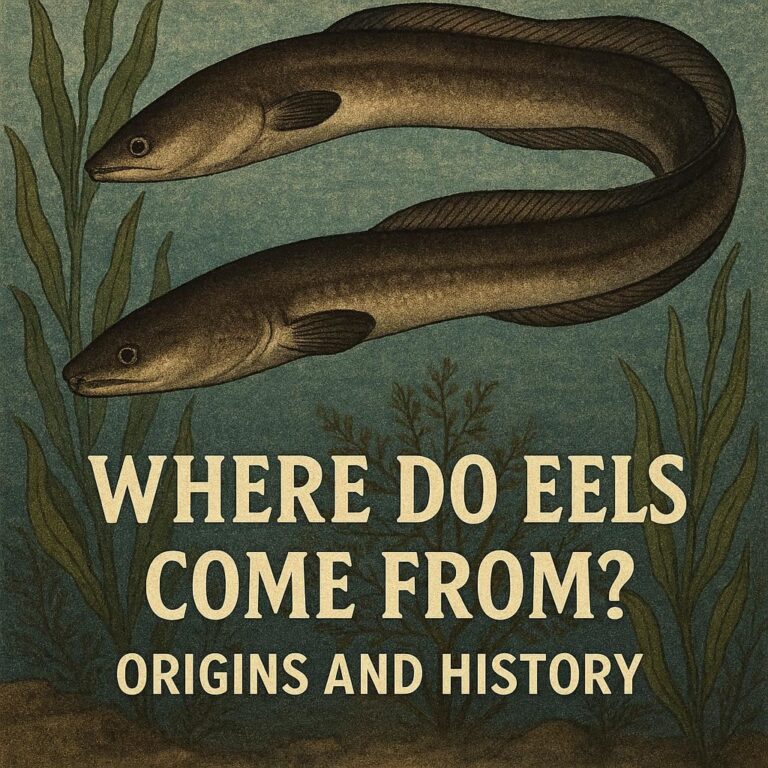

For over two thousand years, the eel has stood as a biological fortress, successfully repelling the efforts of history’s greatest thinkers to understand its life. Aristotle believed they emerged spontaneously from the mud; a young Sigmund Freud failed his medical career’s first major task when he couldn’t find an eel’s reproductive organs; and even today, in an era of satellite tracking and deep-sea submersibles, no human has ever witnessed eels mating in the wild.
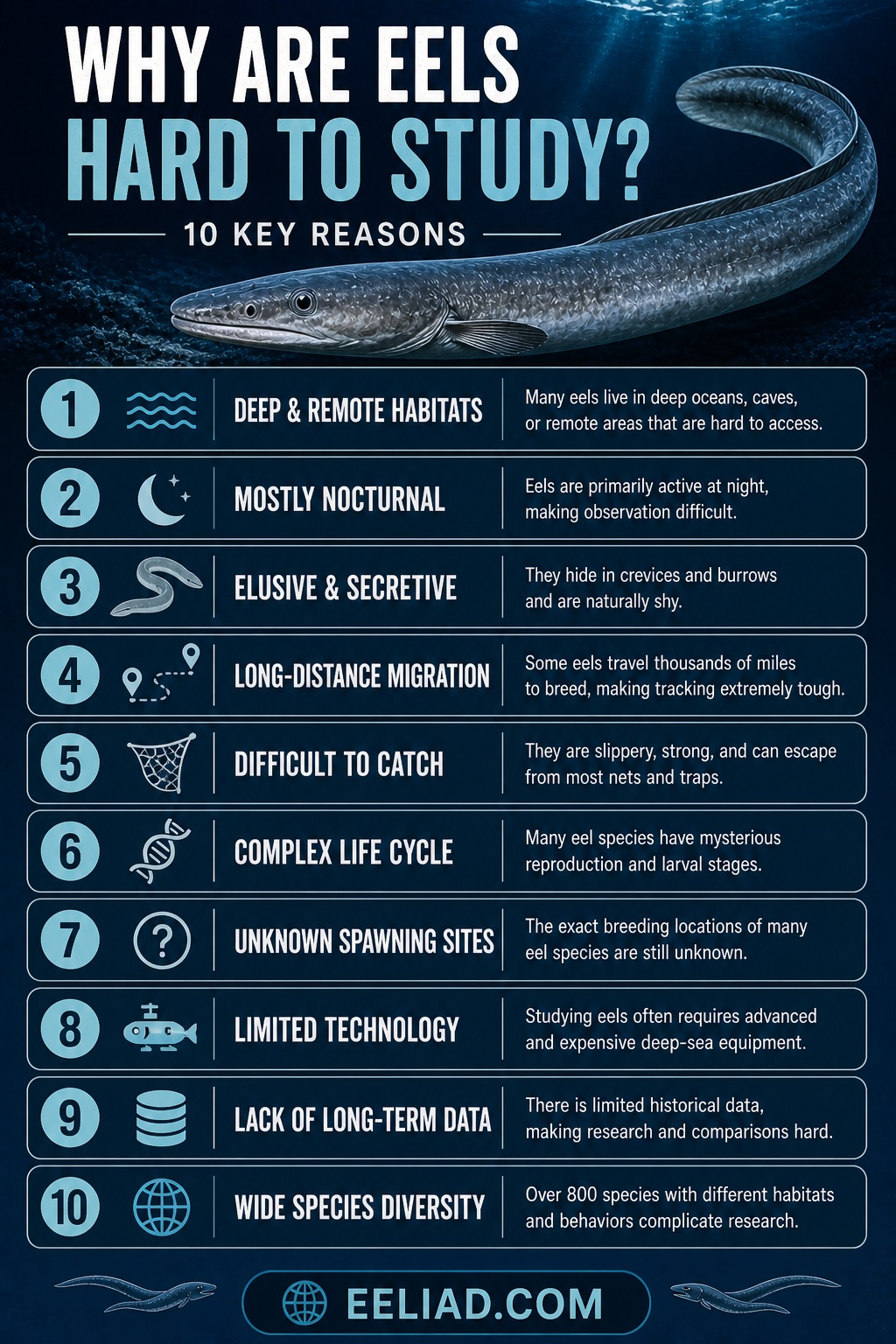
The eel is not just “difficult” to study—it is a masterpiece of evolutionary evasion. Its life cycle is a labyrinth of shifting forms, its habitats are among the most inaccessible on Earth, and its physiology defies the standard rules of vertebrate biology. To understand why eels remain the “Final Frontier” of ichthyology, we must look at the five primary barriers that have kept their secrets hidden for millennia.
The Shape-Shifting Life Cycle: The Metamorphosis Barrier
The primary reason eels were impossible to identify for centuries is that they do not look like the same animal at different stages of their lives. Most fish look like miniature versions of their adult selves shortly after hatching. Eels, however, undergo a series of radical transformations that are more akin to a caterpillar becoming a butterfly.
The Leptocephalus Larvae Illusion
For a long time, scientists classified the eel’s larval stage as a completely different species of fish called Leptocephalus brevirostris. These larvae are transparent, leaf-shaped, and gelatinous. They look nothing like the tubular, muscular serpents they become.
Because they drift in the open ocean for months or years, linking them to the “Yellow Eels” found in local rivers required a massive leap of scientific faith and decades of net-towing data.
The “Silvering” Transformation
When an eel decides to migrate, it doesn’t just change its behavior; it re-engineers its entire body.
- The Digestive Dissolve: During their final migration, eels stop eating and their stomachs literally dissolve.
- Eye Expansion: Their eyes double in size to see in the deep ocean.
- Color Shift: They change from a muddy yellow to a shimmering metallic silver. This “Silvering” process makes them a physiological “moving target” for researchers. Studying a Yellow Eel in a creek tells you almost nothing about how that same animal will function as a Silver Eel in the 2,000-meter depths of the Atlantic.
The Sargasso Enigma: The Spawning Ground Barrier
The greatest hurdle in eel research is the location of their nursery. Every American and European eel is born in the Sargasso Sea, a vast, calm, and seaweed-clogged region in the North Atlantic near the Bermuda Triangle.
The “Needle in a Haystack” Problem
The Sargasso Sea is nearly 3.5 million square kilometers. Eels do not build nests or spawn at the surface; they reproduce at depths between 400 and 700 meters. Trying to find a group of mating eels in that vast, three-dimensional volume of water is functionally impossible with current technology.
The Absence of Evidence
To this day:
- No wild eel eggs have ever been successfully collected in the Sargasso Sea.
- No adult eels have been captured in the act of spawning.
- No “spent” (post-spawning) adults have ever been found.The eels simply vanish into the deep, spawn, and presumably die, leaving behind only the tiny larvae as proof they were ever there.
The Migration Mystery: The Tracking Barrier
Studying an animal that travels 7,000 kilometers across an ocean is a logistical nightmare.
The Tagging Dilemma
Standard satellite tags used on sharks or whales rely on the animal coming to the surface to transmit data. Eels, however, are deep-water migrants. They stay hundreds of meters down during the day to avoid heat and predators.
Furthermore, eels are incredibly slippery and lack the hard fins required to “bolt” a tag. Many eels simply wiggle out of their trackers, or the drag of the tag makes them easy prey for sharks, leading to “premature release” of data that tells us more about a shark’s stomach than an eel’s path.
Eels appear to navigate using the Earth’s magnetic field—a sense humans cannot easily perceive or replicate in a lab setting. Creating a laboratory environment that mimics the complex magnetic and pressure changes of a 3,000-mile ocean trek is nearly impossible, making it hard to test their navigational theories.
The Laboratory Wall: The Breeding Barrier
In most fields of biology, if you can’t find an animal in the wild, you breed it in a lab. Eels, however, are famously “shy” in captivity.
The Maturity Trigger
Eels will not naturally mature sexually in a tank. In the wild, their reproductive organs only develop after they have swum thousands of miles and experienced specific pressure changes and temperature shifts.
To get eels to produce eggs or sperm in a lab, scientists must inject them with high doses of salmon pituitary hormones. Even then, the resulting larvae usually die within days because we do not know what “food” they eat in the wild. Some theories suggest they eat “marine snow” (falling organic debris), but replicating this diet in a sterile lab has led to a 99% mortality rate.
The Economic and Legal Barrier: The “White Gold” Problem
Because eels are so hard to breed, the global sushi industry relies on catching wild “Glass Eels” as they enter rivers.
The Black Market
Glass eels can fetch prices higher than gold or cocaine per kilogram. This has created a massive, often dangerous black market. For researchers, this means that data on eel populations is often skewed by illegal poaching, and entering certain habitats to study them can be physically dangerous due to the presence of organized crime syndicates involved in the eel trade.
Conservation Confusion
Because we don’t know their “recruitment” patterns (how many larvae survive each year), it is incredibly hard to set conservation laws. We are trying to protect a species while being blind to 50% of its life cycle.
Summary: The Barriers to Eel Science
| Challenge | Why it makes study difficult |
| Metamorphosis | Larvae look like a different species; adults change physiology entirely. |
| Depth | Spawning occurs in the “Midnight Zone” where light and cameras struggle. |
| Geography | The Sargasso Sea is too large to patrol or monitor effectively. |
| Diet | We don’t know what the larvae eat, making lab-raising impossible. |
| Navigation | They use magnetic/chemical cues that are hard to track or replicate. |
Conclusion: Why We Keep Trying
Why do scientists spend decades and millions of dollars trying to solve the “Eel Question”? Because the eel represents a bridge between our world and the deep unknown. They are “bio-indicators”—their health tells us about the health of our rivers and the health of the open ocean.
To solve the mystery of the eel is to solve the mystery of how life survives the extremes. Until we can film that final act in the Sargasso Sea, the eel remains the ocean’s greatest unread book—a reminder that even in the 21st century, nature still knows how to keep a secret.
Frequently Asked Questions
1. Why can’t we just use a GoPro to find them?
GoPros cannot handle the pressure of the 700-meter depths where eels spawn, and their battery life wouldn’t last the months required to wait for an eel to appear in the vast Sargasso Sea.
2. Is it true that Freud failed at studying eels?
Yes. In 1876, Freud dissected 400 eels looking for testes to prove they weren’t hermaphrodites. He found nothing because eels only develop those organs during their final migration, and he was studying them in a lagoon.
3. What do we call the study of eels?
It falls under Ichthyology (the study of fish), though specialists often refer to themselves as “anguillid researchers.”
4. How do we track them today?
We use Pop-up Satellite Archival Tags (PSATs). These record depth and temperature and then float to the surface at a pre-set time to beam their data to a satellite.
5. Are all eels this hard to study?
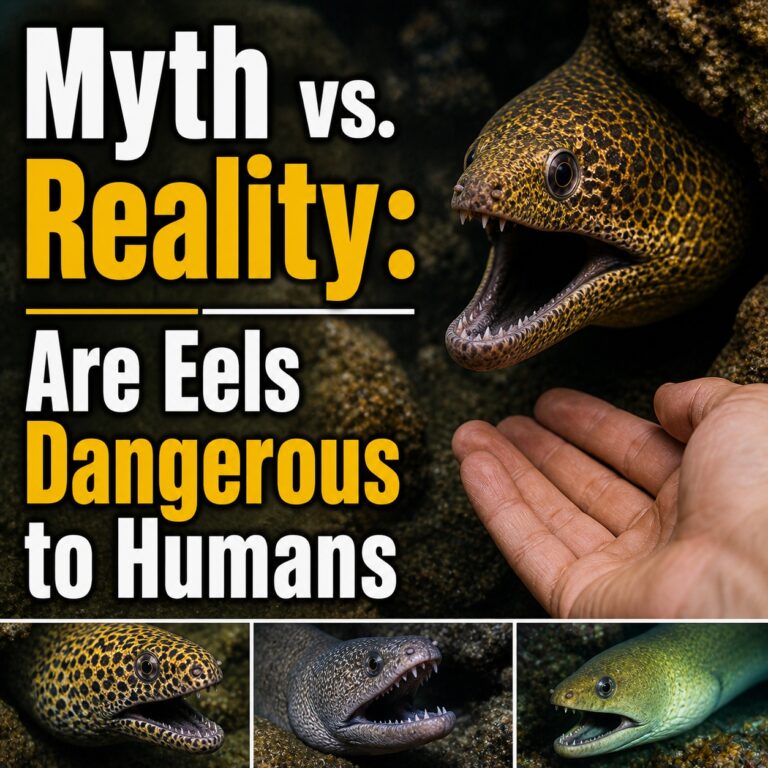
Freshwater eels (Anguillids) are the hardest. Reef morays are much easier to study because they stay in one place, but even their larval stages remain largely mysterious.