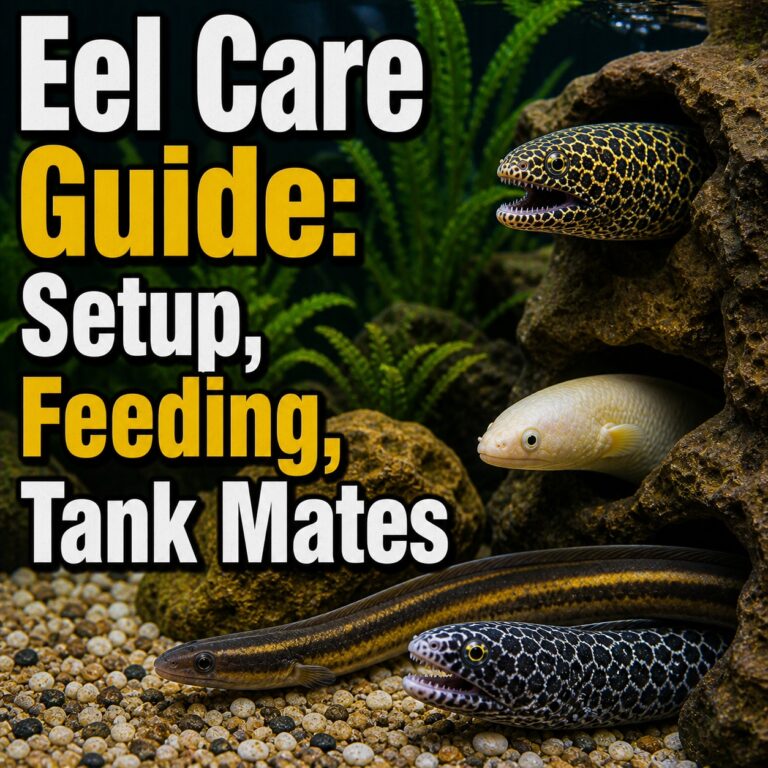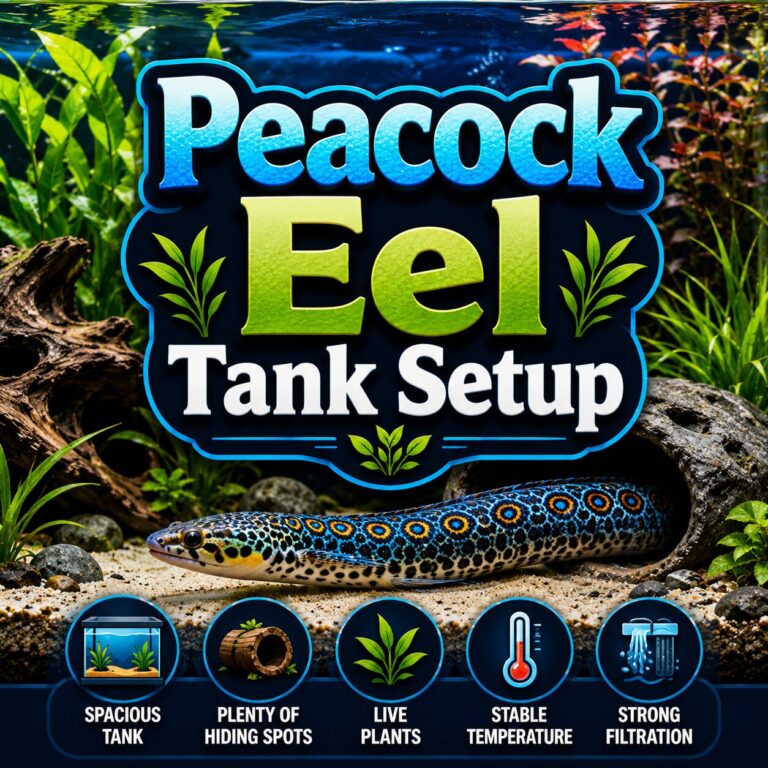

Eels are the quintessential “oddball” fish. Whether you are keeping a freshwater Spiny Eel or a marine Moray, their elongated bodies and mysterious behaviors make them the centerpiece of any aquarium. However, their unique anatomy—specifically their lack of protective scales and their predatory nature—makes choosing roommates a high-stakes decision.
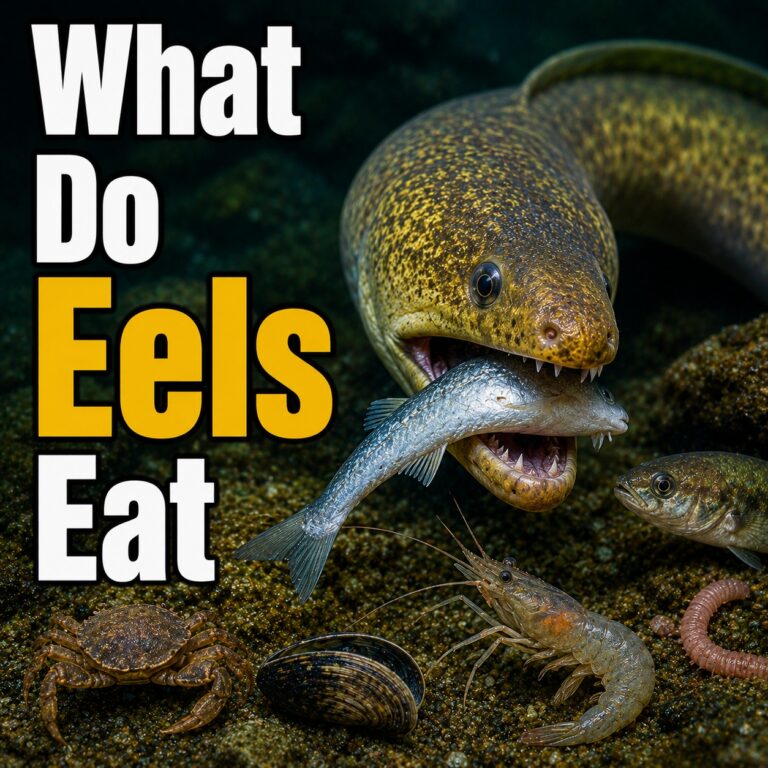
The golden rule of eel keeping is simple: If a tank mate is small enough to fit in the eel’s mouth, it is no longer a tank mate; it is a meal. Beyond size, you must balance temperament, speed, and feeding habits. This guide breaks down the best companions for both freshwater and saltwater eels, categorized by the “zone” of the tank they occupy.
Freshwater Eel Companions
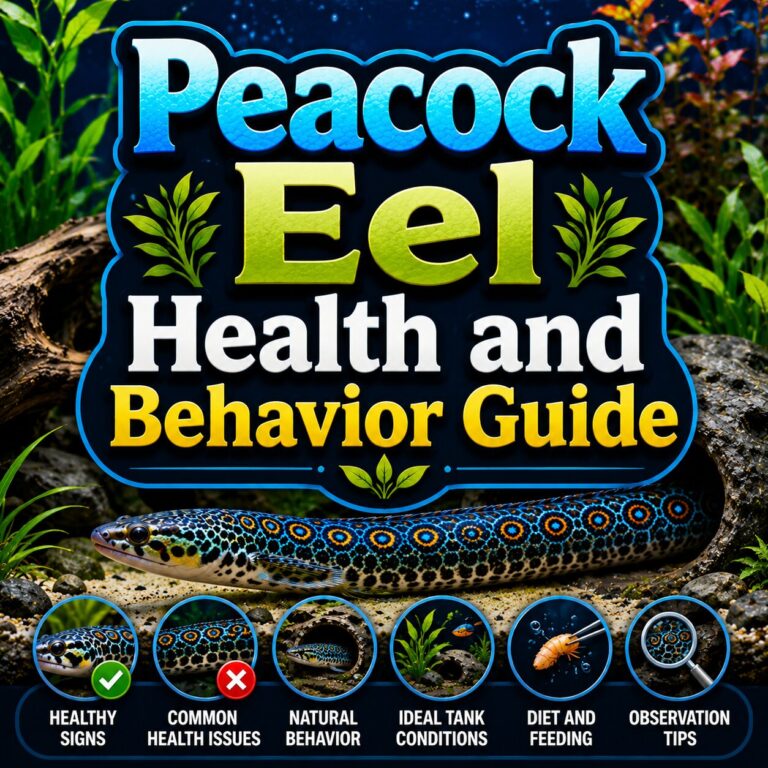
Common Species: Peacock Eel, Fire Eel, Zig-Zag Eel, Ropefish.
Freshwater eels are generally shy, bottom-dwelling hiders. They are most active at night and require tank mates that will not nip at their sensitive skin or outcompete them for every scrap of food.
Top/Mid-Water Dwellers
These fish provide movement and color in the upper layers, safely out of the eel’s “strike zone” near the substrate.
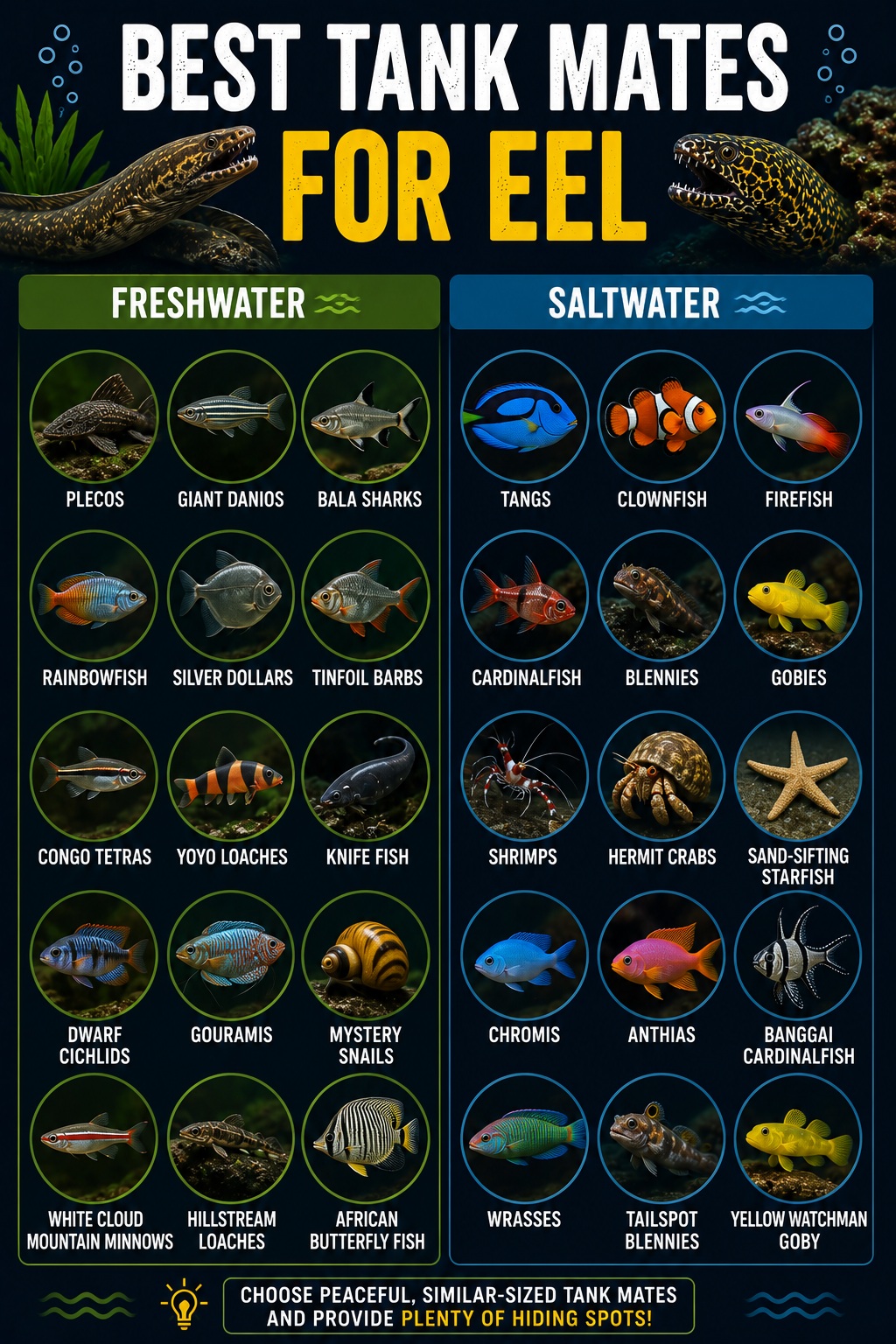
- Silver Dollars: Perhaps the most “eel-proof” fish. Their deep, disc-like bodies are impossible for an eel to swallow, and they are peaceful schooling fish.
- Angelfish & Pearl Gouramis: These are excellent passive companions. They are slow and stately, rarely venturing to the bottom to bother a buried eel.
- Rainbowfish (e.g., Boeseman’s): These are fast-moving, vibrant, and hardy. Their speed allows them to dart away from any nocturnal curiosity the eel might show.
- Bala Sharks: Best for larger setups (125+ gallons), these sharks are peaceful but robust. Their size ensures they are respected even by larger Fire Eels.
Bottom Dwellers
Sharing the floor is the trickiest part of eel community building. You need fish that share the eel’s lifestyle without stealing its cave.
- Clown Loaches: These are the ultimate companions. They are social, share the eel’s love for caves, and often “snuggle” with eels in hiding spots.
- Larger Corydoras: Use robust species like C. brochis. They help clean up leftover food that the eel might miss, keeping the substrate healthy.
- Bichirs (e.g., Senegal Bichir): While they look similar to eels, they are more armored. As long as they are of similar size, they coexist peacefully in “oddball” tanks.
Other Potential Mates
- Large Barbs: Tinfoil Barbs or Roseline Sharks are too large and fast to be targeted.
- Plecos: Medium-sized Plecos (like the Bristlenose) are great, though you should ensure the eel has a “smooth” PVC pipe or cave where the Pleco’s rasping mouth won’t accidentally irritate the eel’s skin.
Saltwater Eel Companions
Common Species: Snowflake Moray, Zebra Moray, Golden Moray.
Saltwater eels are generally more aggressive and have much higher “bioloads” (waste production). Their tank mates must be “tough” and capable of handling high-flow environments.
Top/Mid-Water Dwellers
Marine tank mates need to be “deep-bodied”—meaning they are taller than they are wide—to prevent the eel from getting a grip.
- Tangs (Yellow, Hippo, Sailfin): Tangs are fast, aggressive enough to hold their own, and possess sharp “scalpels” near their tails that eels naturally respect.
- Large Angels: Species like the Emperor or Queen Angel are robust and occupy the water column with authority.
- Foxface Lo: These fish are venomous and brightly colored. Most Morays quickly learn that the Foxface is not worth the risk.
Bottom Dwellers
Finding a bottom-dweller for a Moray tank is difficult, as Morays are highly territorial over rockwork.
- Groupers (Miniatus or Panther): These are fellow ambush predators. Because they grow to significant sizes, they are rarely bullied by eels.
- Lionfish: These are iconic companions. Their venomous spines provide a “hands-off” warning that even the most aggressive Snowflake Moray will heed.
Other Potential Mates
- Pufferfish: Large Puffers (like the Dogface Puffer) have incredibly tough skin and the ability to inflate, making them a “hard pass” for most predatory eels.
- Triggerfish: Niger or Blue Jaw Triggers are usually safe, but avoid the highly aggressive Queen Trigger, which may actually attack the eel.
Species to ABSOLUTELY Avoid
Regardless of the environment, these fish usually lead to disaster when paired with eels:
- Small Schooling Fish: Neon Tetras, Guppies, or Chromis will eventually disappear. Even if the eel is “peaceful” during the day, it is a hunter by night.
- Aggressive Fin-Nippers: Convict Cichlids, Serpae Tetras, or aggressive Damselfish may nip at the eel’s sensitive tail or eyes, causing infections.
- Small Crustaceans: Unless the eel is a “fish-only” eater, ornamental shrimp (like Cherry or Skunk Cleaner shrimp) and small crabs are considered expensive snacks.
- Other Eels (usually): Unless you have a massive tank (200+ gallons) with many visual breaks, two eels of the same species will often fight for the “best” cave until one is severely injured.
Critical Success Factors
1. The “Mouth-Size” Rule
Never trust an eel. A Peacock Eel might live with Neon Tetras for six months, but as soon as the eel hits a growth spurt, those Tetras will disappear one by one during the night. Always choose tank mates based on the eel’s adult size, not its juvenile size.
2. Managing the “Feeding Frenzy”
Eels are scent-driven and slow. Faster fish like Bala Sharks or Tangs will often eat all the food before it reaches the eel.
- Solution: Use Target Feeding. Use long tongs to hold a piece of shrimp or a worm directly in front of the eel’s cave. This ensures the eel is fed and prevents the other fish from overeating.
3. Avoiding the “Nippers”
The biggest threat to an eel isn’t usually a predator—it’s a “nipper.” Fish like Tiger Barbs, Serpae Tetras, or small Damselfish may be attracted to the eel’s flowing fins or its sensitive tail. Because eels are scaleless, these nips quickly turn into bacterial infections that can be fatal.
Compatibility Matrix
| Tank Mate | Why it Works | Special Note |
| Silver Dollars | Maximum Safety | Best for large Fire Eels. |
| Pearl Gourami | Peaceful coexistence | Great for shy Peacock Eels. |
| Clown Loaches | Shared lifestyle | Provide plenty of “group caves.” |
| Bichirs | Similar temperament | Watch for competition during feeding. |
| Bala Sharks | Fast & Deep-bodied | Require a very long tank (6ft+). |
Freshwater vs Saltwater Eel Compatibility
| Trait | Freshwater Eels | Saltwater Eels |
|---|---|---|
| Aggression | Moderate | Moderate to high |
| Community suitability | Better | More difficult |
| Reef safe | No | Usually no |
| Predator risk | Medium | High |
| Best companions | Peaceful medium fish | Robust marine fish |
Conclusion
A community tank featuring an eel is a dynamic and fascinating ecosystem. By choosing Top/Mid-Water Dwellers that provide visual distraction and Bottom Dwellers that respect the eel’s territory, you can create a harmonious environment. Always prioritize “deep-bodied” fish, master the art of target feeding, and ensure your lid is weighted—because the best tank mate in the world won’t matter if your eel decides to go for a walk on the living room carpet!
Best Tank Mates for Eels FAQ’s
1. Can eels live with small fish?
Not recommended. Most eels will eat small fish if they fit in their mouths.
2. What are safe companions for freshwater eels?
Large, peaceful fish like loaches, catfish, and cichlids that won’t nip or compete aggressively.
3. Do marine eels have compatible tank mates?
Yes. Larger reef fish such as groupers, lionfish, and tangs can coexist, provided they aren’t small enough to be prey.
4. Are invertebrates safe with eels?
Not usually. Crabs, shrimp, and snails are often eaten by moray and brackish eels.
5. Do eels prefer solitary tanks?
Many thrive alone, but with proper space and hiding spots, they can share tanks with suitable species.
6. What’s the biggest mistake in choosing tank mates?
Adding aggressive or very small fish. This leads to stress, injury, or predation.
7. Can two eels live together?
Only in very large tanks with multiple hiding places. Otherwise, territorial fights may occur.