
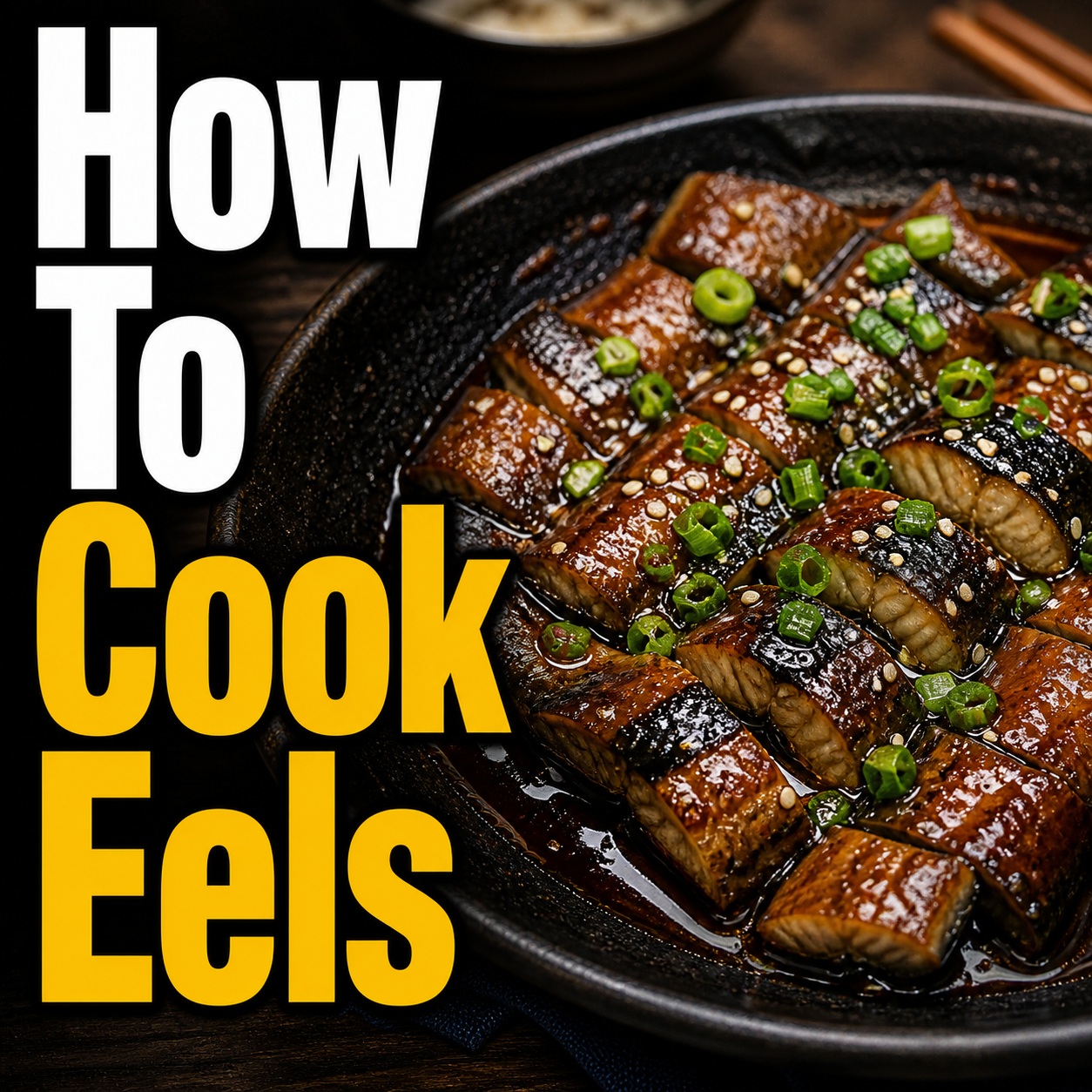
Eel is a delicacy that occupies a unique space in the culinary world. From the smoky, lacquered Unagi of Japan to the herb-flecked Anguilla of Italy, it is a fish prized for its rich, fatty texture and savory depth. However, for many home cooks, the idea of preparing eel is shrouded in mystery and even a bit of intimidation.
In this guide, we will deconstruct the process of cooking this remarkable fish—covering everything from safety protocols and cultural styles to modern air fryer techniques.
The Essentials: Is Eel Good for Eating?
Are eels good for eating? Absolutely. Eel is one of the most nutrient-dense fish available. It is exceptionally high in Vitamin A, Vitamin E, and Omega-3 fatty acids. Its texture is often compared to a cross between a firm white fish and a succulent piece of roasted pork belly. Because of its high fat content, it is nearly impossible to overcook, making it a forgiving protein for beginners once the initial preparation is mastered.
Is eel supposed to be cooked?
Yes. This is the most critical rule of eel preparation. Unlike tuna or salmon, you cannot eat raw eel.
Warning: Can we eat raw eel? No. The blood of both freshwater and saltwater eels contains a toxic protein called ichthyotoxin. This toxin causes severe muscle cramping, including of the heart, if ingested. Fortunately, the toxin is highly heat-sensitive. Cooking eel to an internal temperature of at least 140°F (60°C) completely neutralizes the protein, making it perfectly safe and delicious to eat.
Sourcing and Preparing Your Eel
Sourcing: Freshwater vs. Saltwater
- Freshwater Eel (Unagi): Known for its high fat content and soft, melt-in-your-mouth texture. This is what you typically find in Japanese sushi restaurants.
- Saltwater Eel (Anago/Conger): Generally leaner and has a “cleaner” sea-salt flavor. It is often simmered or deep-fried in tempura.
How to Prep Like a Pro
If you are buying a whole, fresh eel, you must deal with the “slime coat.”
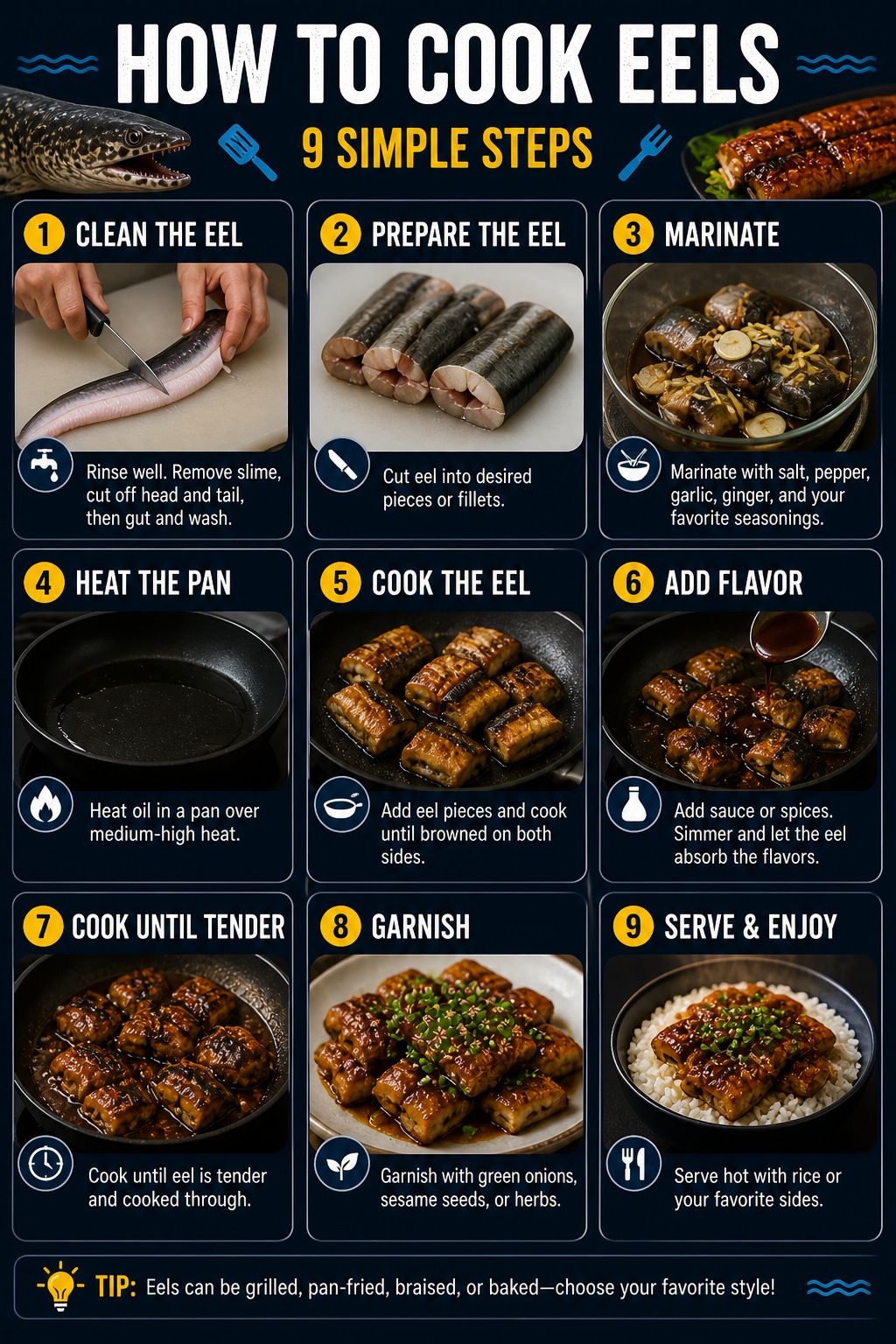
- The Salt Scrub: Place the eel in a large bowl and cover it with coarse salt. Scrub vigorously to remove the mucus.
- The Rinse: Rinse in cold water mixed with a splash of vinegar to tighten the skin.
- Filleting: Eels have a long, central spine. Most modern cooks prefer to buy “butterfly” fillets, where the spine has been removed, but the two halves of the fish remain connected by the skin.
Global Eel Cooking Styles: Chinese, Japanese, Italian
1. Japanese Style: The Art of Kabayaki
The most famous way to eat eel is Kabayaki. The eel is butterflied, skewered, grilled over binchotan charcoal, steamed to remove excess fat, and then basted in a “Tare” sauce (soy sauce, mirin, sugar, and sake).
- The Result: A smoky, sweet, and savory glaze that caramelizes over the rich meat.
2. Chinese Style: Braised with Garlic and Ginger
In Chinese cuisine, eel is often celebrated for its “warming” properties.
- The Technique: Bone-in chunks of freshwater eel are flash-fried to crisp the skin, then braised in a clay pot with whole cloves of garlic, slices of ginger, fermented black beans, and dark soy sauce. The garlic cloves soften until they reach a buttery consistency that complements the eel’s fat.
3. Italian Style: Anguilla alla Veneziana
In Italy, particularly during Christmas, eel (Capitone) is the star of the show.
- The Technique: Eel is cut into rounds and sautéed with fresh bay leaves, lemon zest, and dry white wine. The acid from the wine and lemon is essential to cut through the richness of the saltwater eel.
Masterclass: Cooking Methods
- Pan: Fry fillets with oil, garlic, and herbs until golden.
- Grill: Skewer and baste with sauce; charcoal adds smokiness.
- Oven: Roast with olive oil, lemon, and herbs.
- Air Fryer: Coat fillets in breadcrumbs; cook at 180°C for 10–12 minutes.
- Frozen Eel: Thaw overnight in fridge; cook as fresh.
How to Cook Eel in a Pan
This is the best method for getting a crispy skin.
- Score the skin lightly in a diamond pattern to prevent it from curling.
- Heat a neutral oil (like grapeseed) in a non-stick pan over medium-high heat.
- Place the eel skin-side down. Press firmly with a spatula for 30 seconds.
- Sear for 3-4 minutes until the skin is “potato chip” crispy. Flip and finish for 1-2 minutes.
How to Cook Eel on the Grill
Grilling is the traditional method to render out excess fat.
- Use medium-hot coals.
- Brush the eel with a mixture of soy sauce and honey.
- Grill skin-side up first to tighten the meat, then flip.
- Baste every 2 minutes. The fat will flare up; this smoke is what provides the signature flavor.
How to Cook Eel in the Oven
Ideal for larger batches or thicker Conger eel fillets.
- Preheat to 400°F (200°C).
- Line a tray with parchment paper and lightly oil the eel.
- Roast for 12–15 minutes.
- Finish under the broiler for 60 seconds to bubbles the skin.
How to Cook Eel in the Air Fryer
The air fryer is a secret weapon for eel. The rapid air circulation mimics the effects of a charcoal grill.
- Preheat the air fryer to 380°F (190°C).
- Place fillets in the basket (skin-side down).
- Air fry for 8–10 minutes.
- During the last 2 minutes, brush with your favorite sauce. The air fryer will caramelize the sugars perfectly without burning them.
How to Cook Frozen Eel
Most “Unagi” found in grocery stores comes pre-frozen and pre-sauced.
- Do not boil in the bag: While instructions often suggest this, it results in rubbery skin.
- The Best Way: Thaw in the fridge, then place on a foil-lined tray and bake at 350°F for 10 minutes, followed by a quick broil to crisp the edges.
Famous Eel Recipe’s Around The World
1. Unagi no Kabayaki (Japan)
This is arguably the most famous eel dish in the world. Freshwater eel is butterflied, skewered, and grilled over white charcoal (binchotan).
- The Signature: The eel is repeatedly dipped in a “Tare” sauce made of soy sauce, mirin, sugar, and sake.
- How it’s served: Often served as Unadon (in a bowl over rice) or Unajyu (in a traditional lacquered box). It is traditionally eaten on the “Day of the Ox” in mid-summer to build stamina against the heat.
2. Jellied Eels (England)
Jellied eels are a staple of London’s East End since the 18th century. Because eels were one of the few fish that could thrive in the then-polluted Thames, they became a cheap, nutritious food for the working class.
- The Signature: Chopped eel is boiled in a spiced stock (usually with lemon juice and nutmeg). As it cools, the natural collagen from the eel’s skin and bones causes the liquid to set into a firm jelly.
- How it’s served: Cold, often with a splash of malt vinegar and white pepper.
3. Anguilles au Vert / Paling in ‘t Groen (Belgium)
This “Eels in the Green” recipe is a Flemish masterpiece. It was originally made by fishermen using whatever herbs they found along the riverbanks.
- The Signature: A vibrant, herbaceous sauce made from a massive amount of greens: spinach, sorrel, parsley, mint, watercress, and basil.
- How it’s served: Hot, with crusty bread or thick-cut Belgian fries to soak up the emerald-colored sauce.
4. Capitones Maritati (Italy)
In many parts of Italy, particularly Naples, “Capitone” (large female eel) is the centerpiece of the Christmas Eve Feast of the Seven Fishes.
- The Signature: The eel is cut into segments and marinated with vinegar, garlic, and mint before being fried or roasted.
- How it’s served: It symbolizes the victory over the “serpent” of evil, serving a spiritual as well as culinary purpose.
5. Braised Eel with Roasted Garlic (China)
In Cantonese and Shanghainese cuisine, eel is prized for its “umami” and medicinal properties.
- The Signature: The eel is flash-fried to create a “chewy” skin texture and then braised in a clay pot with dark soy sauce, rock sugar, and dozens of whole, caramelized cloves of garlic.
- How it’s served: Sizzling in the pot, often finished with a drizzle of toasted sesame oil.
6. Arroz de Anguila (Spain)
Hailing from the Albufera region of Valencia, this is a specialized cousin of the Paella.
- The Signature: Using the local short-grain rice, the dish is cooked in a wide, flat pan with a stock made from eel heads, paprika, and saffron.
- How it’s served: The eel pieces are added toward the end of the cooking process to ensure they remain succulent while the rice develops a slightly crispy bottom (socarrat).
Summary
While taste is subjective, most culinary experts agree that the “best” way to eat eel is the Japanese Kabayaki method served over a bowl of steamed white rice (Unadon). The rice absorbs the rendered eel fat and the sweet tare sauce, creating a perfect balance of textures.
Quick Tips for Success:
- Acid is your friend: Because eel is fatty, serving it with pickled ginger, lemon, or a vinegar-based slaw will enhance the flavor.
- The Bones: Eels have many small “pin bones.” If you grill the eel slowly, these bones soften and become almost unnoticeable.
- The Skin: Never discard the skin! It contains the most flavor and a high concentration of collagen.
Whether you are pan-searing a fresh saltwater fillet with Italian herbs or air-frying a frozen unagi for a quick weeknight bowl, eel offers a decadent dining experience that is well worth the effort of preparation. Respect the heat (to stay safe!) and embrace the fat for a truly professional result.
cooking Eels FAQ’S
Can we eat raw eel?
No — raw eel blood is toxic. Always cook thoroughly.
Are eels good for eating?
Yes — rich in protein, omega‑3s, vitamins A, D, E, and minerals.
Best way to eat eel?
Grilled kabayaki over rice (Japan), roasted with herbs (Italy), or stir‑fried slices (China).
Is eel supposed to be cooked?
Yes — cooking neutralizes toxins and enhances flavor.