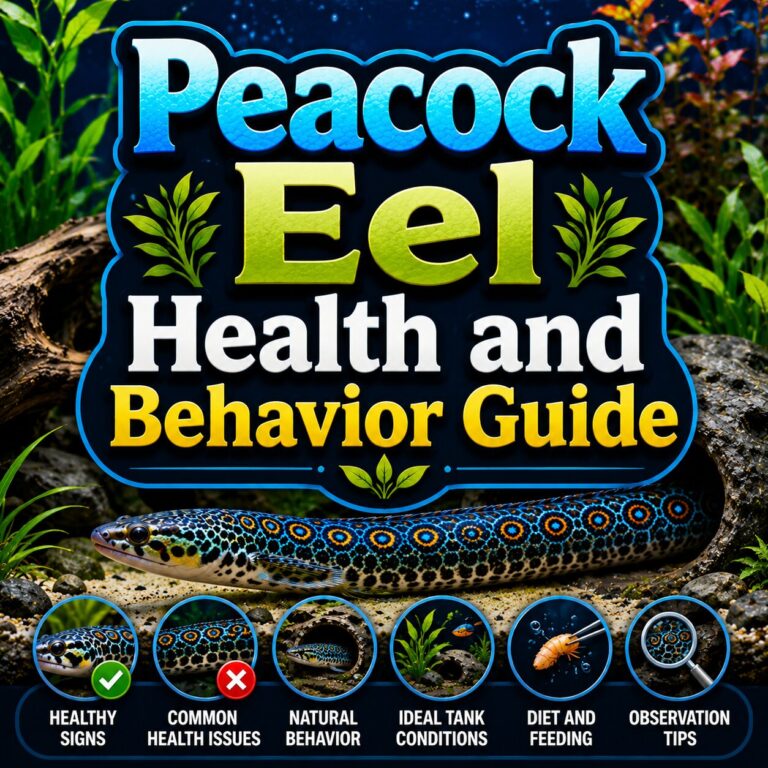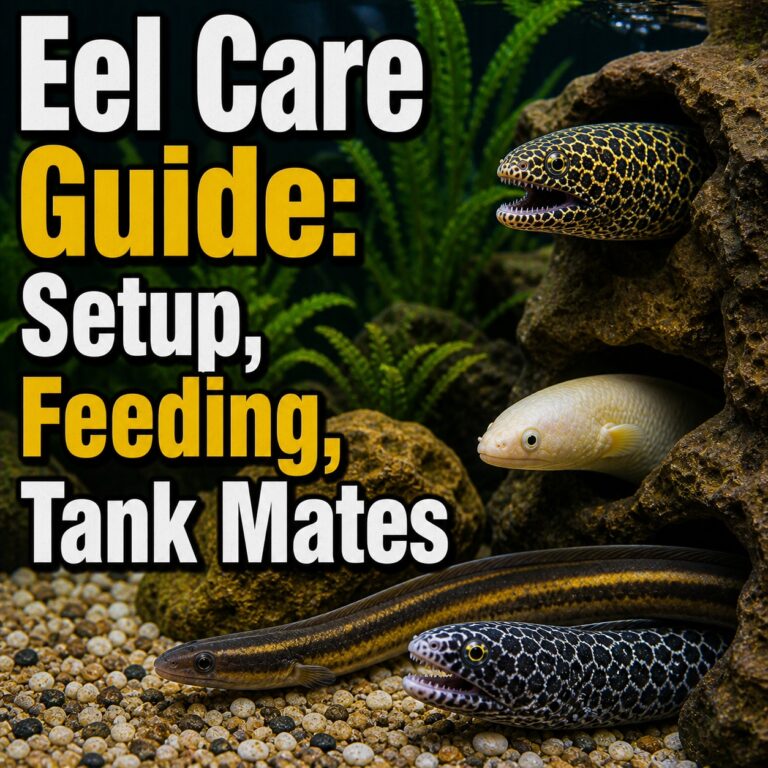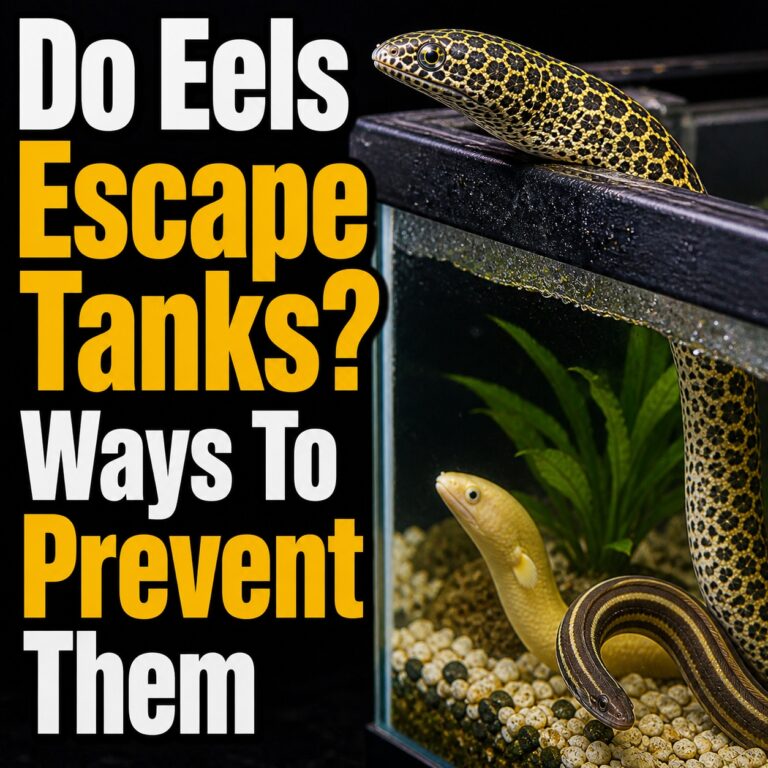
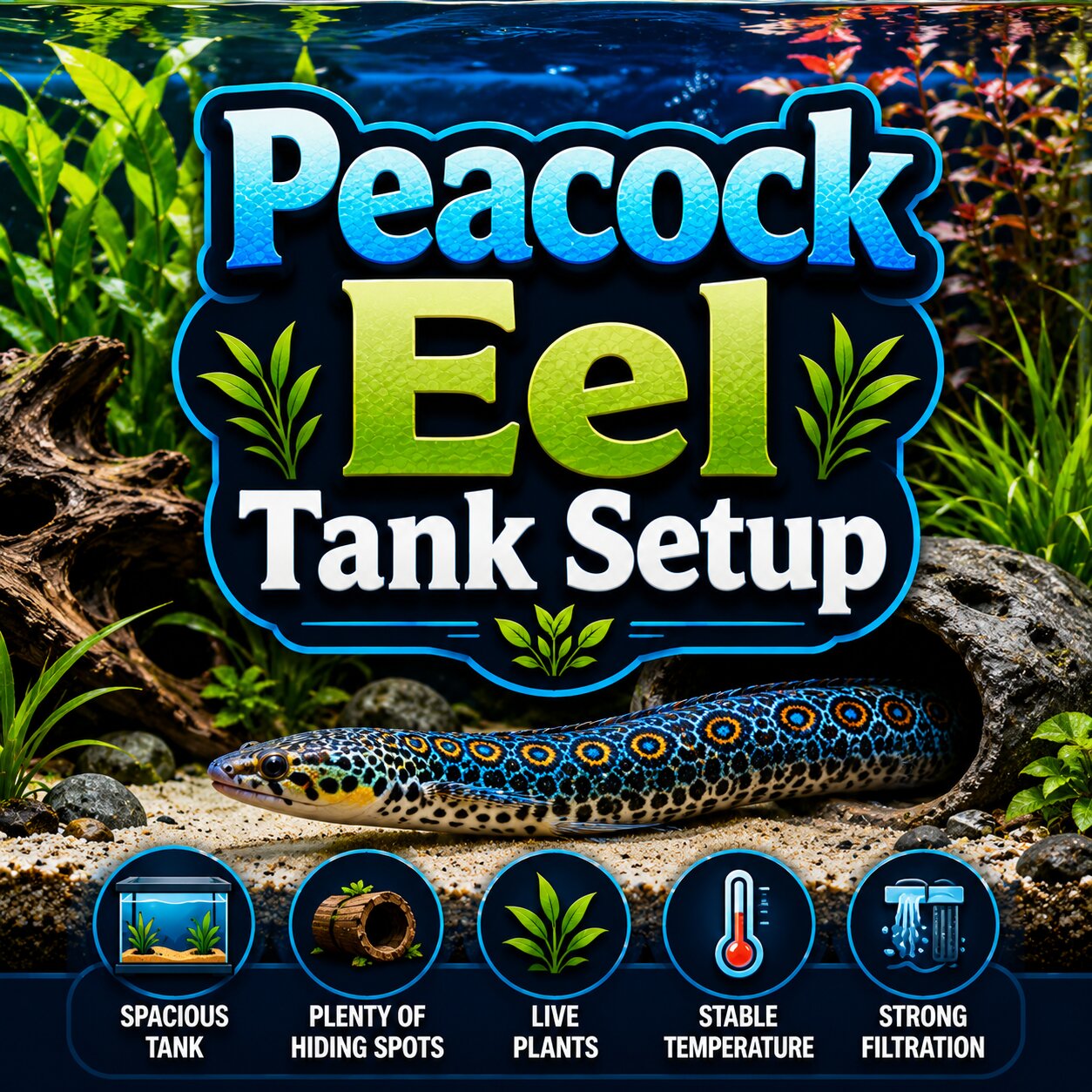
The peacock eel (Macrognathus siamensis) is one of the most rewarding freshwater “oddball” fish you can keep. With their prehistoric look, sensitive pointed snout, and fascinating burrowing habits, they instantly become the conversational centerpiece of any room. However, setting up a successful home for this Southeast Asian native requires a radical shift away from standard fishkeeping design.
Because peacock eels lack typical protective fish scales, possess an incredibly muscular serpentine body, and follow a strict nocturnal schedule, standard aquarium layouts can easily lead to injury, chronic stress, or fatal escapes. This comprehensive guide outlines exactly how to build an ideal, stress-free environment that accommodates their instinctual burrowing and hiding behaviors from youth to maturity.
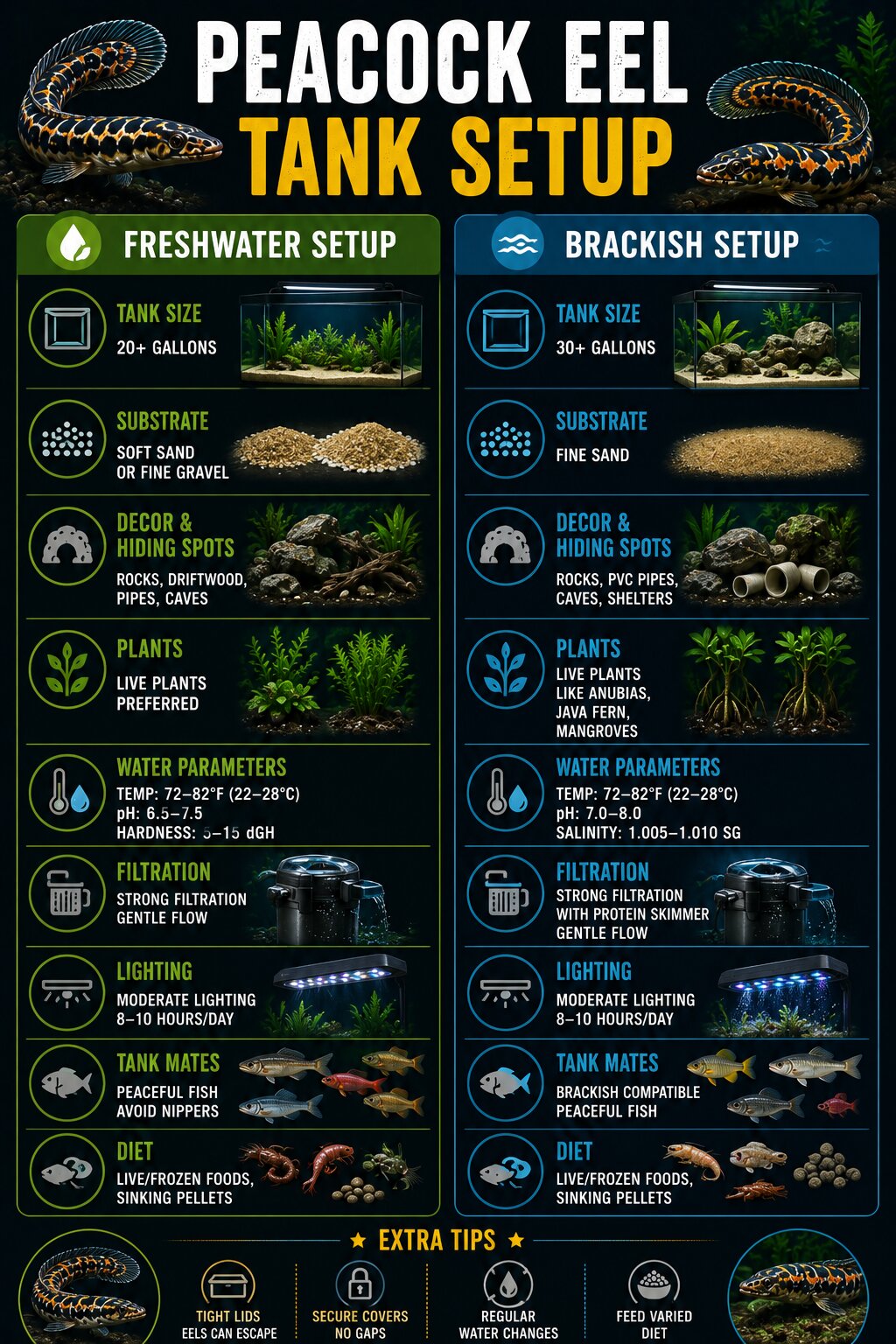
Peacock eels (Macrognathus siamensis) thrive in aquariums when provided with soft sand substrate, hiding places, and stable water parameters (23–28 °C, pH 6.5–8). They are peaceful but nocturnal burrowers and escape artists, so a tight-fitting lid is essential.
Here’s a structured step‑by‑step guide to setting up the perfect Peacock Eel tank
1. Choose the Right Tank
Start Here
Peacock eels need space to burrow and swim.
- Minimum 150 L (40 gal) tank
- Length at least 90 cm
- Larger footprint preferred over height
2. Add Soft Substrate
Critical
Sand prevents skin injuries and infections.
- Use fine sand or smooth gravel
- Avoid sharp substrates
- Depth: 5–8 cm for burrowing
3. Install Secure Lid
Safety
Eels are notorious escape artists.
- Tight-fitting lid with no gaps
- Cover filter openings
- Check regularly for wear
4. Set Water Parameters
Stable conditions keep eels healthy.
- Temperature: 23–28 °C (73–82 °F)
- pH: 6.5–7.5
- Hardness: 5–15 dGH
- Gentle filtration, low flow
5. Provide Hiding Places
Eels are shy and nocturnal.
- Use caves, PVC pipes, bogwood
- Dense plants and leaf litter
- Ensure decor is stable and secure
6. Cycle and Maintain Water
Clean water prevents stress and disease.
- Fully cycle tank before adding eel
- Weekly 20–30% water changes
- Avoid sudden parameter swings
7. Feed Proper Diet
Carnivorous diet replicates natural feeding.
- Frozen bloodworms, brine shrimp, mysis
- Occasional live foods
- Feed once or twice daily, remove leftovers
8. Select Compatible Tank Mates
Avoid small or aggressive fish.
- Peaceful mid-sized species (rasboras, rainbowfish)
- Avoid neon tetras, shrimp, fry
- Monitor feeding competition
9. Monitor Behavior
Eels are nocturnal and shy.
- Expect burrowing during day
- Active at night under dim light
- Use moonlight LEDs for viewing
10. Prevent Health Issues
Proper setup reduces risks.
- Watch for bacterial skin infections
- Ensure varied diet
- Quarantine new tank mates
1. Best Substrate for Peacock Eels: Sand vs. Gravel
The single most critical choice you will make when building a peacock eel aquarium setup is the substrate. In the wild, these fish inhabit the slow-moving rivers and flooded fields of the Mekong and Chao Phraya basins, where the riverbeds consist of deep, soft silt and mud.
Substrate Impact Comparison
Fine, Smooth Sand ──> Seamless burrowing ──> Intact slime coat ──> Healthy eel
Coarse, Rough Gravel ──> Skin abrasions ──> Bacterial infections ──> Fatal “Red Leg”
The Definitive Verdict: Do Peacock Eels Need Sand?
Yes, peacock eels absolutely need sand. You must never keep this species in an aquarium with standard aquarium gravel, crushed coral, or rough eco-complete substrates.
Because peacock eels are obsessive burrowers, they use their pointed snouts to plow into the ground, wedging their entire bodies beneath the surface until only their eyes stick out. If they attempt to plow into gravel, the sharp edges of the stones act like sandpaper against their scaleless skin. This friction strips away their protective mucus layer and creates micro-tears across their bellies.
Opportunistic bacteria in the water quickly invade these open wounds, causing a condition known colloquially as “Red Leg” or systemic hemorrhagic septicemia, which is notoriously difficult to cure and frequently fatal.
Substrate Specifications
To create a safe, luxurious digging zone, select a smooth, fine-grained aquarium sand, such as inert pool filter sand or cosmetic river sand. Avoid aragonite or marine sand mixtures that alter your water chemistry.
- Substrate Depth: Maintain a sand bed depth of at least 2.5 to 4 inches (6 to 10 cm). This depth ensures that as your eel grows from a juvenile into a mature adult, it can submerge its body completely without hitting the bare bottom glass of the tank.
- Maintenance Tip: Deep sand beds can occasionally trap pockets of toxic hydrogen sulfide gas. Because your peacock eel will constantly behave like an underwater plow, their natural digging movements will gently stir the sand and prevent these dangerous gas pockets from forming.
2. Peacock Eel Tank Size Guide for Juveniles and Adults
Another common mistake among beginners is purchasing a juvenile peacock eel based entirely on its pet-store size. In retail tanks, these fish are typically sold as thin, 3- to 4-inch ribbons. However, they grow steadily and can live for over a decade, meaning you must plan for their adult mass.
Minimum Tank Capacities
While a tiny juvenile can technically sit in a 20-gallon aquarium for its first few months, you will save time, money, and stress by starting with their permanent adult home.
- For a Single Adult Peacock Eel: The absolute minimum footprint is a standard 30-gallon long aquarium. Note that the footprint (length and width) is vastly more important than the vertical height of the tank, as these eels spend nearly all their lives navigating the bottom floor.
- For multiple eels or an “Oddball” Community: If you plan to keep a pair of peacock eels or combine them with robust tank mates like Silver Dollars or Pearl Gouramis, you should upgrade to a 55-gallon or 75-gallon aquarium.
Footprint Strategy
A standard 30-gallon long tank provides 36 inches of horizontal swimming space, whereas a 30-gallon tall tank only provides 24 inches. Always prioritize a wider, longer tank base to give your bottom-dwelling eel maximum territory to forage, explore, and hide.
3. How to Stop Peacock Eels Escaping from Aquariums
It is an unfortunate rite of passage for many eel keepers to wake up and find their prized pet dried up on the living room carpet. Eels are legendary escape artists. Their long, completely muscular bodies allow them to bridge vertical gaps, and their slippery slime coats let them slide through openings that seem impossibly small. If there is a hole in your tank lid large enough for the eel’s head to fit through, the entire eel will eventually exit through it.
The Escape Prevention Protocol
- Weighted or Locking Screen/Glass Canopies
- Foam Blocks or Filter Sponges stuffed into all HOB cutouts
- Plastic Mesh or Mesh Netting wrapped around all open plumbing
The Lockdown Strategy
To ensure your peacock eel remains safely inside its habitat, execute the following security measures during your initial setup:
Use a Locking Lid:
Use a heavy glass canopy or a tightly fitting plastic lid with sliding clips or locking tabs. A large, adult peacock eel possesses enough muscular force to lift a lightweight plastic hood or push open a loose mesh screen.
Seal the Utility Gaps:
Look at the back of your aquarium hood where the filter pipes, heater cords, and airline tubing enter the tank. These plastic cutouts are primary escape routes. You must plug these gaps completely. Cut blocks of coarse mechanical filter foam or aquarium-safe sponge and wedge them tightly into every single open gap around your cords and tubes.
Protect the Intakes and Outflows:
Eels love to swim against strong currents. They will actively try to climb up the waterfall of a Hang-On-Back (HOB) filter or slither inside the wide outflow pipe of a canister filter. Secure a piece of fine plastic craft mesh or a pre-filter sponge over these openings to block access completely.
4. Peacock Eel Aquarium Decorations and Hiding Spots
When designing a peacock eel tank layout, your primary objective is psychological security. Eels that feel exposed become chronically stressed, which suppresses their immune systems and causes them to refuse food. To make your eel brave enough to explore, you ironically need to provide so many hiding spaces that they feel completely invisible.
Selecting Eel-Safe Caves
Eels love tight, dark spaces where they can feel the walls of the structure pressing against their bodies. This physical contact trigger makes them feel safe from predators.
PVC Pipe Tunnels:
The absolute best, most practical hiding spots are lengths of standard PVC pipe. Select pipes with a diameter slightly larger than your eel’s body (usually 1 to 2 inches) and smooth down any sharp cut edges with sandpaper. You can bury these pipes directly into your sand bed, creating an instant, collapse-proof underground bunker. To make them visually appealing, glue sand or small pebbles to the exterior using aquarium-safe 100% silicone.
Smooth Driftwood and Terracotta Pots:
Smooth pieces of Malaysian driftwood or Mopani wood offer excellent natural shelter. Ensure the wood lacks sharp, splintered knots that could scratch the eel’s skin. Terracotta clay flowerpots, laid on their sides or cut in half, also provide fantastic, budget-friendly caves.
Smooth River Stones:
If you build rock caves, stick exclusively to large, rounded river pebbles. Never use jagged lava rock or rough seiryu stones. Always glue your rock structures together using aquarium-safe silicone; if an eel decides to burrow underneath a loose pile of rocks, they can easily cause a structural collapse that could crush them.
5. Designing a Peacock Eel Planted Tank
Integrating live plants into a peacock eel aquarium setup adds immense visual beauty and helps manage water quality by absorbing nitrates. However, combining a dedicated burrower with a rooted aquatic garden requires specific planting techniques. If you simply plant delicate species into the sand, your eel will uproot them every single night during its frantic searches for worms.
Plant Selection Matrix
| Plant Type | Placement Strategy | Why It Works |
| Anubias (All Varieties) | Superglue or tie to driftwood/large rocks | The roots never enter the sand, making them completely immune to the eel’s burrowing habits. |
| Java Fern (Microsorum pteropus) | Attach to central hardscape elements | A tough, low-light plant that draws nutrients directly from the water column rather than the substrate. |
| Amazon Swords | Plant deep in sand, surrounded by heavy river stones | Large, robust root systems can handle movement once established, but heavy rocks protect the base. |
| Vallisneria | Protect the base with a plastic root guard or perimeter rocks | Creates a tall, grass-like jungle that mimics the eel’s natural flooded-field habitat. |
| Java Moss / Christmas Moss | Allow to carpet across wood and PVC pipes | Provides an excellent structural matrix that harbors micro-fauna for your eel to forage. |
The Root Protection Trick
If you are determined to grow heavy root-feeders like Cryptocorynes or Amazon Swords directly in the sand bed, you must protect their root zones. Place a cluster of heavy, smooth river stones directly around the crown of the plant. This creates a physical barrier that prevents your peacock eel from digging directly next to the plant’s main stalk, allowing the roots to anchor safely into the lower layers of the substrate.
6. Environmental and Water Parameter Requirements
While peacock eels are relatively hardy once established, they have zero tolerance for poor water conditions due to their lack of protective scales. They thrive in clean, well-oxygenated water with moderate flow.
Water Temperature: Keep your heater calibrated between 23°C and 28°C (73°F to 82°F). Sudden drops in temperature will immediately stall their metabolism and cause them to stop eating.
pH Range: Aim for a stable, neutral pH between 6.5 and 7.5.
Water Hardness: Soft to moderately hard water (5 to 15 dGH) closely mirrors their native tropical river basins.
Filtration and Flow: Eels produce a fair amount of waste and require pristine water. Use a high-quality canister filter or an oversized HOB filter to keep Ammonia and Nitrite levels strictly at 0 ppm, and maintain Nitrates below 20 ppm. Ensure your filter output creates healthy surface agitation, as eels have high oxygen demands, especially along the bottom layer of the aquarium.
7. Habitat Setup Checklist for Success
To ensure you haven’t missed a single step before introducing your new serpentine companion, use this comprehensive setup checklist:
- Substrate consists exclusively of fine, smooth sand (minimum 2.5 inches deep).
- Tank size features a minimum footprint of a 30-gallon long aquarium.
- All utility cutouts on the hood are firmly plugged with mechanical filter foam.
- Filter intakes and outflows are screened off to prevent internal slithering.
- At least two tight, smooth caves (PVC or terracotta) are provided per eel.
- Hardscape structures are secured with silicone to prevent collapse from digging.
- Live plants are securely anchored, tied down, or protected by heavy river rocks.
- Water parameters are fully cycled with 0 ppm Ammonia and 0 ppm Nitrite.
Conclusion: The Ultimate Reward
Taking the time to build a specialized, sand-bottomed, escape-proof aquarium pays massive dividends. When a peacock eel feels truly safe in its environment, its behavior transforms. Instead of remaining perpetually stressed and hidden, a secure peacock eel will regularly poke its head out of its favorite PVC tunnel, color up with vibrant yellow and brown patterns, and confidently navigate the sand bed during evening feeding times. By prioritizing soft substrate, tight hiding spaces, and bulletproof lid security, you create a beautiful tropical ecosystem where this magnificent miniature serpent can thrive for years to come.
FAQs About Peacock Eel Care
Can Peacock Eels live alone? Yes, they can live solo, but groups of 3–5 are also fine.
Do they eat shrimp? Yes, they will prey on shrimp and fry.
Are they aggressive? No, they are peaceful but can outcompete shy fish for food.
How big do they grow? Up to 30–32 cm (12 inches).
What’s their lifespan? With proper care, several years in captivity.
Do they need sand? Absolutely — sand prevents skin damage and infections.
Are they nocturnal? Yes, most active at night; use dim lighting.
Can they be bred in captivity? Rarely, as sexual dimorphism is hard to distinguish.
Do they jump out of tanks? Yes, lids are mandatory to prevent escapes.
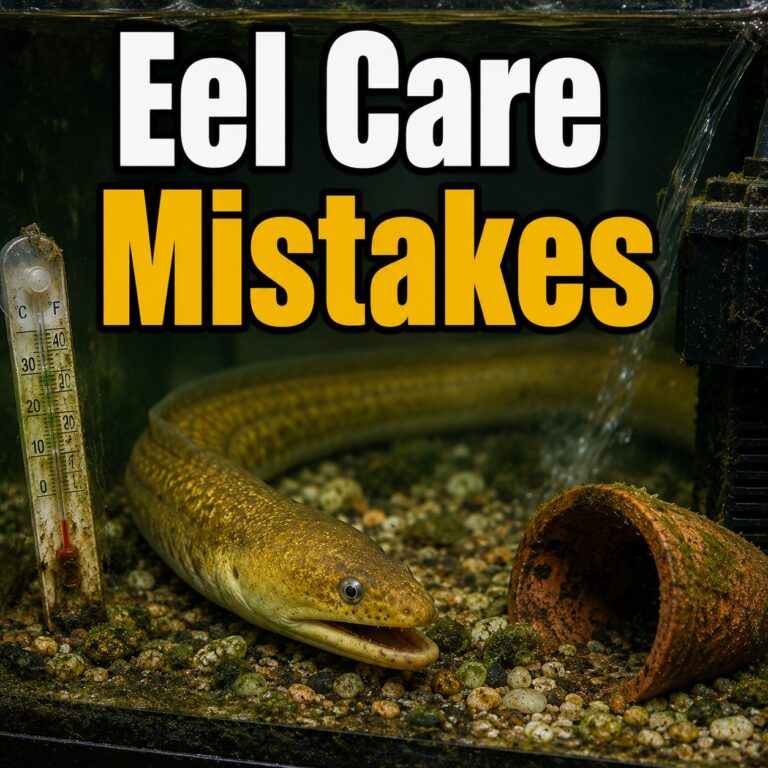
What’s the biggest care mistake? Housing in too small tanks or using sharp gravel.
Key Takeaway: A spacious, sand‑bottom tank with secure lid, stable water, and protein‑rich diet ensures Peacock Eels thrive as peaceful, fascinating oddballs in freshwater aquariums.