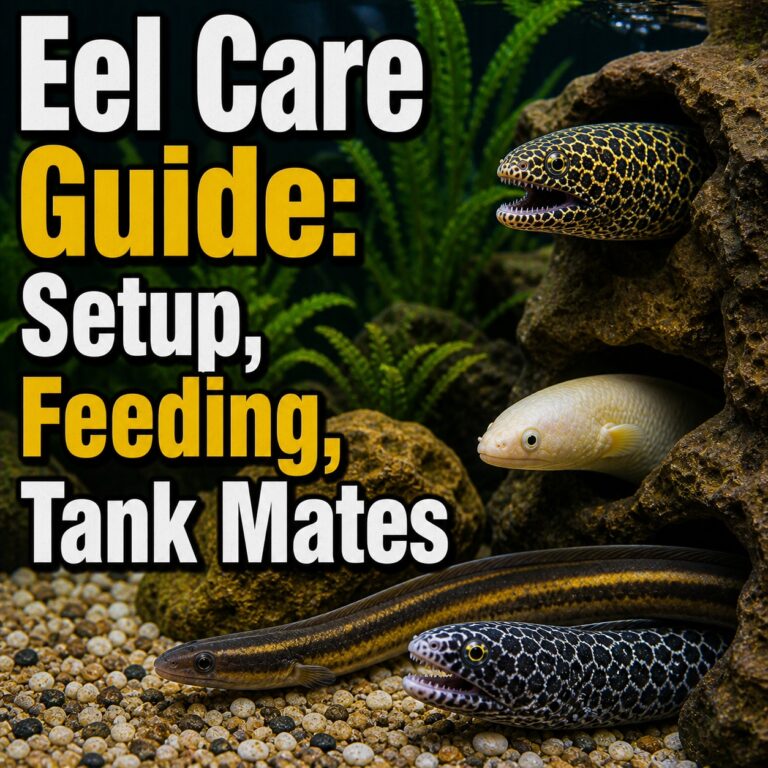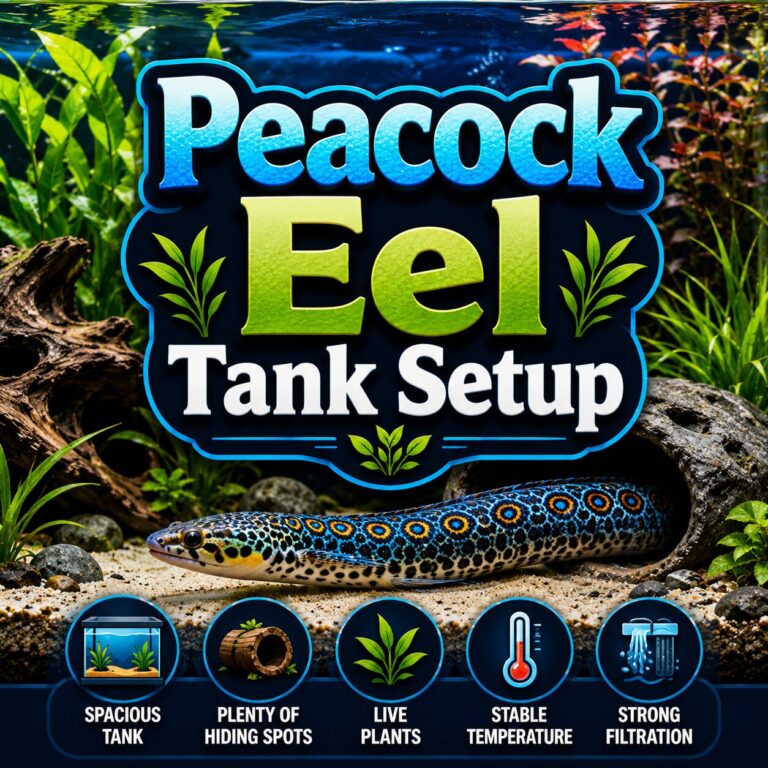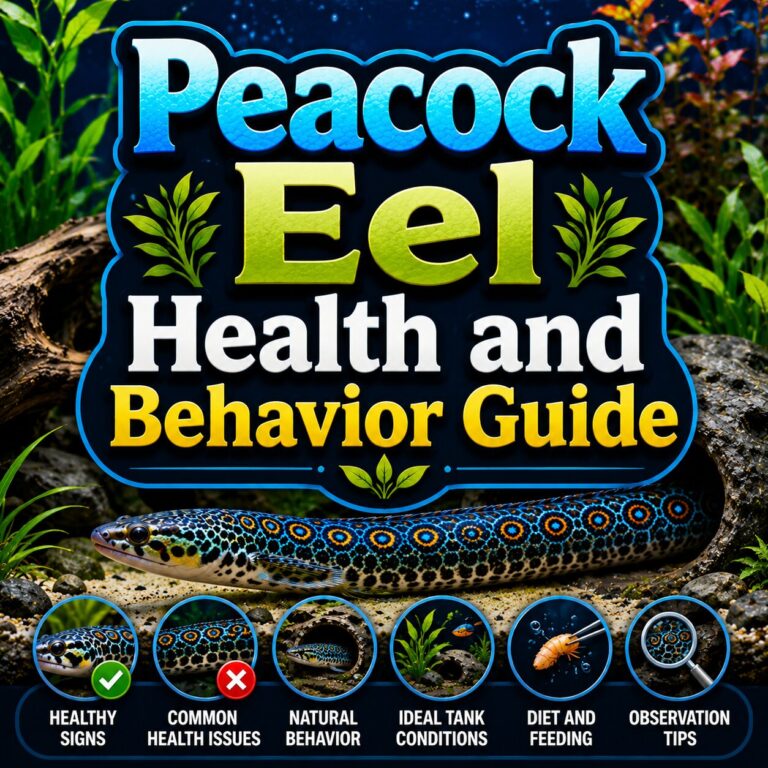
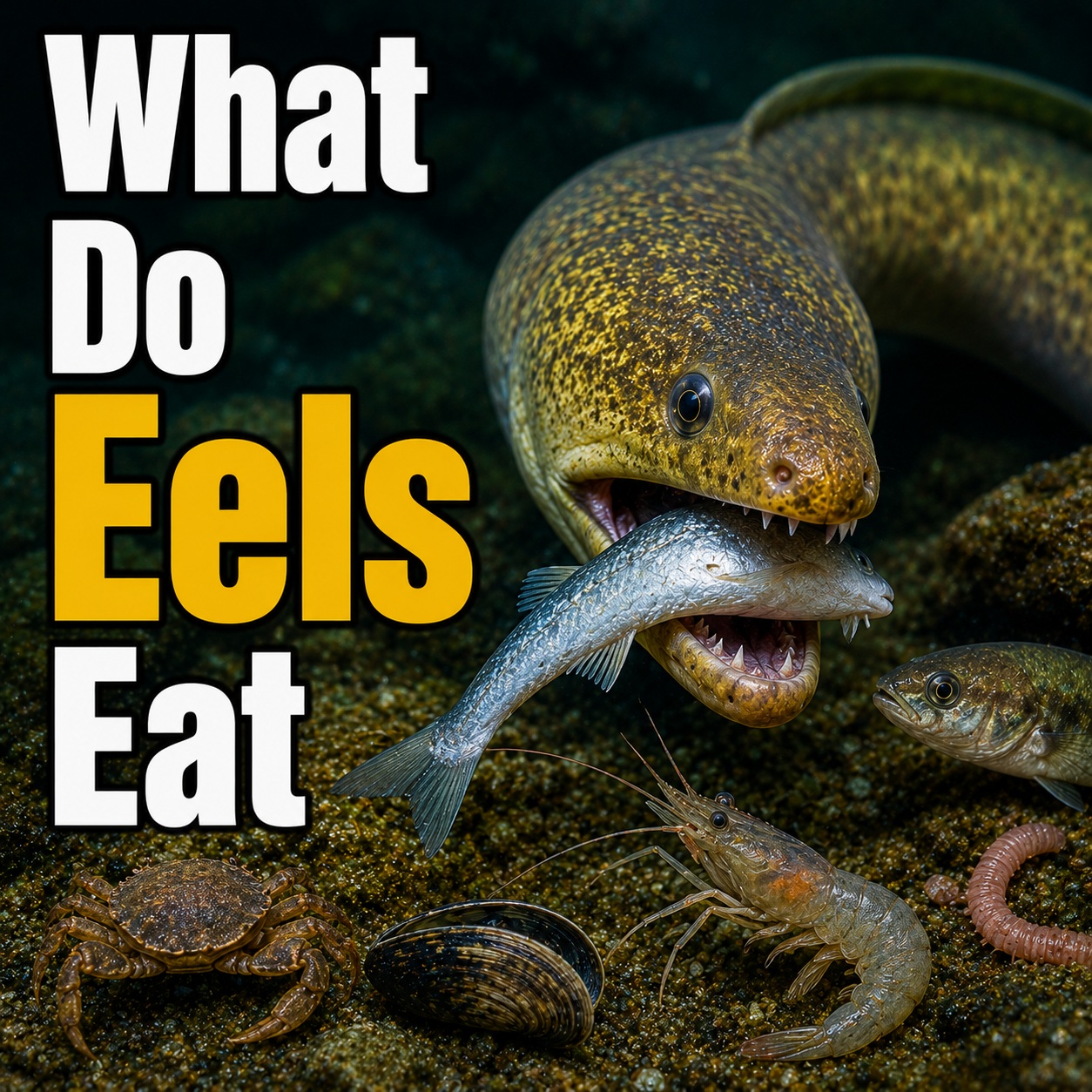
Maintaining a pet eel is one of the most rewarding challenges in the aquarium hobby. Whether you are keeping a freshwater Spiny Eel, a primitive Bichir, or a saltwater Dwarf Moray, you are caring for a high-level predator. In the wild, eels are opportunistic hunters that rely on a combination of stealth, scent, and specialized anatomy to capture prey.
To keep an eel healthy in captivity, you must move beyond standard fish flakes. Eels require a protein-rich, varied diet that mimics their natural hunting cycles. This guide provides a deep dive into the nutritional requirements, feeding techniques, and “menu” options for the most popular pet eel species.
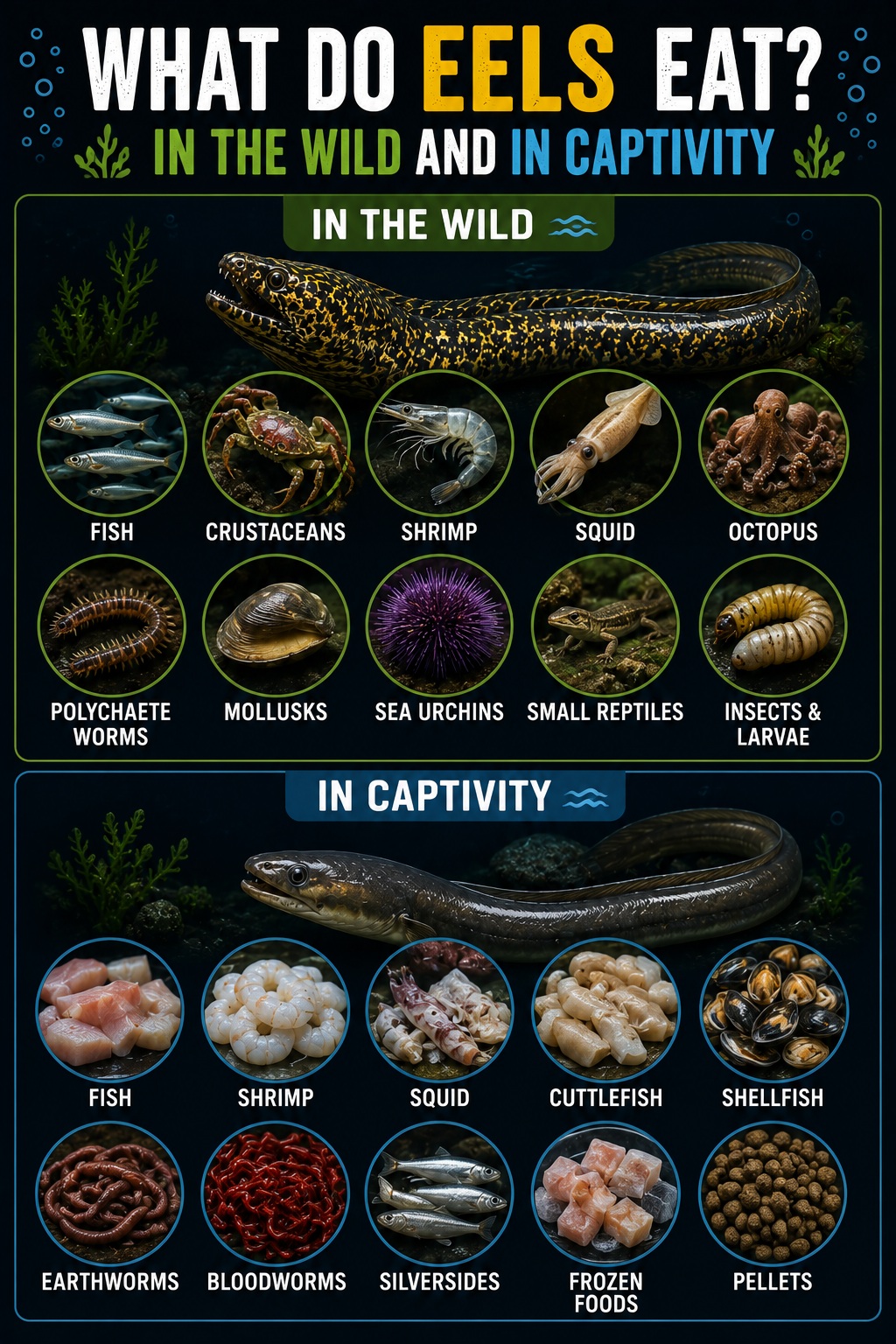
🐟 What Eels Eat in the Wild
General Diet
- Carnivorous and opportunistic — they consume whatever smaller animals are available.
- Common prey:
- Small fish
- Crustaceans (crabs, shrimp, crayfish, lobsters)
- Mollusks (clams, mussels, squid, octopus)
- Worms and insect larvae
- Amphibians (frogs, tadpoles)
- Larval stage (leptocephali): feed on marine snow (organic detritus and plankton).
- Glass eels & elvers: eat insect larvae, tiny crustaceans, and small fish.
- Adults: expand diet to larger fish, cephalopods, and carrion.
Hunting Behavior
- Nocturnal predators — hunt at night using smell rather than sight.
- Ambush tactics: hide in burrows or crevices, strike quickly.
- Moray eels: use pharyngeal jaws to drag prey into their throat.
- Cooperative hunting: morays sometimes hunt with groupers, flushing prey from hiding.
🐠 What Eels Eat in Captivity
Freshwater Aquarium Eels
- Live foods: bloodworms, blackworms, earthworms, ghost shrimp, feeder fish (guppies, minnows).
- Frozen foods: brine shrimp, mysis shrimp, chopped fish pieces.
- Prepared foods: sinking carnivore pellets, carnivore sticks.
- Feeding schedule:
- Juveniles: daily or every other day.
- Adults: 2–3 times per week.
- Tips: feed at night, use varied diet, avoid overfeeding.
Marine Aquarium Eels (e.g., Snowflake Moray)
- Preferred foods: crustaceans and hard‑shelled invertebrates (crabs, shrimp, clams, squid).
- Feeding frequency: 1–3 times per week for adults.
- Technique: target feeding with tongs to avoid bites.
- Avoid: freshwater feeder fish (e.g., goldfish) and mammal/poultry meat — nutritionally unsuitable.
1. Understanding the Eel’s Sensory Biology
Before discussing what to feed, it is vital to understand how eels eat. Most eels have relatively poor eyesight. Instead, they rely on two primary senses:
- Chemoreception (Smell): Eels have highly developed olfactory organs (nostrils). They “taste” the water to locate prey long before they see it.
- Mechanoreception (The Lateral Line): They can sense the minute vibrations of a struggling shrimp or fish in the water column.
The Lesson for Owners: Food must be “smelly” to trigger a feeding response. Frozen-thawed or fresh foods are almost always more successful than dried pellets because they release more chemical signals into the water.
2. The Freshwater Menu: Spiny Eels and Oddballs
Most freshwater “eels,” like the Peacock, Zig-Zag, and Fire Eel, are actually Spiny Eels (Mastacembelidae). Their mouths are small and pointed, designed for “snigging” invertebrates out of the mud.
Primary Food Sources:
- Bloodworms: These are the “staple” for almost all small to medium freshwater eels. They are rich in protein and highly enticing.
- Blackworms and Tubifex: These live worms are excellent for enticing “picky” eaters who refuse frozen food.
- Earthworms (Nightcrawlers): For larger species like the Fire Eel, chopped earthworms are an ideal power food. They are packed with minerals and help eels gain weight quickly.
- Brine Shrimp and Mysis: Good for smaller species (like the Yellowtail Spiny Eel) to provide essential fatty acids.
The Pellet Challenge:
Most Spiny Eels will not eat dry pellets or flakes. They do not recognize them as food. If you wish to use pellets, you must choose “sinking carnivore” varieties and often “scent” them by soaking them in bloodworm juice.
3. The Saltwater Menu: Morays and Marine Eels
Marine eels, particularly Moray Eels, have much larger jaws and a different predatory style. Many are “durophagous,” meaning they are specialized to eat hard-shelled prey.
For Crustacean Eaters (e.g., Snowflake, Zebra, Chain Morays):
These eels have blunt teeth for crushing. Their diet should include:
- Raw Shrimp (Shell-on): The shell provides essential calcium and roughage that keeps the eel’s digestive tract healthy.
- Crabs and Crayfish: Providing live or “fresh-killed” crabs allows the eel to exercise its natural crushing behavior.
- Clams and Mussels: These can be offered cracked open. They are incredibly nutrient-dense.
For Piscivores (Fish Eaters) (e.g., Golden, Dragon, Tesselata Morays):
These eels have sharp, needle-like teeth. Their diet should focus on:
- Silversides: Small, whole frozen fish are the perfect meal.
- Squid and Octopus: High in protein and very “smelly,” making them a favorite for picky morays.
- White Fish Chunks: Cod, tilapia, or halibut can be offered in bite-sized chunks.
⚠️ WARNING: Avoid “feeder goldfish.” Goldfish are high in fat and contain thiaminase, an enzyme that blocks the absorption of Vitamin B1 (Thiamine). Over time, a diet of goldfish will cause neurological damage and death in eels.
4. Feeding Frequency and the “Fast”
One of the most common mistakes beginners make is overfeeding. In the wild, an eel might catch a large meal and then hide in a hole for three days to digest it.
- Juvenile Eels: Should be fed daily or every other day to support rapid growth.
- Adult Eels: Should be fed 2–3 times per week.
- The “Eel Fast”: It is perfectly normal for a healthy adult eel to go 1–2 weeks without eating, especially after a large meal. This is not cause for alarm unless the eel begins to lose visible body mass.
5. The Art of Target Feeding
Because eels are slow, shy, and have poor eyesight, they often lose out on food to faster tank mates like Barbs, Tangs, or Cichlids. Target feeding is a mandatory skill for eel keepers.
The Feeding Tongs (The “Grabber”):
Never use your hands to feed an eel (especially a Moray). Use long stainless steel or plastic feeding tongs.
- Wiggle the food near the eel’s hiding spot.
- Allow the eel to “scent” the food.
- Once the eel strikes, release the food.
The Feeding Tube:
For very shy species like Garden Eels, a PVC pipe can be used to deliver food directly to their burrows, preventing it from being swept away by the filter or eaten by other fish.
6. Nutritional Supplements and Vitamins
In captivity, even the best varied diet can lack certain trace elements found in the wild ocean or river.
- Vitamin Soaking: Products like Selcon or Vita-Chem can be dripped onto frozen food before feeding. This ensures the eel receives adequate Vitamin C and B12, which are vital for their immune system and slime coat production.
Summary Diet Table by Species
| Eel Type | Primary Diet | Feeding Method | Difficulty |
| Peacock Eel | Bloodworms, Mysis | Nightly, scattered | Easy |
| Fire Eel | Earthworms, Krill | Tongs, 3x per week | Moderate |
| Snowflake Moray | Raw Shrimp, Clams | Tongs, 2x per week | Easy |
| Garden Eels | Frozen Cyclops, Plankton | Water column/Tube | Hard |
| Bichirs | Sinking Pellets, Fish | Evening, bottom-drop | Easy |
Troubleshooting: “My Eel Won’t Eat”
If your eel is on a hunger strike, check the following “Eel Stressors”:
- Water Temperature: Eels are cold-blooded; if the water is too cold, their metabolism slows down, and they lose interest in food.
- Nitrates: High nitrate levels act as an appetite suppressant for eels.
- Substrate: If a Spiny Eel cannot burrow (e.g., if you have coarse gravel), it will feel stressed and stop eating.
- Lighting: Most eels are nocturnal. Try feeding 30 minutes after the aquarium lights have been turned off.
Key Takeaways
- Wild eels: opportunistic carnivores, diet varies by habitat and life stage.
- Captive eels: require protein‑rich foods mimicking natural prey; feeding schedules depend on age and species.
- Best practice: provide variety, feed at night, and use safe feeding tools for morays.
Conclusion: The Healthy Eel
A well-fed eel is a vibrant, active, and long-lived pet. By providing a “rotational” diet—alternating between shrimp, worms, fish, and squid—you ensure that your eel receives a full spectrum of amino acids and minerals. Remember: the key to a pet eel’s heart is through its nose. Use high-quality, fragrant frozen foods, master the use of feeding tongs, and your serpentine companion will thrive for decades.
Pro-Tip: Keep a “Feeding Log.” Because eels eat infrequently, it is easy to forget if you fed them on Tuesday or Wednesday. Tracking their meals helps you spot early signs of illness or bloating before they become serious.