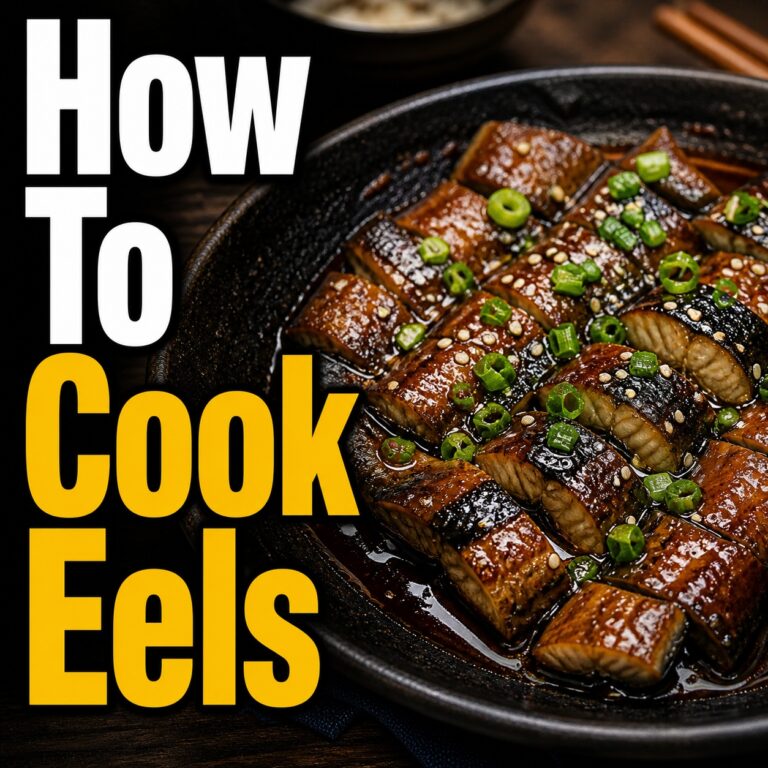
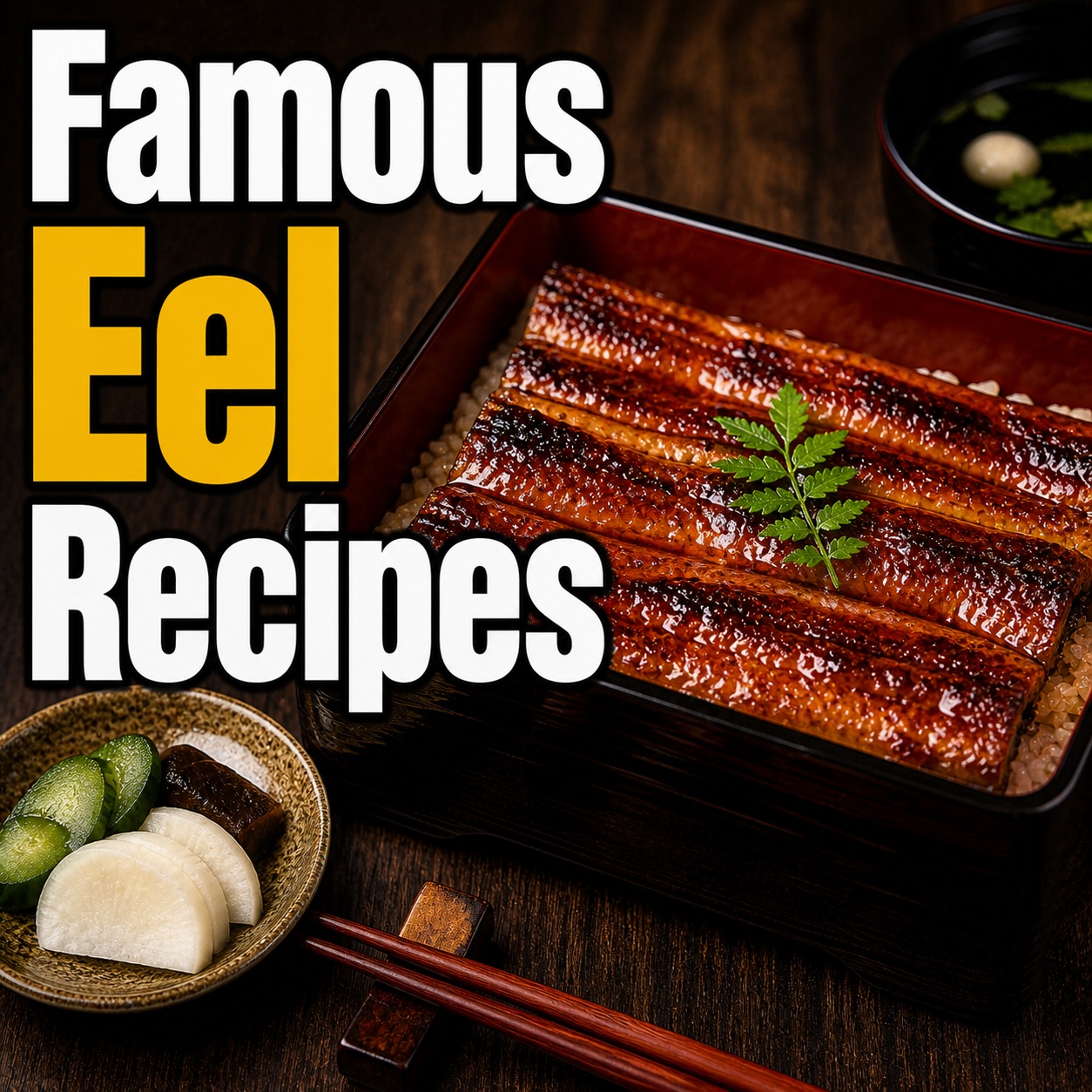
This comprehensive culinary guide explores the art of cooking eel across the globe. From the meticulous charcoal-grilling techniques of East Asia to the herb-infused stews of Europe and the spiced curries of India, discover how every culture masters this rich, succulent fish.
The world of eel cuisine is a fascinating map of cultural history, ranging from ancient Roman feasts to modern Tokyo street food. Because eel is so rich and fatty, the most famous recipes across the globe almost always feature a balancing element—either a sweet, syrupy glaze or a sharp, acidic punch.
Here are the most iconic eel recipes that have defined the culinary landscape.
Japan: The Masters of Unagi and Anago
Japan treats eel with a reverence rarely seen elsewhere. Chefs often train for decades to master the “Kabayaki” technique—skewering, steaming, and grilling—to achieve the perfect balance of smoky char and tender meat.
1. Unadon / Unaju
The quintessential Japanese eel dish. Both feature grilled freshwater eel (Unagi) over a bed of steamed rice, with the only difference being the serving vessel: a bowl for Unadon and a lacquered box for Unaju.
Preparation Steps:
- Butterfly the freshwater eel and remove the spine.
- Skewer the meat with bamboo sticks to prevent the skin from curling.
- Grill the eel plain over charcoal to render the initial fat.
- Steam the grilled fillets for 15 minutes to soften the connective tissues.
- Baste the eel in a Tare sauce (soy sauce, mirin, sugar, and sake).
- Flash-grill again until the sauce caramelizes into a glossy, dark glaze.
- Serve atop hot rice with a dash of citrusy Sansho pepper.
2. Hitsumabushi
A famous specialty from Nagoya, this dish offers a multi-sensory experience by allowing the diner to enjoy the eel in three distinct ways.
Preparation Steps:
- Prepare the eel using the Kabayaki method (as described in Unadon).
- Chop the finished eel into narrow strips rather than leaving it in large fillets.
- Place the strips over a thick bed of rice in a large wooden tub.
- Prepare three side components: a bowl of condiments (wasabi, nori, green onions), a pot of hot dashi broth, and a small empty bowl.
3. Umaki
A delicate fusion of land and sea, this dish wraps savory grilled eel inside a sweet, fluffy Japanese omelet (Tamagoyaki).
Preparation Steps:
- Grill a small strip of eel with a light soy glaze.
- Whisk eggs with dashi stock, sugar, and a pinch of salt.
- Pour a thin layer of egg into a rectangular pan.
- Place the eel strip at the edge of the egg layer.
- Roll the egg around the eel.
- Add more egg layers, rolling repeatedly until you form a thick, golden log.
- Slice into rounds to reveal the eel center.
4. Unagi & Anago Nigiri
Nigiri highlights the difference between freshwater (Unagi) and saltwater (Anago) eel. Unagi is bold and fatty, while Anago is leaner and softer.
Preparation Steps:
- Simmer Anago in a broth of soy sauce and sugar (unlike Unagi, which is grilled).
- Shape small oblong mounds of vinegared sushi rice.
- Lay a warm slice of prepared eel over the rice.
- Secure with a thin strip of nori seaweed if the eel is particularly soft.
- Brush with a reduced eel sauce (Nitsume) before serving.
5. Uzaku
A refreshing appetizer that balances the richness of grilled eel with the crisp acidity of pickled cucumbers.
Preparation Steps:
- Slice cucumbers into paper-thin rounds and salt them to draw out moisture.
- Rinse and squeeze the cucumbers dry.
- Toss the cucumbers in a dressing of rice vinegar, sugar, and soy sauce.
- Dice warm, kabayaki-style grilled eel into small chunks.
- Mound the eel on top of the cucumber salad just before serving.
6. Shirayaki
For the purist, Shirayaki skips the sweet sauce to showcase the eel’s natural, clean flavor.
Preparation Steps:
- Butterfly and skewer the freshwater eel.
- Grill slowly over charcoal, basting only with a splash of sake and a pinch of sea salt.
- Cook until the skin is incredibly crispy and the fat bubbles.
- Serve with freshly grated wasabi and high-quality soy sauce on the side.
China: Bold Aromatics and Wok Mastery
Chinese eel recipes often focus on “Sheng Bao”—a high-heat flash-frying technique that creates a unique, springy texture.
7. Sheng Bao Shan Pian (Fried Eel Slices)
A beloved dish in East China, known for its intense garlic aroma and sweet-and-sour finish.
Preparation Steps:
- Slice deboned eel into thin strips.
- Blanch the strips quickly in boiling water to remove the slime.
- Stir-fry the slices in a blazing hot wok with plenty of lard or oil.
- Add a large handful of minced garlic, ginger, and leeks.
- Deglaze with black vinegar, sugar, and dark soy sauce.
- Toss until the sauce thickens and coats every slice.
8. Braised Eel
This slow-cooking method results in a deeply savory dish where the eel meat practically falls off the bone.
Preparation Steps:
- Chop the eel into 2-inch bone-in segments.
- Brown the segments in a pan with oil.
- Add rice wine, ginger slices, and star anise.
- Pour in equal parts water and soy sauce with a lump of rock sugar.
- Simmer on low heat for 30 minutes until the liquid reduces to a thick, fragrant gravy.
Italy: The Mediterranean Tradition
Eel, or Anguilla, is a cornerstone of Italian festive cooking, particularly along the Adriatic coast and the lakes of Lombardy.
9. Capitone (Christmas Roasted Eel)
In Southern Italy, roasting a large female eel (Capitone) is the highlight of the Christmas Eve Feast of the Seven Fishes.
Preparation Steps:
- Cut the eel into large sections.
- Toss with olive oil, crushed garlic, salt, and plenty of fresh bay leaves.
- Arrange in a roasting pan.
- Roast at high heat (425°F) until the skin is blistered and golden.
- Serve with lemon wedges to cut through the festive richness.
10. Bisato in Speo (Grado Style)
This Venetian classic uses an ancient method of spit-roasting that dates back centuries.
Preparation Steps:
- Skewer large chunks of eel onto a long spit, alternating the fish with bay leaves and slices of crusty bread.
- Roast the spit slowly over an open wood fire.
- Allow the rendered eel fat to drip onto the bread slices, which toast and absorb the flavor.
- Season with only salt and pepper.
11. Bisato in Umido / Stewed Eel
A comforting, rustic stew common in the lagoon city of Venice.
Preparation Steps:
- Sauté onions, celery, and carrots in olive oil.
- Add eel pieces and brown them slightly.
- Pour in a splash of dry white wine and let it evaporate.
- Stir in tomato purée and a ladle of fish stock.
- Slow-cook for 25 minutes until the sauce is rich and the eel is tender.
Portugal: The Atlantic Influence
Portugal celebrates the eel through “Caldeiradas” (stews) and crispy fries, reflecting its seafaring heritage.
12. Caldeirada de Enguias
A robust, colorful stew that is a specialty of the Aveiro region.
Preparation Steps:
- Layer sliced onions, bell peppers, and potatoes in a heavy pot.
- Place cleaned eel chunks on top of the vegetables.
- Season with saffron, ginger, and piri-piri (hot pepper).
- Add white wine and a drizzle of olive oil.
- Simmer gently without stirring until the potatoes are soft and the eel is cooked through.
13. Enguias Fritas
Crispy, golden, and addictive, these are a favorite snack in Portuguese coastal taverns.
Preparation Steps:
- Marinate small eel pieces in lemon juice and salt for 30 minutes.
- Dredge the pieces in a mixture of flour and cornmeal.
- Deep-fry in hot olive oil until very crispy.
- Serve hot with a side of tomato rice.
Belgium & England: Northern European Comfort
14. Paling in ’t Groen (Belgium)
One of Belgium’s national treasures, this “Eel in the Green” dish is vibrantly herbaceous.
Preparation Steps:
- Sauté cleaned eel pieces in butter.
- Create a green paste by blending massive amounts of parsley, chives, watercress, spinach, and sorrel.
- Add the herb paste to the eel with a splash of white wine.
- Simmer for only 10 minutes so the herbs keep their bright green color.
15. Jellied Eels (England)
A historic London street food, prized for its cooling properties and unique texture.
Preparation Steps:
- Boil chopped eel in a pot with water, lemon juice, nutmeg, and bay leaves.
- Cook until the meat is tender and the water is thick with natural collagen.
- Place the eel pieces into bowls and pour the cooking liquid over them.
- Refrigerate overnight until the liquid sets into a clear, savory jelly.
India: Spices and Mustard Oil
In India, particularly in Bengal and the South, eel is treated with bold spices that complement its earthy flavor.
16. Mustard Seed Eel Curry (Shorshe Maach)
A pungent, sinus-clearing curry that is a staple of Bengali cuisine.
Preparation Steps:
- Grind yellow and black mustard seeds with green chilies into a fine paste.
- Rub eel chunks with turmeric and salt.
- Sear the eel in hot mustard oil and set aside.
- Temper nigella seeds in the same oil.
- Whisk the mustard paste with water and pour into the pan.
- Simmer the eel in the sauce for 5 minutes.
- Drizzle with raw mustard oil for a final peppery kick.
17. Spicy Eel Fry (South Indian Style)
A fiery, dry preparation that uses curry leaves to provide a deep, aromatic base.
Preparation Steps:
- Coat eel pieces in a thick paste of red chili powder, ginger-garlic paste, and turmeric.
- Heat oil in a pan and throw in a handful of fresh curry leaves.
- Fry the eel on medium heat until the spices form a dark, crispy crust.
- Finish with a squeeze of lime and a garnish of raw red onions.
France: The Heritage of the River
In France, eel is a centerpiece of “cuisine fluviale” (river cuisine). These dishes often utilize the country’s world-class wines to balance the fish’s natural oils.
18. Matelote d’Anguille
Considered the “Coq au Vin” of the fish world, this rich stew is a specialty of the Île-de-France region surrounding Paris.
Preparation Steps:
- Chop the eel into 3-inch segments.
- Sauté pearl onions and button mushrooms in butter until they are golden brown; set them aside.
- Brown the eel pieces in the same pot.
- Pour in a full-bodied red wine (traditionally a Pinot Noir) and a splash of brandy.
- Flambé the brandy to burn off the alcohol, then add a bouquet garni (thyme, parsley, bay leaf).
- Simmer gently for 20 minutes.
- Thicken the sauce at the end by whisking in a beurre manié (butter and flour paste).
- Serve with the onions, mushrooms, and triangles of fried bread rubbed with garlic.
19. Catigot d’Anguilles
A regional specialty from the Rhône Valley, specifically the Condrieu area, which traditionally uses the local white wines.
Preparation Steps:
- Cut the eel into small rounds.
- Sauté the eel in olive oil with minced garlic and shallots.
- Add a generous amount of dry white wine and a tablespoon of tomato concentrate.
- Stir in a handful of black olives and capers.
- Stew on low heat until the sauce reduces to a thick, briny glaze that clings to the fish.
Germany & Netherlands: Northern Sea Specialties
In the North, preservation techniques like smoking and hearty, complex soups dominate the culinary landscape.
20. Hamburger Aalsuppe
This “Eel Soup” from Hamburg is a fascinating blend of sweet and savory, traditionally containing dried fruits and vinegar.
Preparation Steps:
- Boil a ham bone with carrots, leeks, and celery to create a rich, smoky base.
- Add dried prunes, apricots, and pears to the simmering broth.
- Stir in a splash of vinegar and a pinch of sugar to create a “sweet and sour” profile.
- Poach fresh eel chunks directly in the broth for the final 10 minutes.
- Garnish with fresh parsley and serve with small flour dumplings (Klöße).
21. Gerookte Paling (Smoked Eel)
The Netherlands is world-renowned for its smoked eel, which features a buttery texture and a profound depth of flavor.
Preparation Steps:
- Brine cleaned eels in a high-concentration salt solution for two hours.
- Dry the eels thoroughly until the skin feels like parchment.
- Hang the eels in a tall smoking chimney.
- Smoke using oak or beech wood at a temperature of approximately 175°F (80°C).
- Remove once the skin turns a deep golden-brown and the internal oils begin to bead on the surface.
- Serve fillets simply on buttered crackers or a slice of dark rye bread.
Croatia: The Neretva Delta Tradition
The Neretva region of Dalmatia is famous for its unique wetlands, where eel and frog stew is a daily staple.
22. Neretvanski Brudet
A spicy, rustic stew that is legally protected as part of Croatia’s cultural heritage.
Preparation Steps:
- Sauté a large amount of chopped onions in olive oil until they completely dissolve.
- Add eel chunks and, traditionally, local frogs.
- Pour in tomato purée, wine vinegar, and a heavy dose of hot chili peppers.
- Cook without stirring; instead, shake the pot occasionally to prevent the delicate fish from breaking.
- Serve over a thick mound of creamy yellow polenta.
23. Raštika s Jeguljom
This Dalmatian dish combines the fattiness of the eel with the bitterness of “Raštika” (a local hardy leaf similar to collard greens or kale).
Preparation Steps:
- Boil the raštika leaves until they are tender.
- Add potatoes and eel chunks to the same pot.
- Season with plenty of garlic, black pepper, and a very generous pour of local olive oil.
- Simmer until the potatoes begin to break down, thickening the broth into a hearty mash.
Chile: The Conger Eel Legacy
Chilean cuisine celebrates the Congrio (Conger Eel). It is so beloved that the Nobel Prize-winning poet Pablo Neruda wrote an entire ode to the soup made from it.
24. Caldillo de Congrio
A vibrant, restorative soup that is considered a national dish of Chile.
Preparation Steps:
- Boil the head and bones of the conger eel with onions and herbs to create a concentrated stock.
- Sauté onions, garlic, carrots, and bell peppers in a separate pot.
- Add sliced potatoes, tomatoes, and the strained eel stock.
- Simmer until the potatoes are cooked.
- Add thick medallions of conger eel and a splash of white wine.
- Finish by stirring in a little heavy cream and fresh cilantro before serving in a clay bowl.
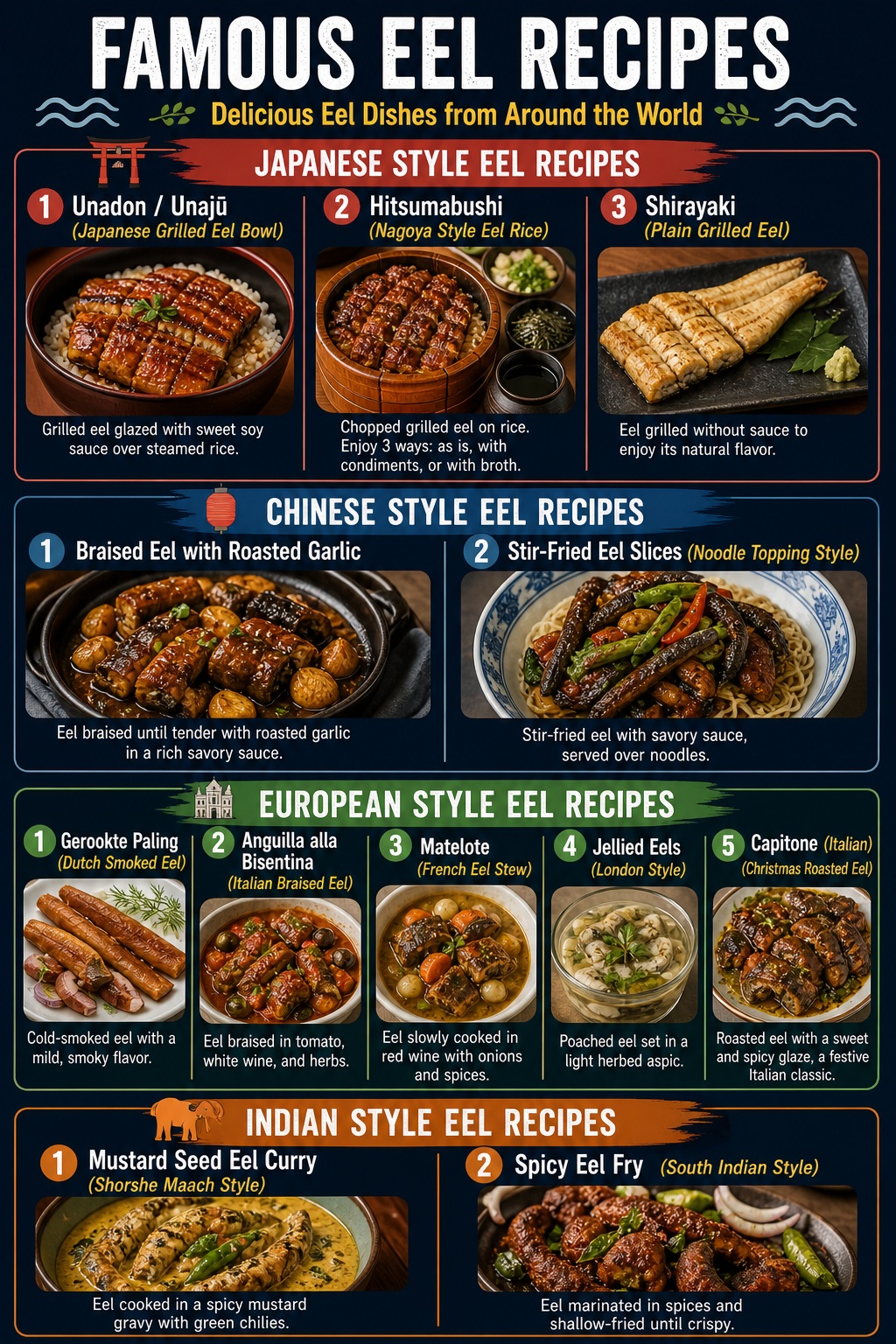
Final Summary Table: Global Eel Cooking
| Method | Dominant Flavor | Region |
| Kabayaki | Sweet, Smoky, Umami | Japan |
| Sheng Bao | Garlic, High-Heat Char | China |
| Matelote | Red Wine, Rich, Earthy | France |
| Brudet | Spicy, Acidic, Sharp | Croatia |
| Caldillo | Fresh, Herbal, Creamy | Chile |
| Shorshe Maach | Pungent, Spicy, Piquant | India |
Conclusion
Eel is a global delicacy defined by its rich, fatty texture and high nutrient density. To balance its savory depth, international recipes typically employ sweet glazes, sharp acids, or pungent spices. Japan leads with the iconic Unagi Kabayaki, while Europe offers diverse traditions ranging from London’s Jellied Eels to Belgium’s herbaceous Paling in ’t Groen.
In Italy, Capitone marks festive celebrations, and Indian Mustard Seed Curries provide a spicy, piquant profile. Whether grilled, smoked, or stewed, these dishes highlight the eel’s versatility as a premier protein that bridges the gap between delicate seafood and succulent meat.
Frequently Asked Questions
- Can you eat eel raw? No. Eel blood contains toxins that are harmful if ingested. Cooking to an internal temperature of at least 140°F (60°C) neutralizes these proteins, making the fish safe to eat.
- What is the difference between Unagi and Anago? Unagi is freshwater eel, known for being rich, fatty, and bold. Anago is saltwater eel, which is leaner, softer, and more delicate in flavor.
- Does eel taste like snake? Despite their appearance, eels are fish. Their taste is unique—often described as a cross between a firm white fish and succulent roasted pork belly, with a mild, sweet, and earthy finish.
- Is the skin edible? Absolutely. Eel skin is rich in collagen and flavor. In many recipes, it is prized for its ability to become crispy when grilled or fried.