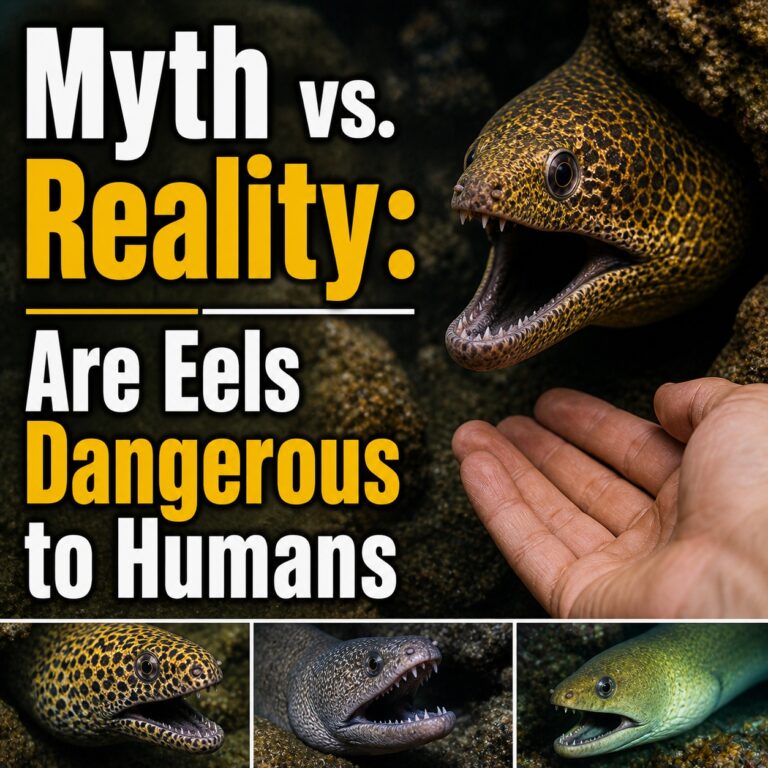
Eels are some of the most evolutionarily “bizarre” creatures on the planet. From their confusing reproductive habits to their movie-monster anatomy, they defy almost every standard rule of marine biology.
Here are some shocking facts about eel species that reveal just how mysterious and extraordinary these creatures really are:
Shocking Eel Facts & Biology
This detailed breakdown explores the biological anomalies, evolutionary mysteries, and specialized survival tactics that make the eel one of the most successful—and strange—lineages in the animal kingdom.
🏛️ Historical & Evolutionary Facts
1. Ancient Lineage: Older than the T-Rex
Eels evolved over 100 million years ago during the Late Cretaceous period. While many species went extinct during the massive K-Pg boundary event that wiped out the dinosaurs, eels survived. Their basic body plan—a streamlined, elongated form with minimal protruding fins—has remained largely unchanged because it is an evolutionary “perfect fit” for navigating narrow crevices and long-distance ocean currents.
2. The Myth of Mud: Spontaneous Generation
For over two millennia, humans were baffled by the origin of eels. Because no one had ever found eel eggs or witnessed them mating, the Greek philosopher Aristotle proposed that eels were born from “the guts of the earth” (mud) through a process called spontaneous generation. This belief persisted until the late 19th century. The truth remained hidden because eels only develop reproductive organs and lay eggs in the deep, remote reaches of the ocean at the very end of their lives.
3. The Ghost Stage: A Century of Mistaken Identity
Eel larvae, called leptocephali, are almost entirely transparent and shaped like thin, flat willow leaves. They contain a jelly-like substance and very little muscle. For over 100 years, marine biologists classified them as a completely separate species of fish. It wasn’t until a researcher kept a leptocephalus in an aquarium and watched it “shrink” and darken into a glass eel that the world realized these transparent ghosts were actually the children of the common eel.
🌊 Migratory & Life Cycle Facts
4. The Sargasso Secret: The Unseen Spawning
Freshwater eels from both North America and Europe leave their rivers and swim thousands of kilometers to a specific, weed-choked patch of the Atlantic called the Sargasso Sea. Despite decades of research and satellite tagging, no human has ever seen an adult eel spawn in the wild. We only know they go there because that is where the smallest, youngest larvae are found. The exact depth and ritual of their mating remain one of the ocean’s greatest mysteries.
5. One-Way Trip: The Final Sacrifice
Eels are semelparous, a biological term for “big bang” reproduction. Like Pacific salmon, they spend their entire lives preparing for a single reproductive event. Once they reach their spawning grounds and lay their eggs, their bodies are completely spent. Every adult eel that makes the journey across the Atlantic dies shortly after reproduction, never returning to the rivers they once called home.
6. Bone-Fueling Travel: Self-Consumption for Survival
To reach the Sargasso Sea, eels must swim for months without eating. To fuel this marathon, they undergo a process called bone resorption. Their bodies literally dissolve their own skeletons to provide the necessary minerals and energy to keep their muscles moving. By the time they arrive to spawn, they are essentially “swimming ghosts,” held together by a flexible rod called a notochord because much of their hard bone has been consumed as fuel.
🧪 Biological & Anatomical Wonders
7. Toxic Blood Chemistry: A Potent Defense
Raw eel blood contains ichthyotoxin, a protein that acts as a hemolytic agent, meaning it can break down red blood cells and cause severe muscle cramping or even death if it enters the human bloodstream. This is a rare trait among fish. Fortunately, the toxin is extremely heat-sensitive; cooking eel to standard temperatures completely denatures the protein, making the meat perfectly safe and nutritious to eat.
8. Delayed Maturity: The Eternal Youth
An eel can spend 20 years in a river in a state of “juvenile” growth. During this stage, they are sexually immature and show no outward signs of being male or female. It is only when they receive a biological signal to return to the sea that they enter the “Silver Eel” stage. At this point, their digestive tract withers away, their eyes enlarge for deep-sea vision, and their reproductive organs finally develop for the first and last time.
9. Gender Fluidity: Crowding Controls the Sex
Eels exhibit environmental sex determination. If a river or pond is overcrowded with eels, the majority will develop as males to ensure the population doesn’t outstrip its food source. In areas with low population density and abundant food, eels are more likely to become females, as females need to grow larger and store more fat to produce the millions of eggs required for the final spawning journey.
🏹 Advanced Anatomy & Senses
10. “Alien” Throat Jaws: The Pharyngeal Snap
Moray eels have a specialized feeding mechanism called pharyngeal jaws. Because they live in tight crevices, they cannot expand their mouths to “suck in” prey like other fish. Instead, they use their outer jaws to grip the target, and a second set of jaws hidden in their throat shoots forward, grabs the prey, and drags it down into the esophagus. This is a mechanical action unique among vertebrates.
How does an eel find a specific patch of the Atlantic Ocean after living in a French or American river for 20 years? They possess magnetoreception, the ability to sense Earth’s magnetic fields. Their bodies act as a biological compass, allowing them to navigate thousands of miles of trackless ocean with pinpoint accuracy to return to the exact location where they were born.
12. Sensory Trade-off: A World of Smell
While an eel’s eyesight is generally poor (especially in their river-dwelling “yellow” stage), their sense of smell is legendary. They have tubular nostrils that allow them to “taste” the water with incredible sensitivity. This allows them to hunt in total darkness, navigating through scent trails left by crabs, fish, and decaying organic matter in murky water.
⚡ Extreme Survival Traits
13. The Electric Battery: Specialized Muscle Tissue
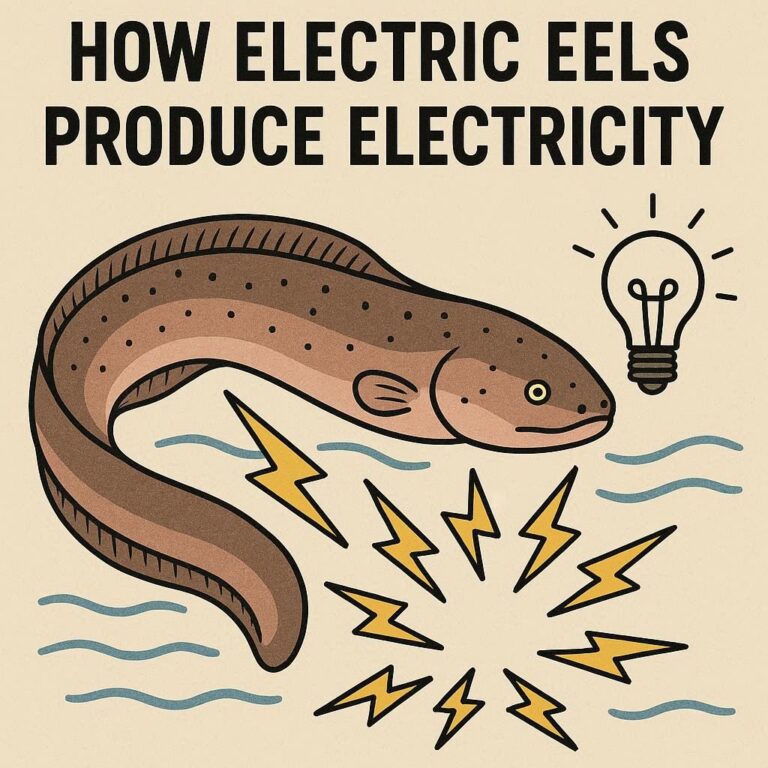
The Electric Eel (Electrophorus) is a living battery. Its electricity is generated by thousands of specialized muscle cells called electrocytes. Each cell produces a tiny charge, but when stacked together and fired simultaneously, they can generate a shock of up to 860 volts. Remarkably, 80% of the eel’s body is dedicated to this power plant, with all its vital organs (heart, liver, stomach) crammed into the front 20% of its body.
14. Skin-Breathing Land Walkers: Overland Migration
Eels are not strictly confined to the water. Through a process called cutaneous respiration, they can absorb oxygen directly through their skin. As long as their skin remains moist, they can slither across wet grass, mud, and damp rocks. This allows them to move between disconnected ponds or bypass waterfalls and dams during their migrations.
15. Extreme Longevity: Decades of Waiting
If an eel is prevented from migrating back to the ocean (for example, by being trapped in a well or landlocked pond), it can live for an incredibly long time. Without the hormonal trigger to spawn, the aging process slows down significantly. One European eel, famously known as the “Brantevik Eel” in Sweden, lived in a residential well for an estimated 155 years before passing away in 2014.
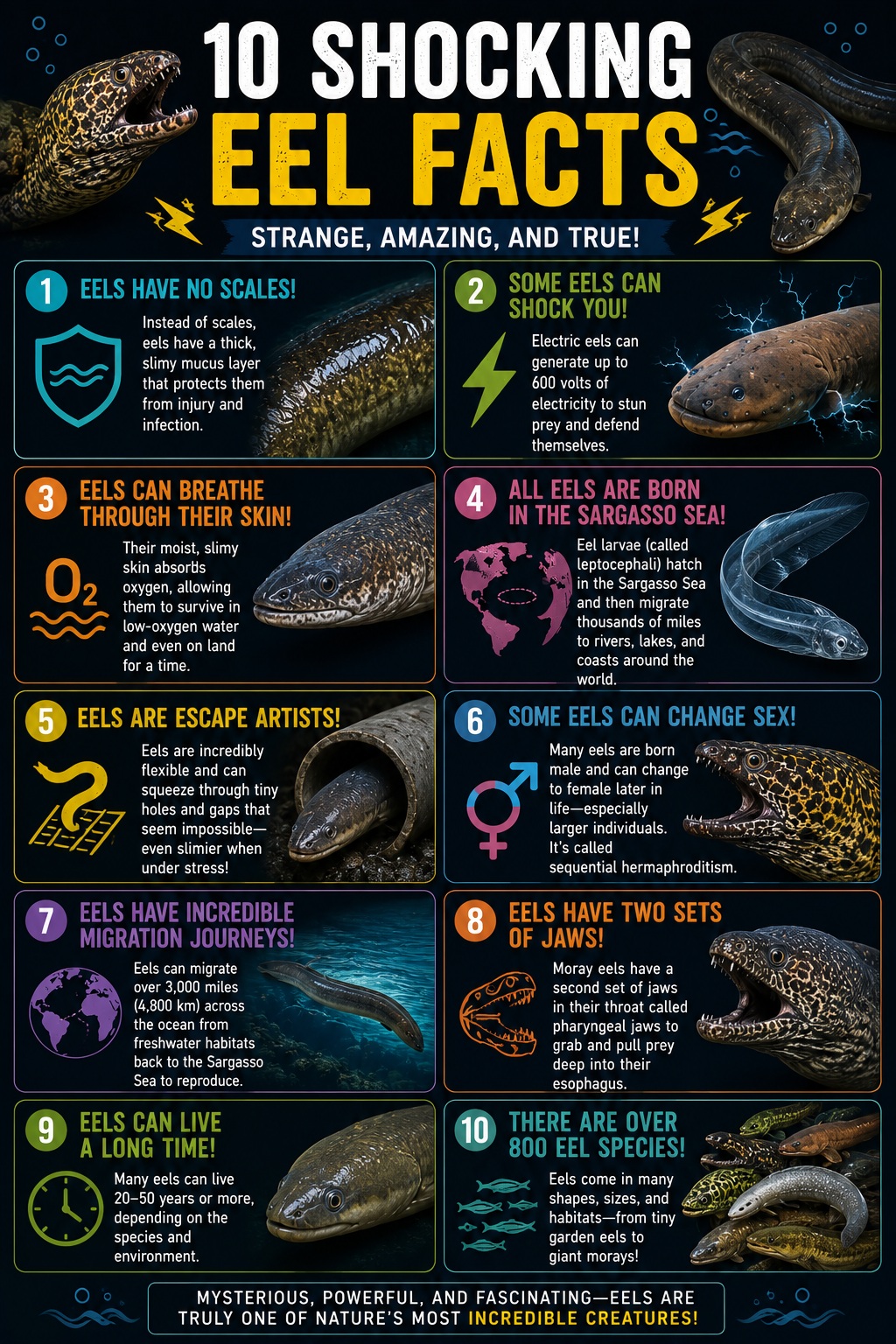
Comparison of Unique Traits Of Eels
| Species | The “Shocking” Trait | Why it Matters |
| Moray | Pharyngeal Jaws | Unique mechanical feeding system. |
| Electric | Leaping Discharge | Aggressive land-defense mechanism. |
| European | Environmental Sex | Survival based on population density. |
| Gulper | Pelican Jaw | Radical adaptation for deep-sea survival. |
| Japanese | Lunar Spawning | Precise celestial-based migration. |
Conclusion
Eels are far more than slippery fish — they are biological marvels. From alien‑style jaws and ghostly larvae to toxic blood and magnetic navigation, their adaptations defy expectations. Their mysterious migration to the Sargasso Sea remains one of science’s greatest unsolved puzzles.
Yet, despite their resilience, eels face grave threats from overfishing, habitat loss, and climate change. Protecting them is not just about saving a species — it’s about preserving one of nature’s most extraordinary stories.