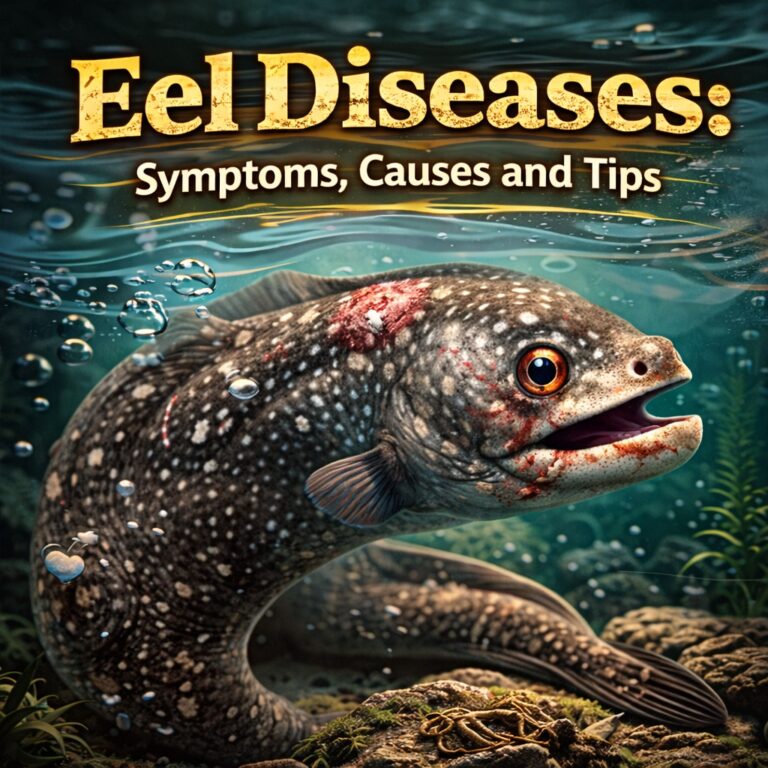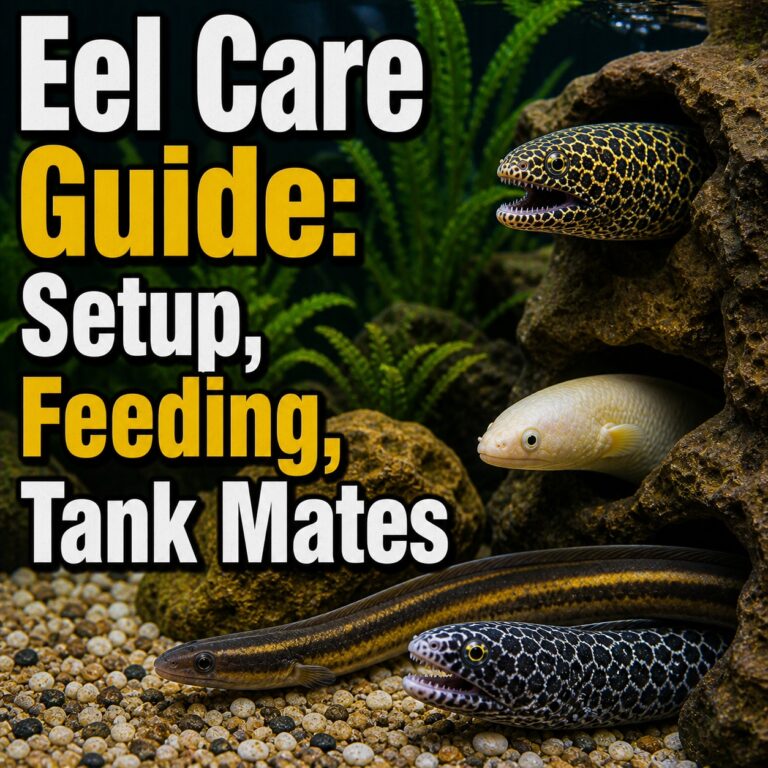
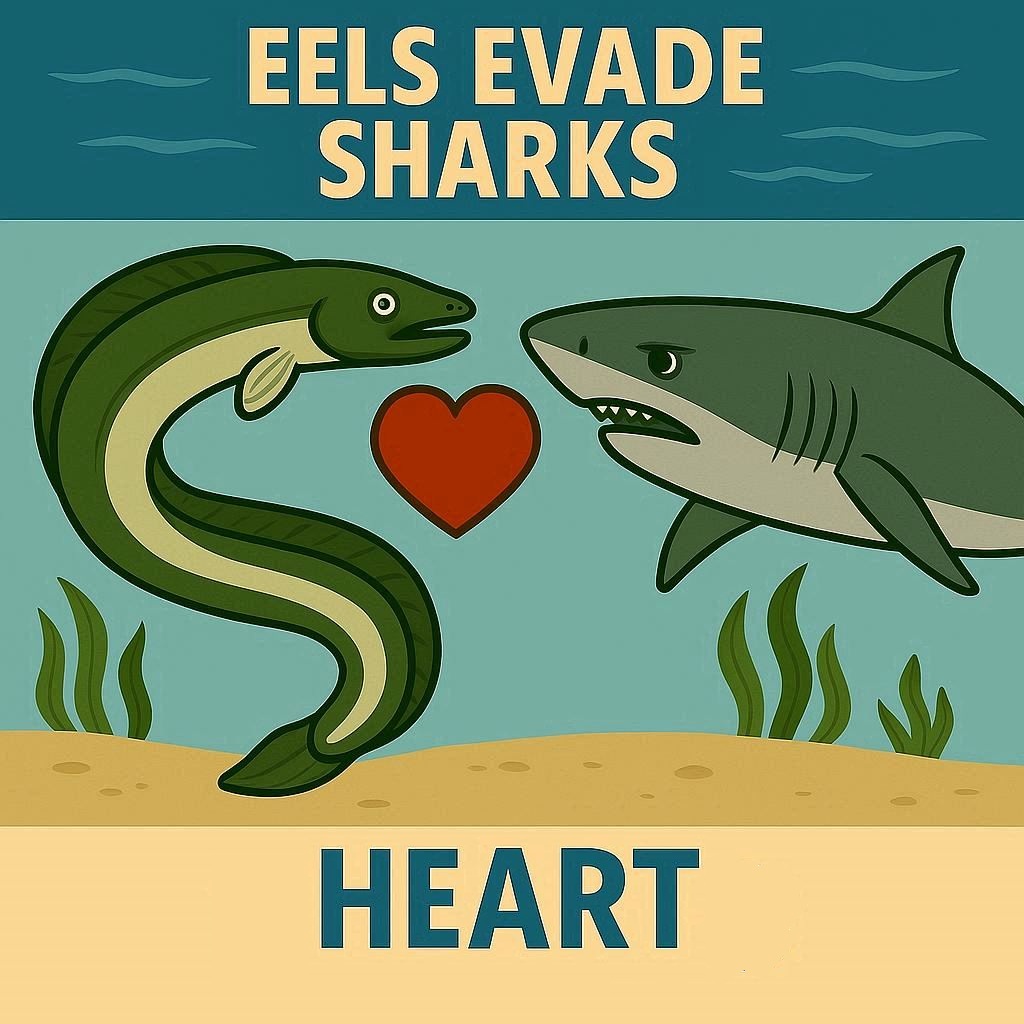
Parasitic eels living inside the heart of a shark may sound like something from a sci-fi movie, but this real and rare phenomenon gives us insight into the harsh and wild relationships found beneath the ocean’s surface. This article explains how snubnosed eels sometimes invade a shark’s heart, what scientists have learned about this strange occurrence, and why it’s a fascinating example of how animals can sometimes behave in totally unexpected ways.
Types of parasites
Parasites are broadly classified into three main groups that affect humans: protozoa (single‑celled), helminths (worms), and ectoparasites (external parasites). Each group has distinct biology, transmission routes, and health impacts.
🧬 Protozoa (Single‑celled Parasites)
- Characteristics: Microscopic, one‑celled organisms; can multiply inside humans.
- Transmission: Contaminated food/water (fecal‑oral route) or insect vectors (mosquitoes, sand flies).
- Examples:
- Plasmodium – causes malaria, the most fatal protozoan disease.
- Giardia lamblia – causes giardiasis, an intestinal infection.
- Entamoeba histolytica – causes amoebic dysentery.
- Impact: Can cause severe systemic or intestinal infections; malaria alone kills hundreds of thousands annually.
🪱 Helminths (Worm Parasites)
- Characteristics: Large, multicellular organisms visible in adult stages; cannot multiply inside humans.
- Transmission: Contaminated food, water, soil, or insect vectors.
- Main Groups:
- Flatworms (Platyhelminths): Flukes (Schistosoma) and tapeworms (Taenia).
- Roundworms (Nematodes): Ascaris lumbricoides (intestinal roundworm), hookworms, filarial worms.
- Thorny‑headed worms (Acanthocephalins): Reside in the gastrointestinal tract.
- Impact: Cause malnutrition, anemia, intestinal blockage, and tissue damage.
🪳 Ectoparasites (External Parasites)
- Characteristics: Live on the skin or hair; attach or burrow into external surfaces.
- Examples:
- Lice (Pediculus humanus) – infest hair and scalp.
- Mites (Sarcoptes scabiei) – cause scabies.
- Fleas and ticks – feed on blood, transmit diseases.
- Transmission: Direct contact or prolonged attachment to the host.
- Impact: Cause itching, skin lesions, and can transmit bacterial or viral infections.
Parasites can be grouped by whether they must live in a host or whether they can survive independently but sometimes exploit a host. This distinction is captured in the terms obligate and facultative parasites.
🧬 Obligate Parasites
- Definition: Cannot complete their life cycle without a host. They rely entirely on host resources for survival and reproduction.
- Examples:
- Plasmodium (protozoa) – causes malaria; requires both humans and mosquitoes.
- Ascaris lumbricoides (roundworm) – lives in the human intestine.
- Sarcoptes scabiei (mite) – burrows into skin to cause scabies.
- Impact: Often cause severe illness, malnutrition, or even death because they exploit host tissues directly.
🌱 Facultative Parasites
- Definition: Can live freely in the environment but may parasitize a host under certain conditions.
- Examples:
- Naegleria fowleri – usually free‑living in warm freshwater, but can invade humans and cause fatal brain infection.
- Fly larvae (myiasis) – normally develop in decaying matter but can infest wounds.
- Certain nematodes – survive in soil but opportunistically infect humans.
- Impact: Opportunistic infections, often in weakened individuals, can lead to localized or systemic disease.
🦠 Types of Shark Parasites
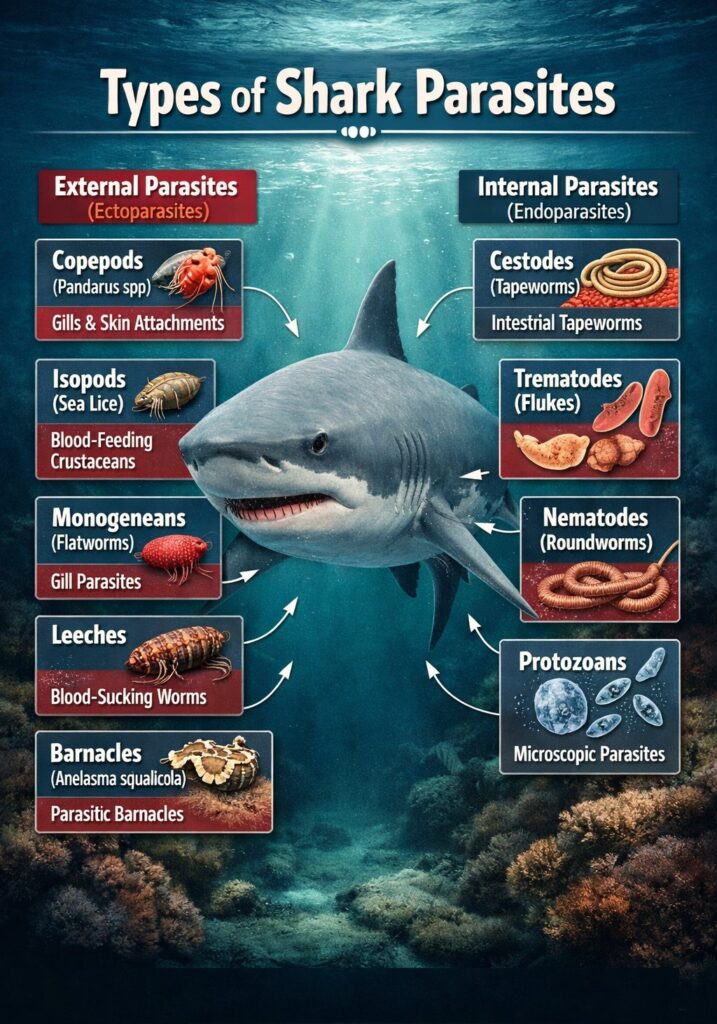
External Parasites (Ectoparasites)
- Copepods (e.g., Pandarus spp.) – Small crustaceans that attach to skin, gills, and fins using hooks or suckers.
- Isopods (sea lice) – Latch onto skin near gills, feeding on blood and tissue.
- Monogeneans (flatworms) – Attach to gills and fins, feeding on blood and tissue fluids.
- Leeches – Occasionally attach to shark skin to feed on blood.
- Barnacles (Anelasma squalicola)** – Unique parasitic barnacle that embeds into shark skin, drawing nutrients.
Internal Parasites (Endoparasites)
- Cestodes (Tapeworms) – Common in the spiral intestine, absorbing nutrients directly from the shark’s gut.
- Trematodes (Flukes) – Flatworms inhabiting digestive tract, liver, or bloodstream.
- Nematodes (Roundworms) – Found in stomach, intestines, liver, and muscle tissue.
- Protozoans – Microscopic parasites that can infect blood or tissues.
The First Discovery: Eels Inside a Shark’s Heart
In 1992, fishermen landed a large shortfin mako shark off Montauk, New York. Scientists investigating how the shark had died got a huge surprise. Hidden inside the shark’s heart were two plump, young snubnosed eels. When oceanographers cut open the heart, they found both eels had stomachs full of blood – shark blood.
This was not just a fluke. About 15 years later, another shark species, a sand tiger, was found with eels inside its heart, body cavity, and muscles. In both cases, the eels appeared healthy and alive before being recovered and refrigerated by researchers.
How Do Eels End Up Inside a Shark’s Heart?
Scientists are not totally sure how the eels manage to get deep inside the shark, but the most likely explanation is that they take advantage of sharks that are sick, injured, or dead.
If a shark is caught by a fishing hook and dangles close to the seafloor, eels might sense the opportunity. They probably enter through the gills or open wounds, then navigate to the shark’s heart by following the circulatory system.
Once inside, these parasites feed on shark blood. Evidence shows that the eels stayed alive there for long enough to fill their stomachs with clotted blood, proving they weren’t just passing through—they were well fed.
Which Eel Species Evades Shark Predators?
The main species involved is called the snubnosed eel (Simenchelys parasitica). These eels are deep-sea dwellers and can grow between 20 and 35 centimeters long. Normally, they are scavengers, feeding on dead animals they find on the seafloor. But every now and then, they have been found alive inside the body – and even the heart – of a shark.
The Eel’s Impact on Sharks
- Behavioral Changes: Infested sharks may rub against rocks or visit cleaning stations more often, reducing foraging efficiency.
- Skin & Gill Damage: Copepods and isopods cause irritation, lesions, and reduced respiratory efficiency.
- Nutrient Drain: Tapeworms and flukes absorb nutrients, lowering energy and growth rates.
- Immune Stress: Heavy infestations weaken immune systems, making sharks vulnerable to secondary infections.
Which Eeel Like creatures Evade Sharks?
The eel‑like creatures most famous for evading shark attacks are hagfish (often called “slime eels”). They aren’t true eels, but their slime defense and flexible bodies make them nearly impossible for sharks to kill.
Hagfish (Myxine spp.)
- Defense Mechanism: When bitten, hagfish instantly release slime that expands up to 10,000 times its original volume. This goo clogs shark gills, suffocating or forcing predators to retreat.
- Skin Adaptation: Loose, flexible skin makes it hard for predators to get a firm grip.
- Knot‑Tying Ability: Hagfish can tie their bodies into knots to escape bites or scrape off slime.
- Effectiveness: Underwater footage shows sharks abandoning attacks after encountering hagfish slime.
🦈 Why Sharks Fail Against Hagfish
- Slime Expansion: Microscopic protein threads in the slime unravel in seawater, creating a suffocating gel.
- Speed: Slime is deployed in less than half a second, overwhelming predators before they can finish a bite.
- Evolutionary Success: This defense has worked for 300 million years, explaining the hagfish’s survival despite lacking scales or strong muscles.
Are Eels Always Parasites?
Snubnosed eels aren’t strict parasites. Most of the time, they act as scavengers. However, in some conditions, they are “facultative parasites,” meaning they feed on living hosts only if the situation allows. They don’t need to parasitize sharks to survive, but if the chance appears, they’ll burrow in and start feeding.
Scientists call these kinds of relationships “conditional parasitism.” Studying them helps researchers understand how true parasites might have evolved, since some animals only sometimes take advantage of living hosts.
Why Is This So Interesting?
- It challenges people’s assumptions about sharks and ocean life. Sharks are often seen as the ocean’s toughest apex predators, but not even they are safe from parasites.
- The discovery shows how animals can switch roles depending on their environment—sometimes scavenger, sometimes parasite.
- Researchers are interested in these rare events because they could teach us how some species develop a parasitic lifestyle over time.
What Do These Eels Tell Us About the Ocean?
The ocean is full of creatures with complex relationships. Most animals try to maximize their chances of survival and will change behavior if needed. The snubnosed eel is a great example — it shows how creative and opportunistic life can be, especially in tough environments like the deep ocean floor.
How Do Scientists Study This?
Scientists rely on rare finds: dissected sharks, sometimes brought in by fishermen, sometimes found dead. They look for signs like damage in the organs, blood in the stomachs of the eels, and differences between affected and healthy sharks.
There aren’t that many cases in the records, but when one appears, researchers examine the shark’s environment and try to guess how the eels got inside. Sometimes, the sharks were caught on longline hooks, which may have made them easy targets for hungry eels lurking near the seafloor.
Conclusion
Parasitic eels found inside the heart of a shark are rare, but they reveal a lot about nature’s creativity. These eels are not always parasites, but they take advantage of opportunities—sometimes living inside sharks’ hearts and feeding on blood. Their strange behavior helps scientists learn about marine biology, parasitism, and the ever-surprising relationships between ocean creatures. Even the mightiest animals can sometimes become victims in the struggle for survival.
Frequently Asked Questions
What kind of eel was found in shark hearts?
Snubnosed eel, scientifically called Simenchelys parasitica.
How do these eels get into the heart?
Scientists think they enter through the gills or mouth, then burrow into blood vessels and move into the heart.
Are these eels always parasites?
No, they usually eat dead animals on the ocean floor but turn into parasites when it helps them survive.
Does the eel kill the shark?
The eels can damage the heart and may contribute to the death of weakened or dying sharks.
How big are the eels found in shark hearts?
Around 21 to 24 centimeters (about 8 to 9 inches) long.
What did the scientists find inside the eels?
Their stomachs were filled with shark blood and no other food or parasites.
How often are eels found inside sharks?
It’s very rare—only a few cases have ever been recorded.
Why do scientists study these parasites?
To better understand ocean ecosystems and the evolution of parasitism.
Do healthy sharks get infested?
Probably not; most cases involve sharks that are already injured, dying, or dead.
Can these eels harm humans?
No, snubnosed eels live deep in the ocean and don’t interact with people.
References
- https://www.sciencealert.com/parasitic-eels-found-inside-the-heart-of-a-shark-and-we-will-never-unsee-the-pics
- http://coo.fieldofscience.com/2017/04/a-parasitic-eel.html
- https://gigazine.net/gsc_news/en/20230627-parasitic-eels-heart-shark/
- https://www.sciencedirect.com/science/article/abs/pii/S1546509817300328