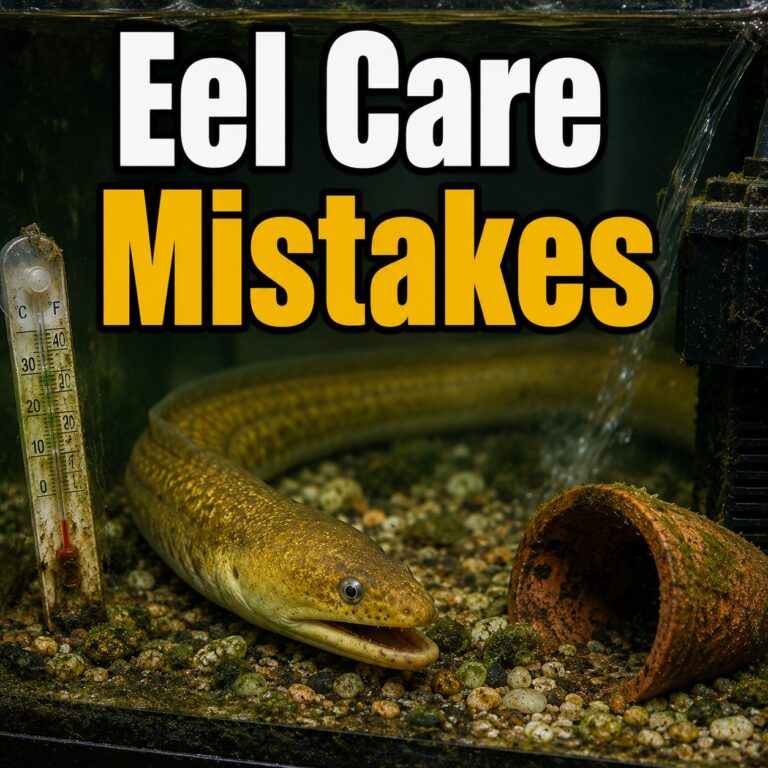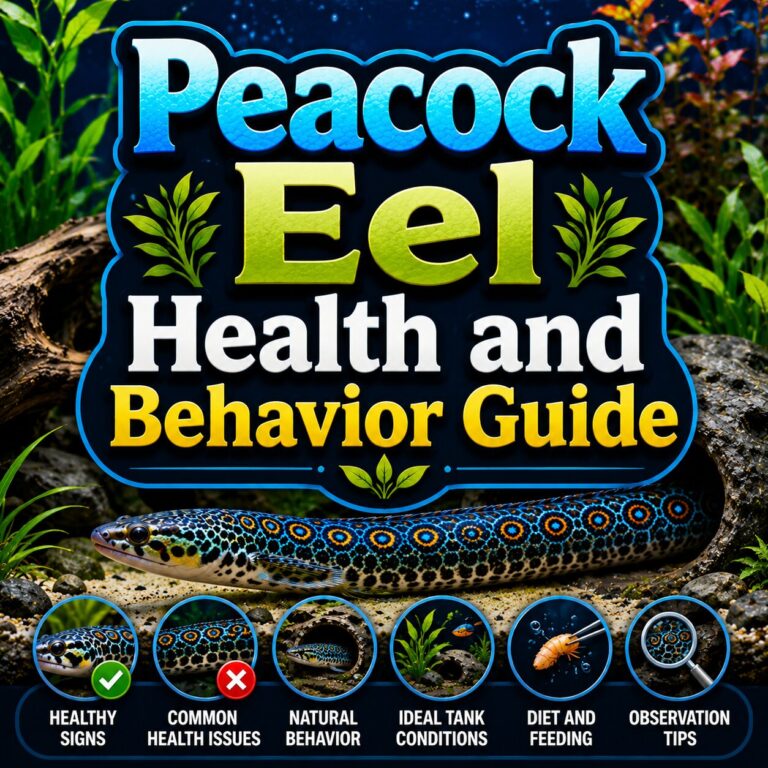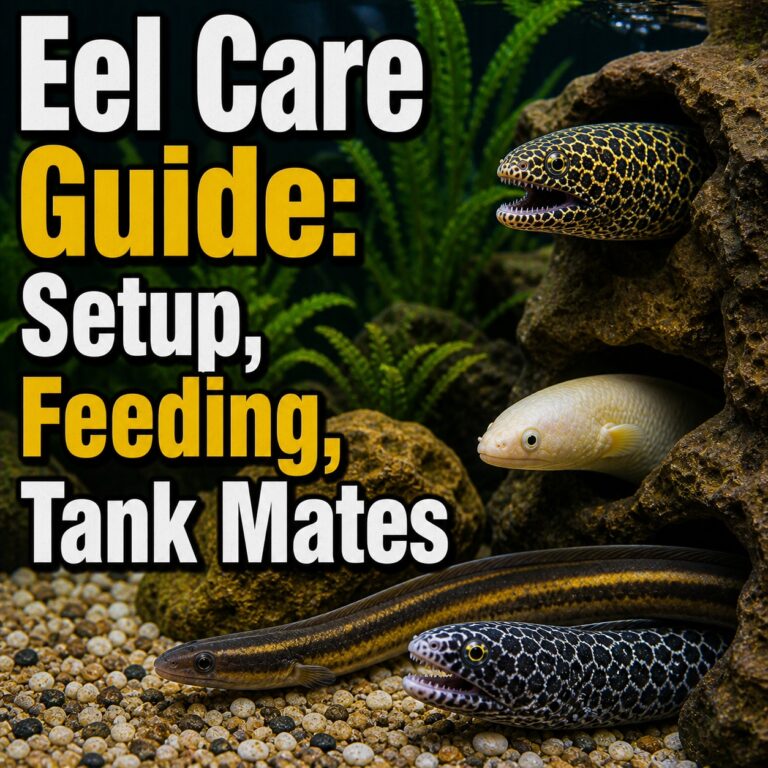
If you have ever spent more than five minutes in the company of an eel enthusiast, you have likely heard “The Story.” It usually involves a midnight trip to the kitchen, a mysterious wet sensation underfoot, and a frantic rescue mission involving a slippery, panicked fish in the middle of the living room carpet.
Why Eels Are the Ultimate Aquarium Houdinis
Eels are arguably the most challenging fish to keep contained in the history of the hobby. Their unique anatomy, combined with a biological drive to migrate, makes them the ultimate escape artists. In this comprehensive guide, we will explore the “why” behind their wanderlust and provide actionable, budget-friendly strategies to ensure your eel stays where it belongs—inside the tank.
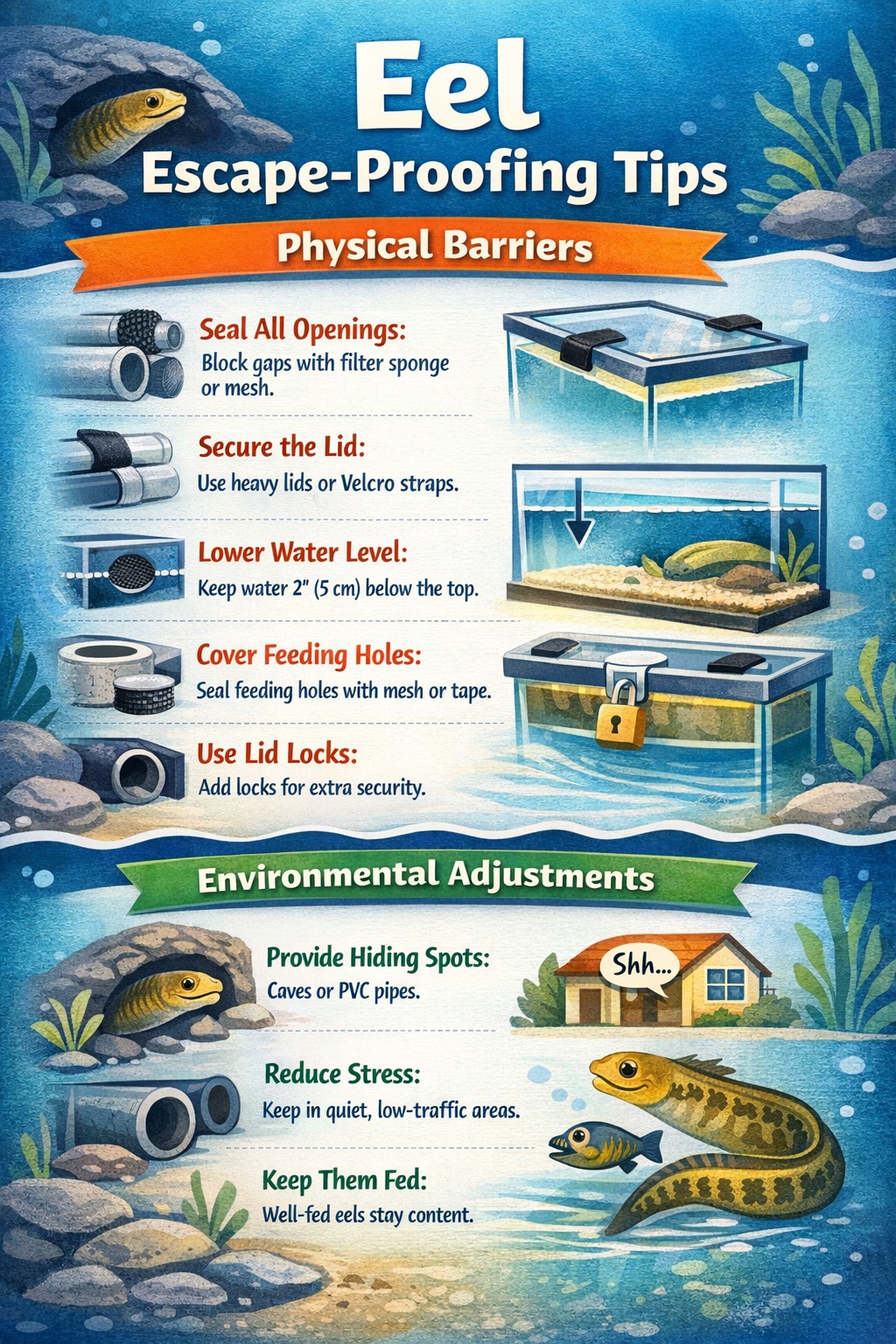
9 Essential Eel Escape‑Proofing Techniques
Physical Barriers
- Seal All Openings: Block gaps around pipes and cables with filter sponge or mesh.
- Secure the Lid: Use heavy glass covers or lock lids with Velcro tape/clamps.
- Extra Backing: Add a strip of glass/acrylic with silicone to overlap the rear rim.
- Lower Water Levels: Keep water at least 5 cm (2 inches) below the top edge.
- Cover Feeding Holes: Seal with mesh or tape when not in use.
- Security Locks: For strong morays, add small locks or clips to lids.
Environmental Adjustments
- Provide Hiding Spots: Caves, PVC pipes, or rock structures reduce stress.
- Reduce Stress: Place tanks in low‑traffic areas; avoid sudden lighting changes.
- Keep Them Fed: Well‑fed eels are less likely to roam.
Can Eels Live in Tanks?
Before we dive into the mechanics of escape-proofing, we must address the fundamental question: Can eels live in tanks?
The answer is yes, but with a significant caveat. Eels are not “set it and forget it” fish. Unlike a goldfish or a school of tetras, eels have specific environmental and security requirements.
Space and Water Parameters
Most eels kept in the hobby, such as the Snowflake Moray or the Fire Eel, require substantial space. A cramped eel is a stressed eel, and a stressed eel is much more likely to look for an exit. Furthermore, eels are high-waste producers. Their thick slime coats and carnivorous diets mean you need over-sized filtration to keep the water quality pristine.
Environmental Enrichment
Eels live in tanks successfully when they feel secure. This means providing plenty of “bolt holes”—PVC pipes, rock caves, or hollow logs where they can hide their entire body. When an eel feels exposed, its first instinct is to find a way out of that environment to find a safer one.
Do Eels Escape Tanks? (The Short, Terrifying Answer)
Yes. Absolutely. Without question.
If there is a hole in your tank setup the size of a dime, a three-foot eel will find a way to compress its body and squeeze through it. and lid is light, they will push it open. finally, If there is a filter intake pipe, they will climb it.
Why Eels Are Built for the Escape
- Biological Impulse: Many eels are catadromous or anadromous, meaning they naturally migrate between fresh and salt water to breed. This “migratory restlessness” can trigger a sudden, intense urge to move, even in a home aquarium.
- Skin Breathing: Many species, like the European Eel or the Cuchia, can absorb oxygen through their skin. This allows them to survive out of water for surprisingly long periods, giving them the confidence to “trek” across dry land (or your floor).
- Muscular Power: Eels are essentially one long muscle. They can generate significant force, allowing them to lift unweighted glass lids or displace plastic hoods.
Why You Need a Lid! (The Infamous Eel Escape Attempt)
To the uninitiated, a lid might seem like an optional accessory or a way to prevent evaporation. To an eel keeper, the lid is a life-support system.
A Case Study in Houdini-ism
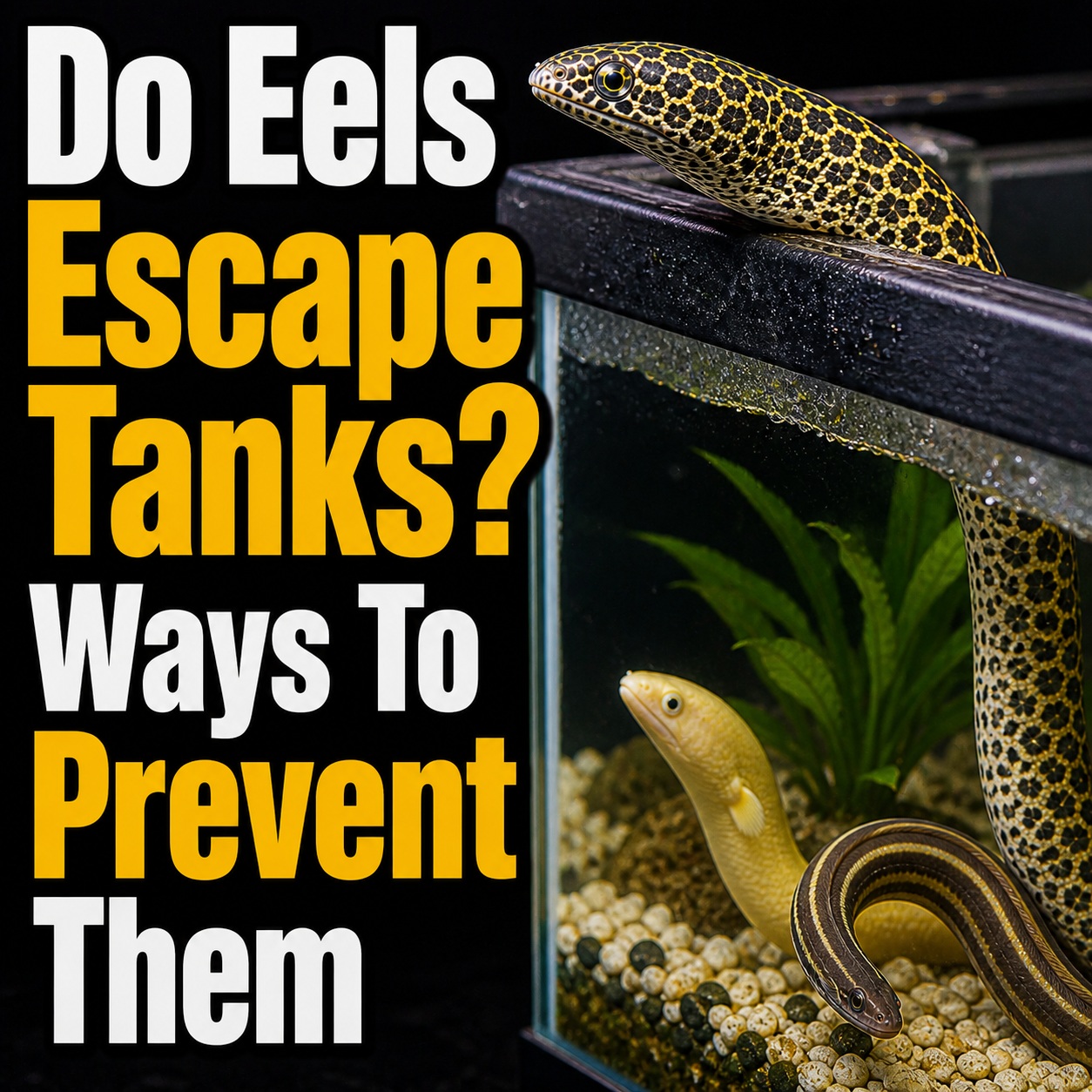
Consider the typical “Eel Escape Attempt.” An owner leaves a small 1-inch gap at the back of the tank to accommodate a heater cord. During the night, the eel—fueled by curiosity or a barometric pressure change—begins “wall-walking.” It pushes its nose into every corner of the upper rim.
When it finds that 1-inch gap, it doesn’t just look at it. It wedges its pointed snout in and uses its incredible muscular strength to lever its body through. Because eels are covered in a thick, lubricating slime, they can slide through gaps that seem physically impossible.
The Result: Without a lid, or with an unfastened one, you are not asking if your eel will escape, but when. An escaped eel dries out quickly, as the slime coat that protects them also picks up carpet fibers, dust, and hair, effectively suffocating the fish.
How Do You Contain Your Eels? Pro Strategies
Containing an eel requires a multi-layered approach. You cannot rely on a single defense. Here is how professional aquarists keep their prize specimens secure.
1. The Weighted Glass Canopy
Standard plastic hoods are useless against a determined Moray or Fire Eel. They are too light and have too many built-in “punch-out” holes for wires. A heavy glass canopy is the first line of defense. However, even glass can be pushed up. Many keepers use aquarium-safe weights (like bags of smooth river stones) on the corners of the lids.
2. The Screen Method (DIY)
For tanks with high oxygen needs, a glass lid might restrict airflow too much. In these cases, a clear mesh screen kit is used. The key here is the mesh size; it must be small enough that the eel’s head cannot fit through. If the head fits, the body follows.
3. Closing the “Cord Gaps”
The most common escape point is the “plastic strip” at the back of glass lids designed to be cut for filters and heaters.
- The Fix: Cut the plastic exactly to the size of the wire. If there is any leftover space, fill it with aquarium-safe sponge or silicone.
Escape-Proofing Ideas for Eels: Advanced Tactics
If you are keeping “high-risk” species like the Spiny Eel or larger Morays, you need to think like a structural engineer.
The PVC “Internal Rim”
Some keepers install a “lip” around the inside top edge of the tank using strips of glass or acrylic. When the eel tries to swim up the glass to find an exit, it hits this horizontal ceiling and is forced back down into the water.
Filter Intake and Outtake Security
Eels are fascinated by flowing water. They will often try to swim into the filter outtake or climb up a “Hang-on-Back” (HOB) filter.
- The Fix: Wrap coarse aquarium sponge around intake strainers. For outtakes, ensure the lid of the filter itself is taped or weighted down, as eels have been known to end up inside the filter media chamber.
Substrate and Hiding Spots
Believe it or not, the best escape-proofing starts at the bottom of the tank. If an eel has a dedicated PVC pipe network under the sand where it feels 100% safe, its urge to “explore” the surface decreases significantly. A secure eel is a stay-at-home eel.
How to Make an Aquarium Escape-Proof for Under $10
You don’t need a custom-built $500 lid to save your eel’s life. Here are three DIY hacks that cost less than a sandwich.
The “Sponge Plug” Method ($2)
Buy a block of coarse pre-filter sponge. Cut small squares and wedges. Shove these into every single gap where a wire or tube enters the tank. The sponge is breathable, water-resistant, and provides enough physical resistance to deter an eel snout.
The “Velcro Security” Hack ($5)
Go to any hardware store and buy heavy-duty, adhesive-backed Velcro strips.
- Clean the outer rim of your tank and the top of your lid with rubbing alcohol.
- Apply the Velcro strips to the corners.
- When the lid is closed, “lock” it down with the Velcro. An eel can push with a few pounds of force, but it cannot rip apart industrial-strength Velcro from the inside.
The Plastic Craft Mesh Shield ($3)
At craft stores, you can buy sheets of plastic “canvas” used for needlepoint.
- Cut the mesh to fit the gaps around your HOB filter.
- Secure it with plastic zip ties. This allows for perfect aeration and water flow while creating a physical grate that no eel can bypass.
Critical Checkpoints: Your Escape-Proof Audit
Before you go to bed tonight, run this 5-point audit on your eel tank:
- The Snout Test: Is there any hole larger than the diameter of the eel’s head? (If yes, plug it).
- The Weight Test: Can I lift the lid with one finger? (If yes, your eel can probably lift it too. Add weights or Velcro).
- The Filter Check: Is the gap where the filter meets the tank sealed? (This is the #1 escape route).
- The Water Level: Is your water level to the very brim? Lowering the water level by 2-3 inches can make it slightly harder for an eel to reach the “lip” of the tank, giving you a buffer zone.
- The Airline Check: Eels will climb airline tubing like a rope. Ensure where the tube exits the tank is tightly sealed with a sponge plug.
Summary and Conclusion
Keeping eels is one of the most rewarding experiences in the aquarium hobby. They are intelligent, long-lived, and possess a prehistoric beauty that few other fish can match. However, with that beauty comes the responsibility of understanding their “restless” nature.
Do eels escape tanks? Yes, they are biologically programmed to seek out new horizons. But by implementing a weighted lid, sealing cord gaps with sponges, and using Velcro locks, you can turn your aquarium from a temporary holding cell into a secure, lifelong home.
You don’t need a massive budget to protect your eel; you just need to be more meticulous than they are. For under $10 and an hour of your time, you can ensure that the only place you ever see your eel is through the glass, and never on your living room floor.