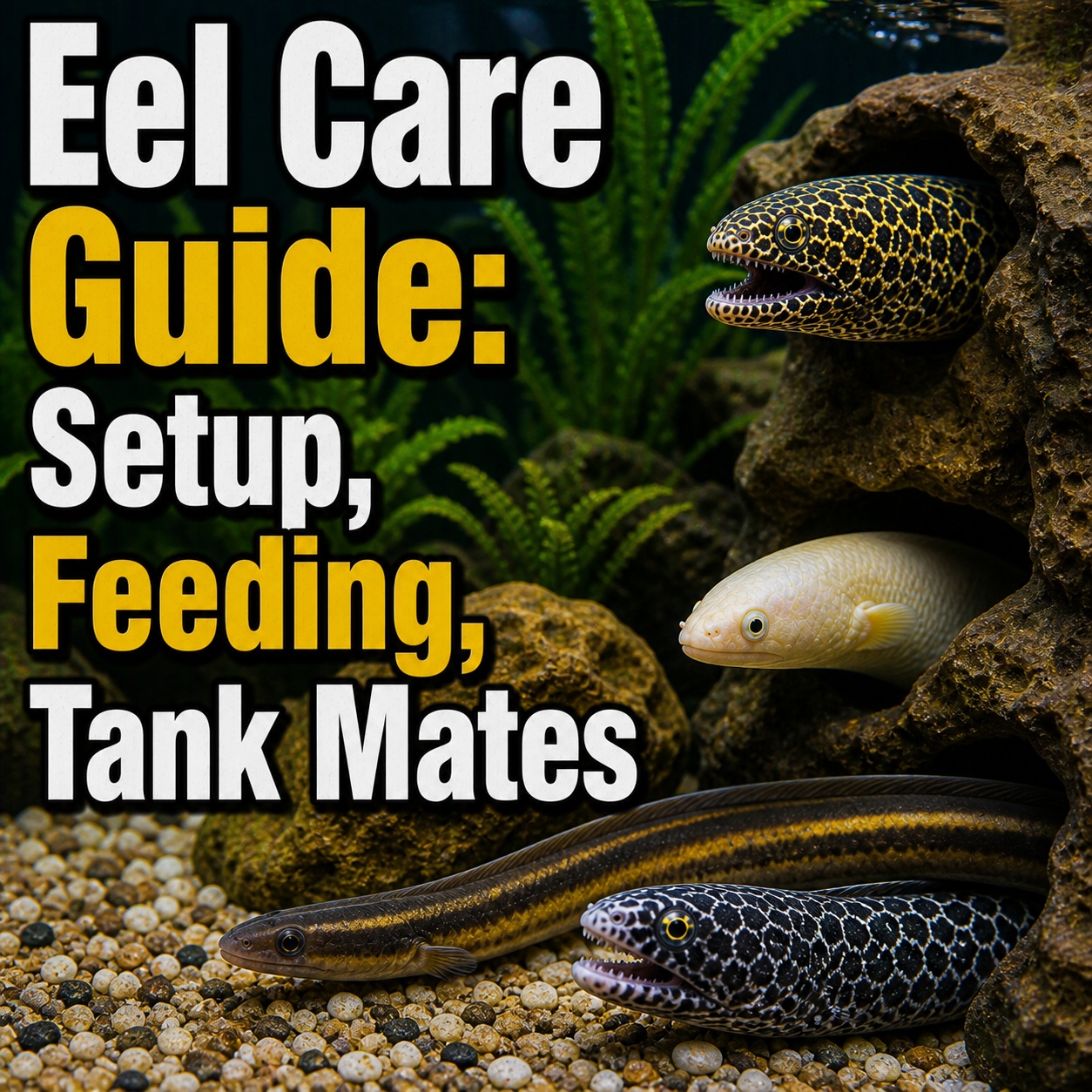
Eels are among the most captivating aquarium inhabitants. Their elongated bodies, nocturnal habits, and mysterious personalities make them stand out from typical community fish. However, keeping eels requires specialized knowledge. They are escape artists, carnivorous feeders, and often grow larger than expected. This guide explores both freshwater and saltwater species, offering detailed advice on aquarium setup, feeding routines, and tank mate compatibility.
Aquarium Setup: The Foundations of an Eel Sanctuary
An eel’s environment is its fortress. In the wild, they spend the majority of their lives tucked into crevices. If your tank does not provide that same sense of security, the eel will become stressed, aggressive, or—most commonly—try to escape.
1. Choosing the Right Tank Size
Eels vary wildly in size. A “one size fits all” approach will lead to disaster.
- Small Species (e.g., Snowflake, Chain, Golden Dwarf): A minimum of 50 to 75 gallons. While they are relatively small, they produce a significant amount of waste.
- Medium Species (e.g., Zebra, Zebra Moray): A minimum of 100 to 125 gallons. These eels are thick-bodied and require more swimming room.
- Large Species (e.g., Green Moray, Tessalata): These require 180 to 300+ gallons. Honestly, most large morays are best left to public aquariums unless you have a custom-built system.
2. The “Eel-Proof” Lid: Non-Negotiable
Eels are the legendary escape artists of the fish world. They can squeeze through any gap large enough for their head.
- Weighted Lids: Use a heavy glass or mesh lid. If it is light, a large eel can literally “push” its way out.
- Gap Sealing: Use pond foam or aquarium-safe tape to seal the gaps around heater cords, filter intakes, and plumbing.
- The Overflow Rule: If you have a sump, ensure the overflow box has a guard. Eels love to slide down into sumps, where they can get caught in return pumps.
3. Aquascaping: Building the Labyrinth
An eel without a cave is a miserable eel.
- PVC Pipe Networks: One of the best secrets for eel keeping is burying PVC pipes under the sand or behind live rock. Use pipes slightly wider than the eel’s body. This gives them a “permanent” burrow that won’t collapse.
- Stable Rockwork: Eels are incredibly strong. They will wedge themselves into cracks and push. If your rocks are not epoxied or securely stacked, the eel can cause a rockslide, potentially cracking the glass or crushing itself.
4. Filtration and Water Quality
Eels are messy eaters and produce high amounts of ammonia and nitrate.
- Protein Skimmers: An absolute necessity. You need a skimmer rated for at least double your tank’s actual volume to handle the bioload.
- High Flow: While eels live in holes, they need high oxygen levels. Use powerheads to keep the water moving, which also helps blow waste into the filtration system.
- Water Parameters:
- Salinity: 1.024–1.026 sg
- Temperature: 76°F–80°F (24°C–27°C)
- Nitrates: Keep below 20 ppm (eels are more nitrate-tolerant than corals, but high levels cause long-term health issues).
Feeding and Nutrition: The Art of the Targeted Strike
Feeding an eel is the highlight of ownership, but it requires caution and a balanced diet.
What to Feed
Never rely on “feeder fish” from a pet store. They are often nutrient-poor and carry diseases. Instead, use high-quality frozen seafood:
- For Pebble-Toothed Eels (Snowflake, Zebra): Raw shrimp (with shell on for calcium), crab meat, and clams.
- For Needle-Toothed Eels (Dragon, Viper, Golden): Silversides, squid, and chunks of white fish (cod or tilapia).
- Vitamin Supplements: Soak food in a liquid multi-vitamin (like Selcon) once a week to ensure they get the micronutrients missing from frozen food.
Feeding Tools and Techniques
Rule Number One: Never feed an eel with your bare hands. Even the “docile” ones have poor eyesight and high feeding drives.
- Feeding Tongs: Use long surgical hemostats or plastic tongs.
- The Schedule: Juveniles should be fed every 2–3 days. Mature adults only need to eat 1–2 times per week. Overfeeding is the leading cause of premature death in captive eels, as it leads to fatty liver disease.
Handling a “Hunger Strike”
It is very common for a newly introduced eel to refuse food for 1–2 weeks. Do not panic. In the wild, they can go a month without eating.
- The Trigger: Try feeding at night with the lights off using a piece of highly “scented” food like raw squid.
- Water Quality: If a long-term resident stops eating, check your nitrates and oxygen levels immediately.
Tank Mates: Who Survives with a Serpent?
Choosing tank mates for an eel is a game of “Size and Temperament.”
1. The General Rule
If a fish can fit in the eel’s mouth, it will eventually end up there. This is true even for “crustacean-eating” eels like the Snowflake. They are opportunistic predators.
2. Compatible Tank Mates
- Large Tangs: Yellow, Sailfin, or Hippo tangs are usually too fast and too large to be bothered.
- Large Angels: Emperor or Blueface angels can hold their own.
- Triggerfish: These are excellent companions but can sometimes be too aggressive, nipping at the eel’s fins. Monitor them closely.
- Groupers: Similar in temperament and size, making them natural roommates.
- Lionfish: Generally ignored by eels because of their venomous spines, but ensure the Lionfish is large enough not to be swallowed whole.
3. Species to Avoid
- Small Wrasses, Gobies, and Blennies: These are expensive snacks.
- Small Ornamental Shrimp: Unless you are keeping a Zebra Moray (which is generally better with shrimp), most eels will hunt down Peppermint or Skunk Cleaner shrimp.
- Other Eels: Only attempt multiple eels in very large systems (180+ gallons) and ensure they are of similar size. Provide at least three caves for every two eels to prevent territorial disputes.
Health and Disease Management
Eels are remarkably hardy and are resistant to common parasites like Ich (Cryptocaryon irritans) due to their thick mucus coat. However, they are not invincible.
1. Copper Sensitivity
CRITICAL: Eels are highly sensitive to copper-based medications. If you have a fish in the tank with Ich, do not treat the main display with copper. Move the sick fish to a quarantine tank. Copper can easily kill an eel by damaging its nervous system.
2. Bacterial Infections
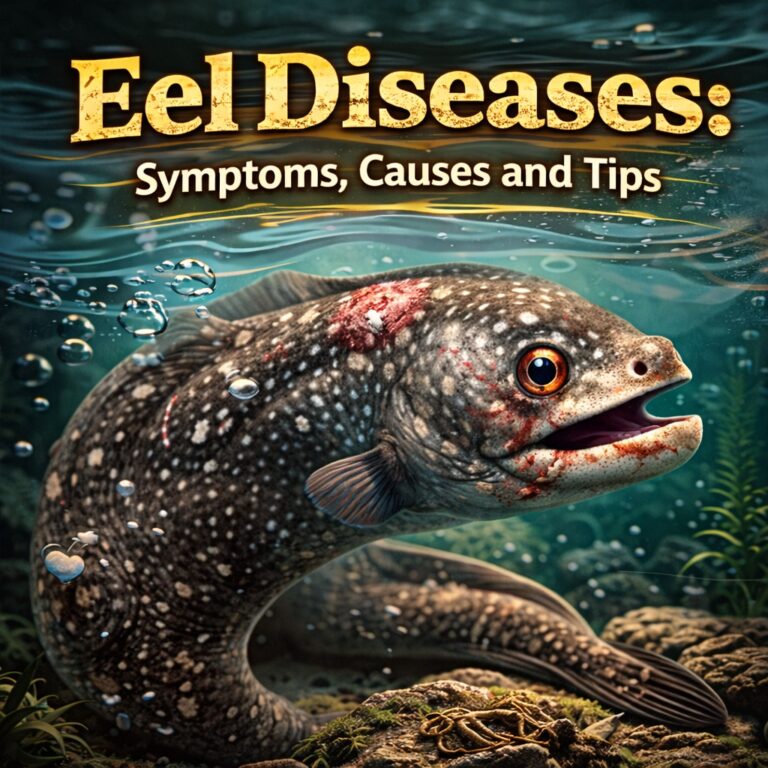
Red sores or white “fuzz” on the skin usually indicate a bacterial infection caused by poor water quality or a scrape from sharp rocks.
- The Fix: Increase water changes and ensure the eel is eating vitamin-enriched food. Most minor scrapes heal on their own if the water is clean.
Choosing the Right Eel for You
Before buying, match the eel to your experience level and tank size.
| Eel Species | Max Size | Temperament | Tank Size | Best For |
| Snowflake Moray | 24″ | Semi-Aggressive | 50-75g | Beginners |
| Golden Dwarf | 10″ | Peaceful | 30g | Nano Reefs |
| Zebra Moray | 40″ | Docile | 100g+ | Community Tanks |
| Dragon Moray | 36″ | Aggressive | 125g+ | Advanced/Specimen |
Summary Checklist for Success
- Lid Check: Is it weighted? Are the cord gaps sealed?
- Nitrate Check: Are you prepared for 20-30% weekly water changes?
- Feeding Check: Do you have a dedicated pair of tongs and a source of raw seafood?
- Aquascape Check: Are the rocks secure? Is there a PVC pipe for the eel to hide in?
Keeping an eel is a commitment to a long-lived, intelligent animal. They will learn to recognize you when you approach the tank and can become the centerpiece of your home. By respecting their predatory nature and providing a secure, clean environment, you can enjoy the unique presence of these marine serpents for decades.
🐠 Freshwater Eel Care
Aquarium Setup
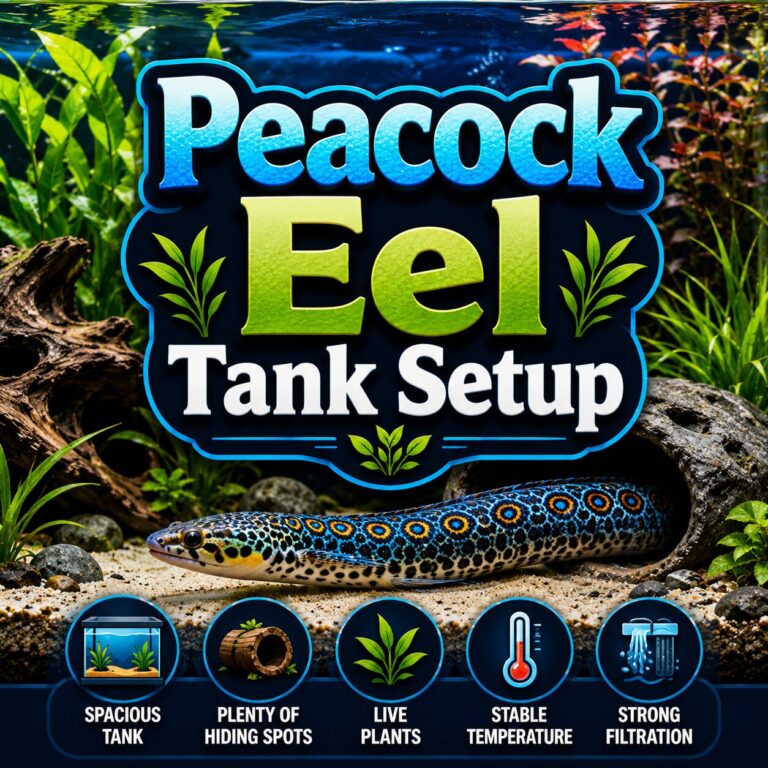
Freshwater eels thrive in tanks that mimic their natural river or lake environments.
- Tank Size:
- Small species (Peacock, Half‑Banded Spiny Eel): 30–40 gallons.
- Larger species (Fire, Tire Track Eels): 75–125+ gallons.
- Water Parameters:
- Temperature: 72–82°F (22–28°C).
- pH: 6.5–7.5.
- Soft, slightly acidic water preferred.
- Substrate & Décor:
- Fine sand for burrowing.
- Driftwood, caves, PVC pipes for hiding.
- Secure lids to prevent escapes.
- Filtration:
- Strong filtration with moderate flow.
- Weekly water changes (20–25%).
Feeding
Freshwater eels are carnivores.
- Diet: Worms, shrimp, krill, small fish, insect larvae.
- Feeding Schedule: Once daily or every other day, preferably at night.
- Tips:
- Use feeding tongs near hiding spots.
- Avoid overfeeding to prevent water pollution.
Tank Mates
- Compatible: Larger barbs, cichlids, gouramis, bichirs, ropefish.
- Avoid: Small fish (tetras, guppies) — likely to be eaten.
- Behavior: Semi‑aggressive, territorial as they mature.
🌊 Saltwater Eel Care
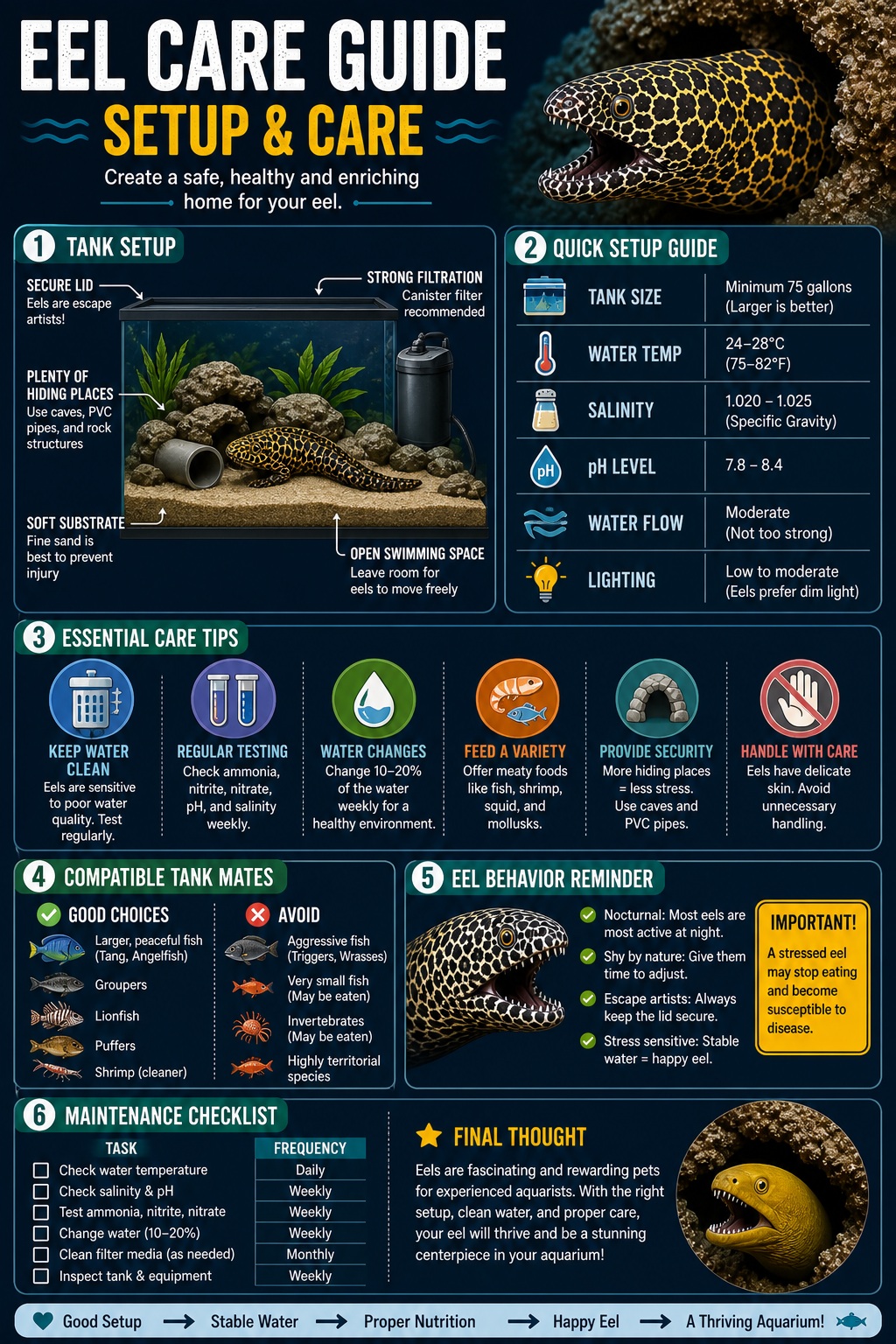
Aquarium Setup
Saltwater eels, especially morays, require reef‑like environments.
- Tank Size:
- Snowflake Moray: 75 gallons.
- Zebra Moray: 125+ gallons.
- Ribbon Eel: 100+ gallons with pristine water.
- Water Parameters:
- Temperature: 74–80°F (23–27°C).
- Salinity: 1.020–1.025 specific gravity.
- pH: 8.1–8.4.
- Décor:
- Live rock with caves and crevices.
- Secure lids — morays are notorious escape artists.
- Filtration:
- Protein skimmers essential.
- Strong biological filtration.
Feeding
Saltwater eels are carnivorous predators.
- Diet: Squid, shrimp, fish fillets, crabs.
- Feeding Schedule: 2–3 times per week.
- Tips:
- Train to accept frozen foods.
- Use feeding sticks to avoid bites.
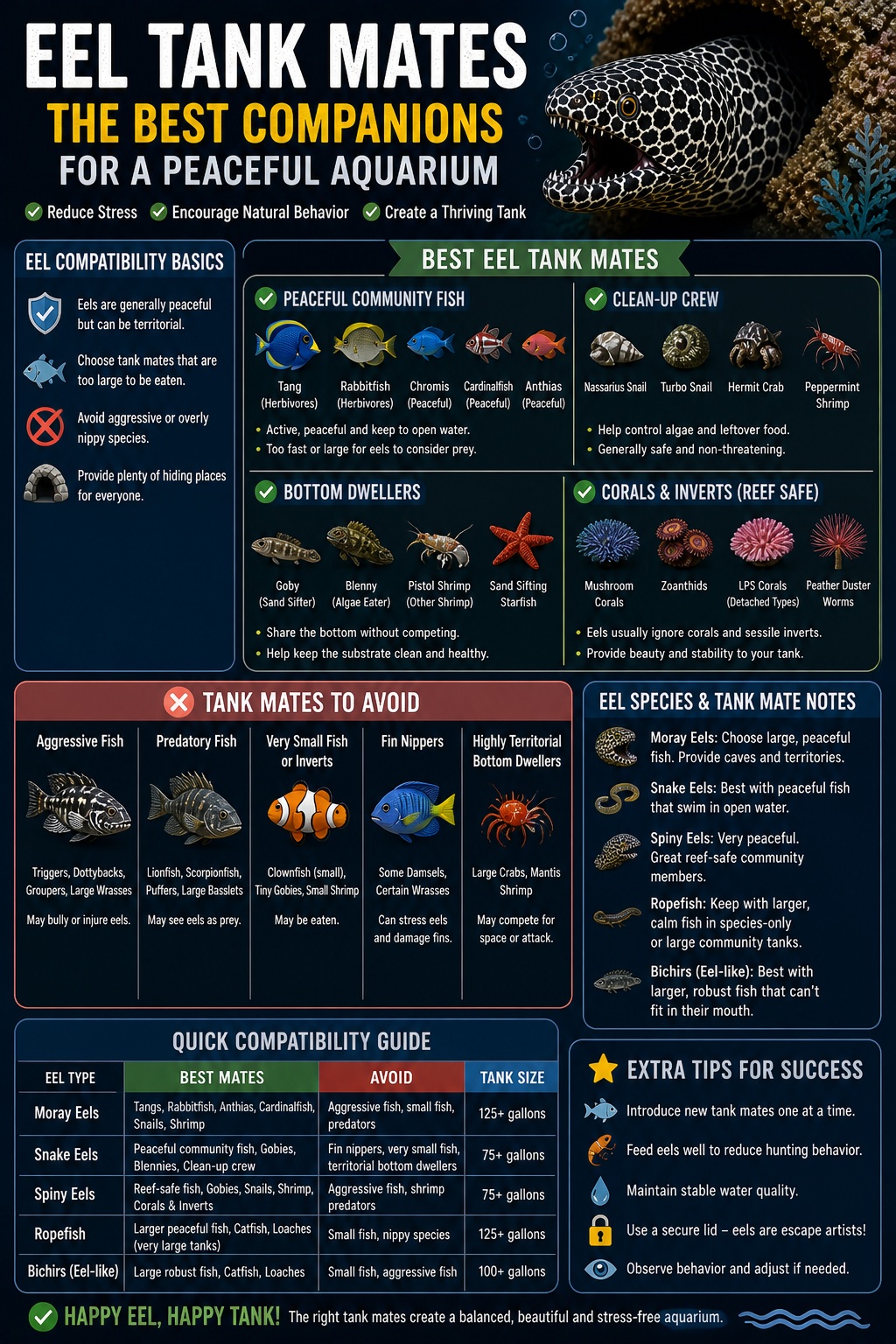
Tank Mates
- Compatible: Larger marine fish (groupers, triggers, tangs).
- Avoid: Small reef fish, ornamental shrimp, crabs.
- Behavior: Generally docile toward fish but predatory toward crustaceans.
🧑🤝🧑 Species Profiles
Freshwater
- Fire Eel: Striking red stripes, grows to 3 feet, semi‑aggressive.
- Tire Track Eel: Unique patterned markings, 30 inches, shy burrower.
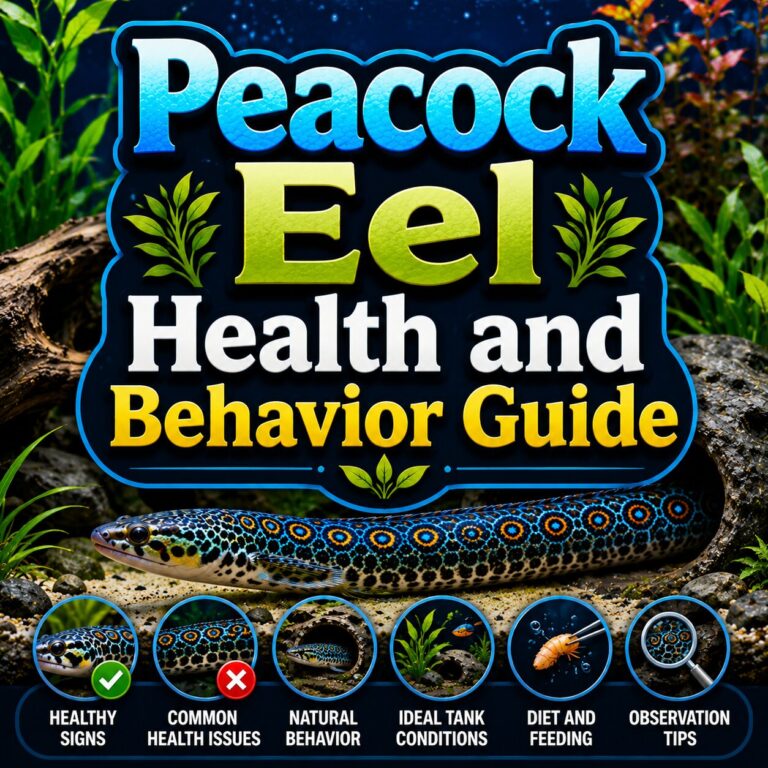
- Peacock Eel: Manageable size (~11 inches), peaceful, decorative eye spots.
- Half‑Banded Spiny Eel: Compact (~8 inches), striped body, beginner‑friendly.
- Dwarf Redtail Eel: Smaller, interactive, easier to care for.
- Senegal Bichir: Primitive fish, hardy, prehistoric look.
- Ropefish: Snake‑like, peaceful, nocturnal, social.
Saltwater
- Snowflake Moray: Hardy, beginner‑friendly, 2 feet, crustacean eater.
- Zebra Moray: Docile, zebra stripes, grows to 5 feet.
- Banded Moray: Shy, banded markings, 3 feet.
- Ribbon Eel: Vibrant blue/yellow, delicate, advanced aquarists only.
⚠️ Common Challenges
- Escape Risk: All eels can escape; secure lids are mandatory.
- Feeding Issues: Some species (Ribbon Eel) refuse food in captivity.
- Aggression: Larger eels may eat tank mates.
- Health Problems: Susceptible to ich, fungal infections, and stress from poor water quality.
Conclusion
Freshwater and saltwater eels are extraordinary aquarium pets, but they demand specialized care. Beginners may start with hardy species like the Peacock Eel or Snowflake Moray, while advanced aquarists can attempt the majestic Fire Eel or delicate Ribbon Eel. With secure tanks, proper diets, and patience, eels can thrive for decades, becoming the centerpiece of any aquarium.