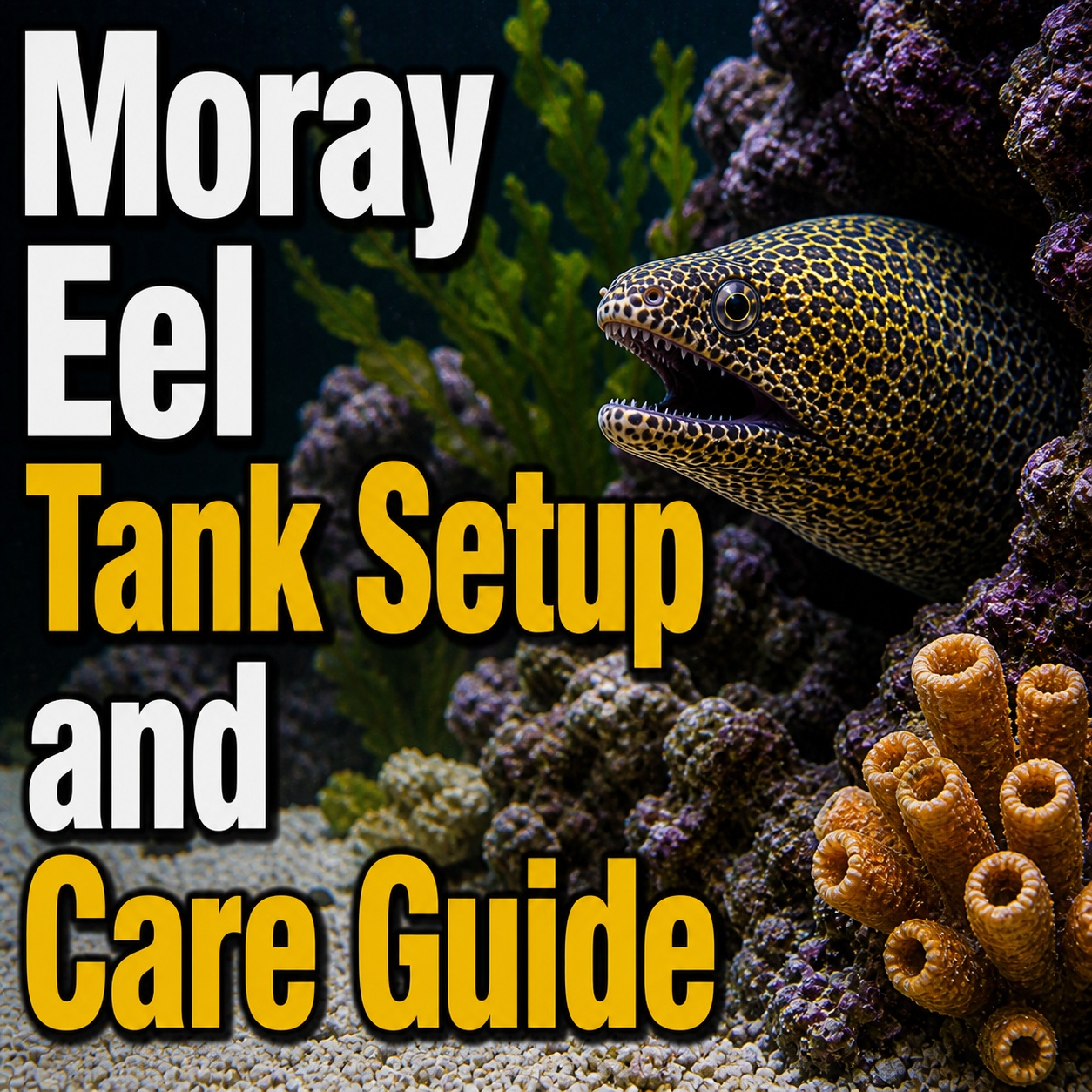
Moray eels are among the most fascinating and misunderstood creatures in the marine aquarium world. Their serpentine bodies, sharp teeth, and mysterious behavior evoke both awe and caution. Despite their intimidating appearance, many moray species are surprisingly docile and can become long‑term aquarium residents when properly cared for.
This guide explores the essentials of moray eel tank setup, water parameters, feeding, tank mates, and species varieties, offering a complete roadmap for aquarists who wish to keep these magnificent predators safely and successfully.
Understanding Moray Eels
Taxonomy and Natural Habitat
- Family: Muraenidae
- Distribution: Tropical and subtropical oceans worldwide — Indo‑Pacific, Caribbean, and Atlantic regions.
- Habitat: Coral reefs, rocky crevices, and mangrove roots.
- Behavior: Nocturnal ambush predators that spend most of their time hiding in caves or holes.
Morays are scaleless, muscular fish with thick mucus‑covered skin that protects them from parasites and abrasion. They breathe by rhythmically opening and closing their mouths, a motion often mistaken for aggression.
Tank Setup Essentials
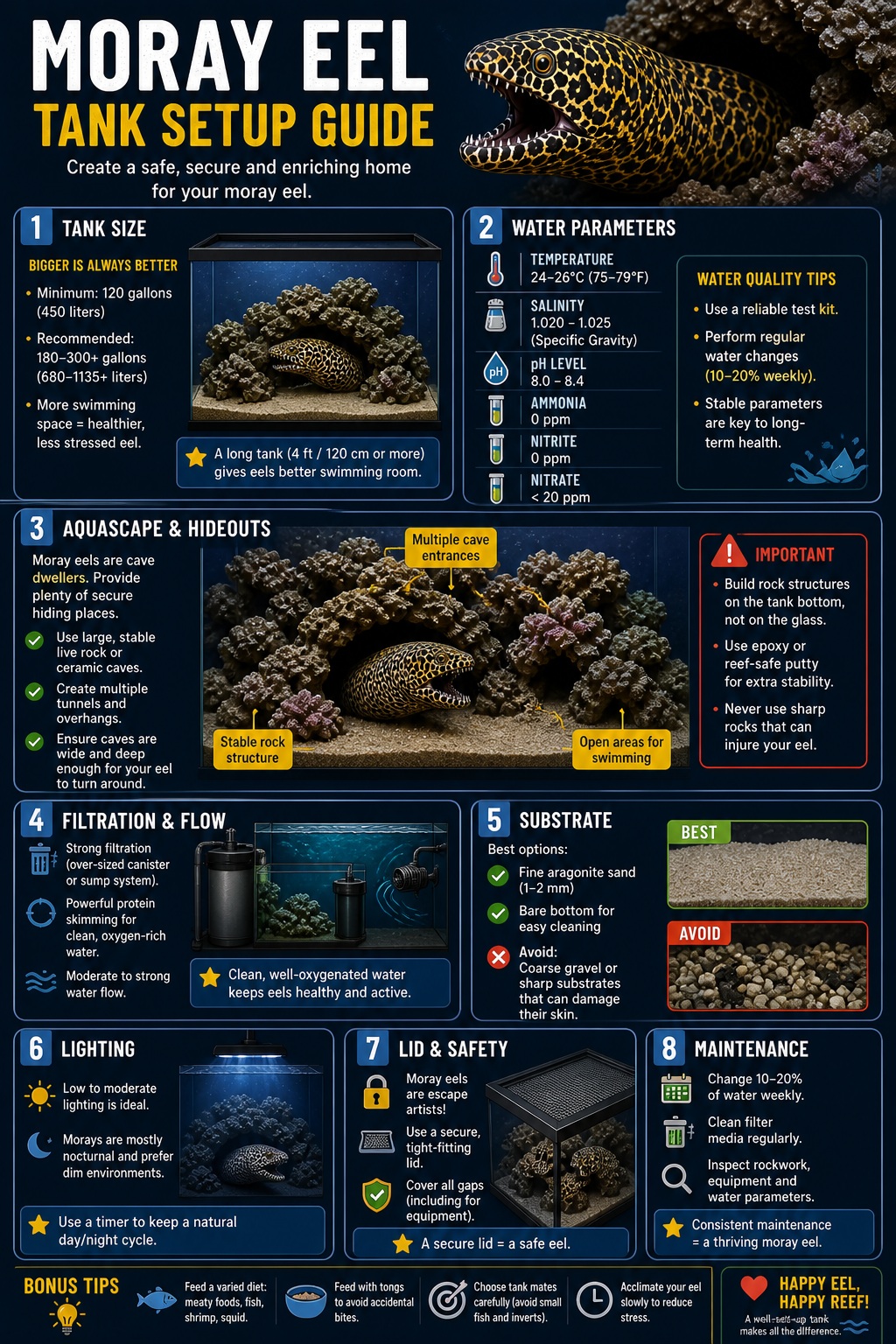
1. Tank Size and Shape
Morays require spacious tanks with horizontal swimming room and secure hiding spaces.
- Small species (Snowflake, Golden Tail): Minimum 75 gallons.
- Medium species (Zebra, Chainlink): 100–125 gallons.
- Large species (Green, Giant Moray): 150–250+ gallons.
A long tank is preferable to a tall one, as morays spend most of their time near the substrate or within rockwork.
2. Water Parameters
Morays are marine species that demand stable, high‑quality water.
| Parameter | Ideal Range | Notes |
|---|---|---|
| Temperature | 72–78 °F (22–26 °C) | Avoid rapid fluctuations. |
| Salinity | 1.020–1.025 SG | Maintain with refractometer checks. |
| pH | 8.1–8.4 | Stable alkalinity prevents stress. |
| Ammonia/Nitrite | 0 ppm | Toxic even at trace levels. |
| Nitrate | < 20 ppm | Controlled with regular water changes. |
Use a protein skimmer and biological filtration to manage waste, as morays produce significant organic matter. Weekly water changes of 20–25 % are essential.
3. Substrate and Décor
Morays are cave‑dwelling predators that require secure hiding spots.
- Substrate: Fine sand or smooth gravel to prevent skin abrasions.
- Rockwork: Stack live rock securely to form tunnels and caves.
- PVC Pipes: Smooth, safe shelters for large eels.
- Lighting: Dim or subdued; bright light stresses nocturnal species.
- Lid: Tight‑fitting glass or acrylic cover — morays are escape artists.
Avoid sharp rocks or coral fragments that can injure their delicate skin.
4. Filtration and Flow
Morays thrive in moderate water movement.
- Filtration: Use canister filters or sump systems with strong biological media.
- Flow: Gentle circulation mimics reef currents; avoid direct jets.
- Aeration: Ensure oxygenation through surface agitation or air stones.
5. Escape‑Proofing
Morays are notorious for escaping tanks.
- Seal all openings around cables and filters with mesh or sponge.
- Use heavy lids or lockable covers.
- Keep water level at least 2 inches below the rim.
- Cover feeding holes when not in use.
- Add clips or locks for large species like Green Morays.
6. Décor & Hiding Spots
Morays are shy, cave‑dwelling predators.
- Live rock structures: Stack securely to form tunnels and crevices.
- PVC pipes or artificial caves: Smooth interiors prevent skin injury.
- Coral décor: Adds realism; ensure openings are wide enough for entry but snug for security.
- Substrate: Fine sand or smooth gravel — gentle on their scaleless skin.
Feeding Moray Eels
Diet
Morays are carnivores with powerful jaws designed for tearing flesh.
- Staple Foods: Shrimp, squid, fish fillets, crab meat, mussels.
- Occasional Treats: Live feeder shrimp or small fish (quarantined).
- Avoid: Fatty meats or freshwater feeders — cause digestive issues.
Feeding Technique
- Feed 2–3 times per week.
- Use feeding tongs or sticks; never hand‑feed.
- Target feed near their hiding spot.
- Remove uneaten food promptly to prevent ammonia spikes.
Training
Most morays can be trained to accept frozen foods. Start with live prey, then gradually mix frozen items until they adapt.
Tank Mates
Compatible Species
- Large tangs, triggers, groupers, wrasses, and lionfish.
- Other semi‑aggressive marine fish that can hold their own.
Avoid
- Small reef fish, ornamental shrimp, and crabs — considered prey.
- Delicate species like gobies or blennies.
Behavior
Morays are generally solitary and territorial. They rarely attack tank mates unless provoked or hungry.
Health and Maintenance
Common Issues
- Skin Abrasions: From sharp décor; heal with clean water.
- Bacterial Infections: Caused by poor water quality.
- Loss of Appetite: Often stress‑related; check parameters.
- Parasites: Treat with reef‑safe medications; avoid copper.
Maintenance Routine
- Daily: Check temperature and lid security.
- Weekly: Test water chemistry.
- Monthly: Clean filters and replace media.
Behavioral Insights
Nocturnal Nature
Morays are most active at night. They hunt by smell rather than sight, using their keen olfactory senses to locate prey.
Territorial Behavior
Each eel claims a cave or crevice as its territory. Introducing multiple eels requires ample space and separate shelters.
Breathing Motion
The constant opening and closing of their mouths is normal — it aids respiration by pumping water over the gills.
Tank Size & Structure
| Species Type | Tank Size | Notes |
|---|---|---|
| Snowflake Moray | ≥75 gal | Hardy, beginner‑friendly, peaceful with large fish. |
| Zebra Moray | ≥100 gal | Docile crustacean eater, ideal for reef tanks. |
| Golden Tail Moray | ≥75 gal | Active, colorful, semi‑aggressive. |
| Green Moray | ≥125 gal | Large, powerful predator; advanced keepers only. |
| Ribbon Moray | ≥100 gal | Delicate, requires pristine water and live food. |
Varieties of Moray Eels
1. Snowflake Moray (Echidna nebulosa)
- Size: Up to 2 feet.
- Temperament: Peaceful; ideal for beginners.
- Diet: Crustaceans and small fish.
- Tank Size: 75 gallons.
- Notes: Hardy, adaptable, and visually striking with white and yellow patterns.
2. Zebra Moray (Gymnomuraena zebra)
- Size: Up to 5 feet.
- Temperament: Docile; prefers crustaceans.
- Tank Size: 100+ gallons.
- Notes: Recognizable by black‑and‑white stripes; excellent for reef tanks.
3. Golden Tail Moray (Gymnothorax miliaris)
- Size: 2–3 feet.
- Temperament: Semi‑aggressive.
- Tank Size: 75 gallons.
- Notes: Bright yellow tail; active and curious.
4. Green Moray (Gymnothorax funebris)
- Size: Up to 8 feet in the wild; 4–6 feet in captivity.
- Temperament: Aggressive; advanced keepers only.
- Tank Size: 150+ gallons.
- Notes: Powerful predator; requires heavy filtration and secure lids.
5. Ribbon Moray (Rhinomuraena quaesita)
- Size: 3–4 feet.
- Temperament: Delicate; difficult to feed.
- Tank Size: 100 gallons.
- Notes: Vibrant blue and yellow coloration; requires pristine water and live food.
6. Chainlink Moray (Echidna catenata)
- Size: 2–3 feet.
- Temperament: Peaceful.
- Tank Size: 75 gallons.
- Notes: Distinct chain‑like pattern; hardy and adaptable.
7. Golden Dwarf Moray (Gymnothorax melatremus)
- Size: 10–12 inches.
- Temperament: Peaceful; ideal for small reef tanks.
- Tank Size: 30–40 gallons.
- Notes: Rare and expensive; prized for its manageable size and bright coloration.
Breeding and Lifespan
Breeding morays in captivity is extremely rare. They are pelagic spawners — eggs and larvae drift in open water. Juveniles undergo a transparent “leptocephalus” stage before metamorphosing into eels.
Most morays live 10–20 years in captivity with proper care. Larger species may exceed 25 years.
Eel Tank Equipment Checklist
| Equipment | Purpose |
|---|---|
| Protein Skimmer | Removes organic waste and maintains oxygen levels. |
| Heater & Thermometer | Keeps temperature stable. |
| Refractometer | Monitors salinity accurately. |
| Canister Filter / Sump | Provides mechanical and biological filtration. |
| Air Pump / Powerheads | Ensures circulation and oxygenation. |
| Secure Lid / Clips | Prevents escapes — essential for morays. |
| Test Kits | Regular monitoring of ammonia, nitrite, nitrate, pH, and salinity. |
Advanced Care Considerations
1. Acclimation
Morays are sensitive to changes in water chemistry. Use a drip acclimation method when introducing them to a new tank. This reduces stress and prevents shock.
2. Handling
Avoid direct handling. Their scaleless skin is delicate, and their bite can be severe. If relocation is necessary, use PVC tubes or large nets with extreme caution.
3. Feeding Challenges
Some species, especially Ribbon Morays, refuse food in captivity. Patience and persistence are required. Start with live prey, then gradually transition to frozen seafood.
4. Escape Behavior
Morays are notorious escape artists. They can push lids, squeeze through tubing gaps, and even climb out of tanks. Always double‑check seals and covers.
Common Mistakes to Avoid
- Underestimating Tank Size: Morays grow large and need space.
- Poor Lid Security: Escapes are common and often fatal.
- Inadequate Filtration: Morays produce heavy waste loads.
- Wrong Tank Mates: Small fish and invertebrates will be eaten.
- Overfeeding: Leads to obesity and water pollution.
- Bright Lighting: Stresses nocturnal species.
Ecological Importance
Morays play a vital role in reef ecosystems. They control populations of fish and crustaceans, maintaining balance. Their presence in aquariums offers a glimpse into the complexity of marine food webs.
❓ FAQs
Q1: Can morays live in freshwater? No, they are strictly marine species.
Q2: Are morays aggressive toward humans? Not usually. They bite only if provoked or mistaken during feeding.
Q3: How long do morays live in captivity? 10–20 years, with some species exceeding 25 years.
Q4: Can multiple morays be kept together? Yes, if the tank is large enough and each has its own cave.
Conclusion
Quick Setup Checklist
- 75–125 gal marine tank
- Protein skimmer + strong filtration
- Fine sand substrate
- Rock caves or PVC shelters
- Tight lid with sealed openings
- Weekly water changes
- Meaty carnivore diet
Moray eels are extraordinary aquarium pets, combining beauty, mystery, and resilience. From the hardy Snowflake Moray to the delicate Ribbon Moray, each species offers unique challenges and rewards. A proper tank setup — spacious, secure, and stable — is the foundation of their care. With thoughtful feeding, careful tank mate selection, and diligent maintenance, morays can thrive for decades, becoming the centerpiece of any marine aquarium.