The Wolf Eel (Anarrhichthys ocellatus) is one of the most misunderstood residents of the North Pacific. Despite its name and its somewhat “nightmarish” appearance—complete with a wrinkled, prehistoric face and a mouthful of jagged teeth—the Wolf Eel is famously known as the “gentle giant” of the deep.
This comprehensive guide explores the biology, behavior, and surprisingly romantic social life of one of the ocean’s most unique “eel-like” fish, incorporating new scientific insights into their life cycle and physiological adaptations.
1. The Great Identity Crisis: It’s Not an Eel
The first thing you need to know about the Wolf Eel is that it isn’t actually an eel. While its body is long, slender, and ribbon-like, it is technically a species of fish and the only member of the family Anarhichadidae (the wolf-fish family) that possesses such an elongated body.
Unlike true eels, which belong to the order Anguilliformes, Wolf Eels have:
- Pectoral Fins: Located just behind their heads (true eels often lack these).
- Dorsal Fin: Runs the entire length of the body, made up of flexible spines that provide structural support without the stiffness of true bone.
- No Pelvic Fins: A common trait among its wolf-fish relatives, emphasizing its streamlined, crevice-dwelling design.
- Unique Gill Structure: They have wide gill openings that allow for efficient oxygen exchange even when squeezed into tight, low-circulation rocky dens.
2. Physical Characteristics: Built for Crushing
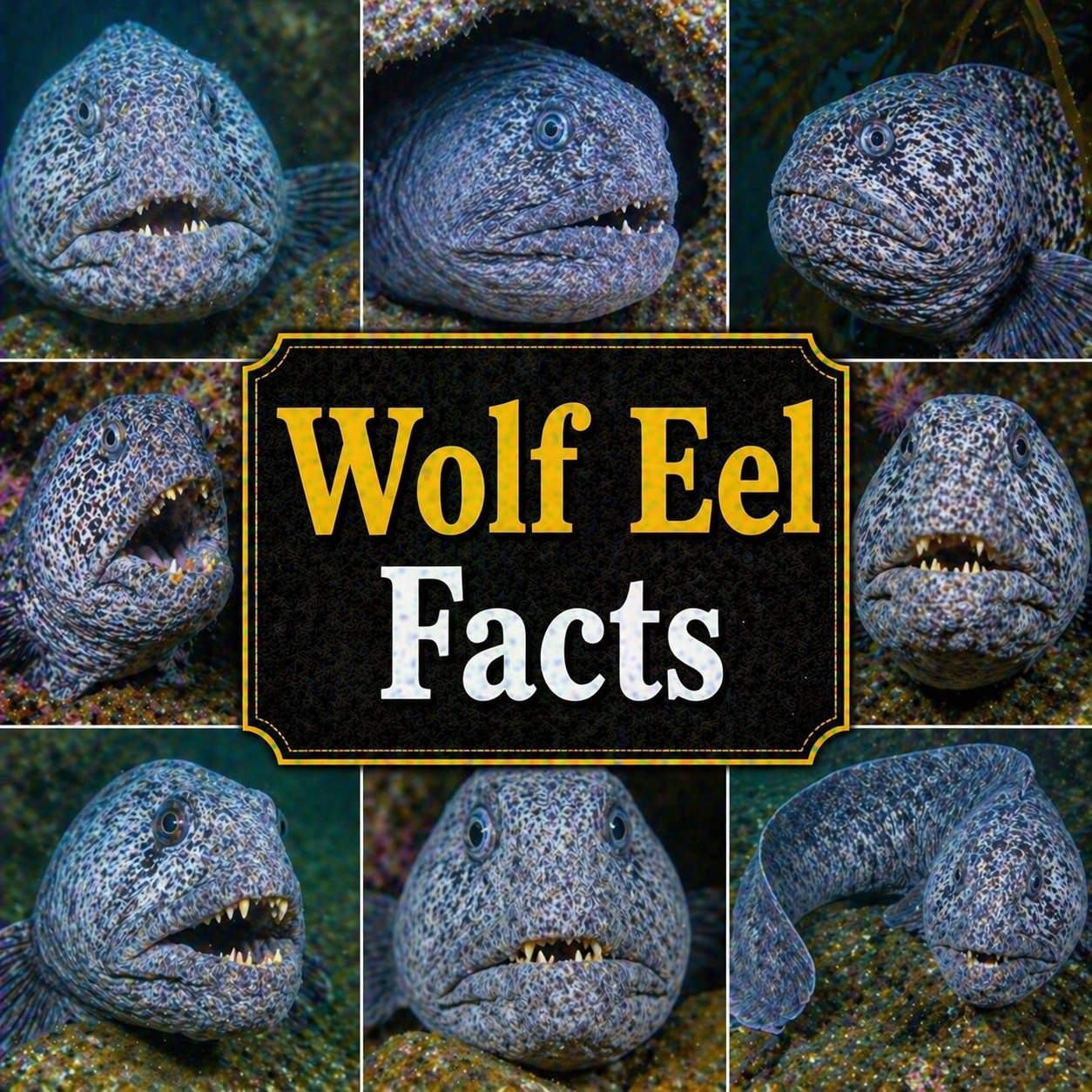
A Wolf Eel looks like it was designed by a special effects team for a fantasy movie. They are gray, mottled with black spots (ocelli), and can grow up to 8 feet (2.4 meters) in length.
The “Crusty” Face and Sexual Dimorphism
As Wolf Eels age, they develop a distinctive “wrinkled” look. This wrinkled skin is thick and durable, protecting them as they squeeze into jagged rocky crevices. However, there is a noticeable difference between the sexes:
- Males: Typically possess much larger, “puffer” heads with thicker, fleshier lips and more pronounced wrinkles.
- Females: Generally have smaller, sleeker heads and a more streamlined profile.
The Powerful Jaws and Annual Tooth Shedding
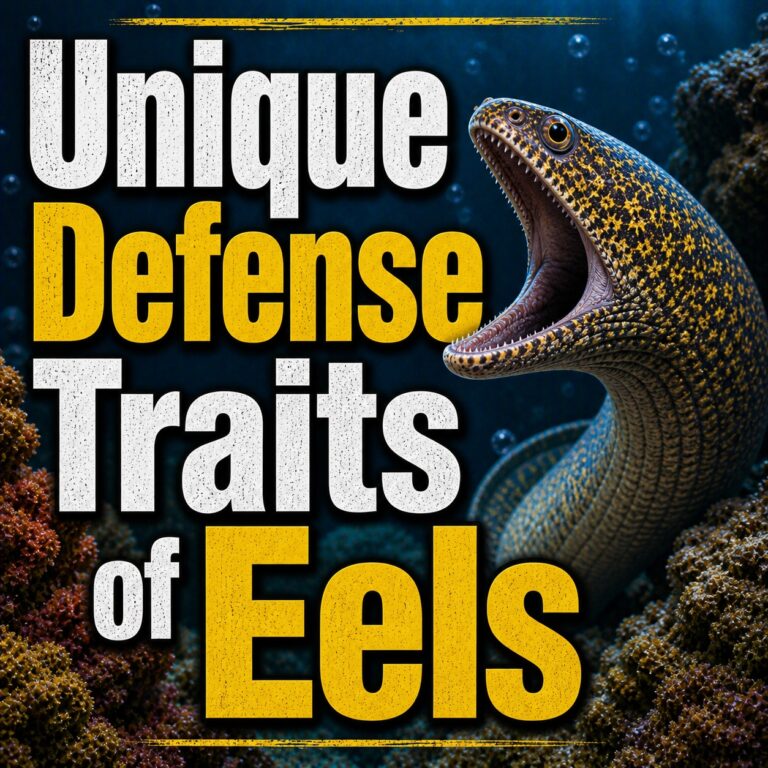
The most intimidating feature of the Wolf Eel is its mouth. They possess a massive, powerful jaw filled with two types of teeth:
- Canines: Located at the front for grabbing and holding slippery prey.
- Molars: Thick, heavy grinding teeth at the back of the mouth.
New Fact: Wolf Eels actually shed their teeth annually. Because they eat such hard-shelled prey, their molars wear down over time. Every year, they go through a “tooth replacement” phase where old, worn teeth are discarded and replaced by a fresh, sharp set. During this time, they often stop eating until their new “hardware” is ready.
3. Habitat: The Rocky Condos of the Pacific
Wolf Eels inhabit the North Pacific coast, from the Sea of Japan to Southern California. They are highly territorial, but in a sedentary way. They prefer rocky reefs and kelp forests, where they find deep “dens” to call home.
Territorial Tenancy
Once a Wolf Eel finds a high-quality den, it may stay there for its entire adult life. They are “homebodies” of the highest order. Because they lack a swim bladder, they are not buoyant. If they stop swimming, they sink. This makes them perfectly suited for a life spent crawling along the sea floor and hiding in caves rather than cruising the open ocean.
4. The Ocean’s Soulmates: Monogamy in the Deep
One of the most fascinating biological facts about the Wolf Eel is their commitment to their partners. They are one of the few fish species that are truly monogamous.
- Mating for Life: Once a male and female pair up (usually around age 4), they often remain together for the rest of their lives—which can be up to 20 years.
- The “Egg Massage”: When the female lays her eggs (up to 10,000 at a time), the parents exhibit a rare behavior called “massaging.” They will use their heads and bodies to gently rotate and nudge the egg mass. This ensures that oxygen-rich water reaches every single egg in the cluster and prevents the growth of fungus or silt.
- Cooperative Guarding: Both parents take turns. While one coils around the eggs to keep them safe, the other defends the den entrance from marauding crabs or rockfish.
5. Life Cycle: From Plankton to Predator
The early life of a Wolf Eel is a stark contrast to its sedentary adult years.
- Planktonic Larvae: When the eggs hatch, the tiny “elvers” don’t stay in the den. They swim up to the surface and become planktonic.
- Orange Stage: Larval Wolf Eels are a brilliant, iridescent orange or brick-red. They spend several months floating near the surface, feeding on tiny crustaceans and growing rapidly.
- The Descent: Once they reach a certain size, they lose their bright color, turn gray, and swim down to the sea floor to find their first “bachelor” den before eventually seeking a mate.
6. Diet: The Shellfish Specialist
Wolf Eels are the “janitors” of the reef, specializing in prey that other fish find impossible to eat.
- Sea Urchins: Their favorite meal. By controlling urchin populations, Wolf Eels act as a Foundation Species, preventing “urchin barrens” and allowing kelp forests to flourish.
- Crustaceans: They easily crack the carapaces of crabs and shrimp.
- Mollusks: Snails and clams are crushed into “ocean popcorn” by those massive rear molars.
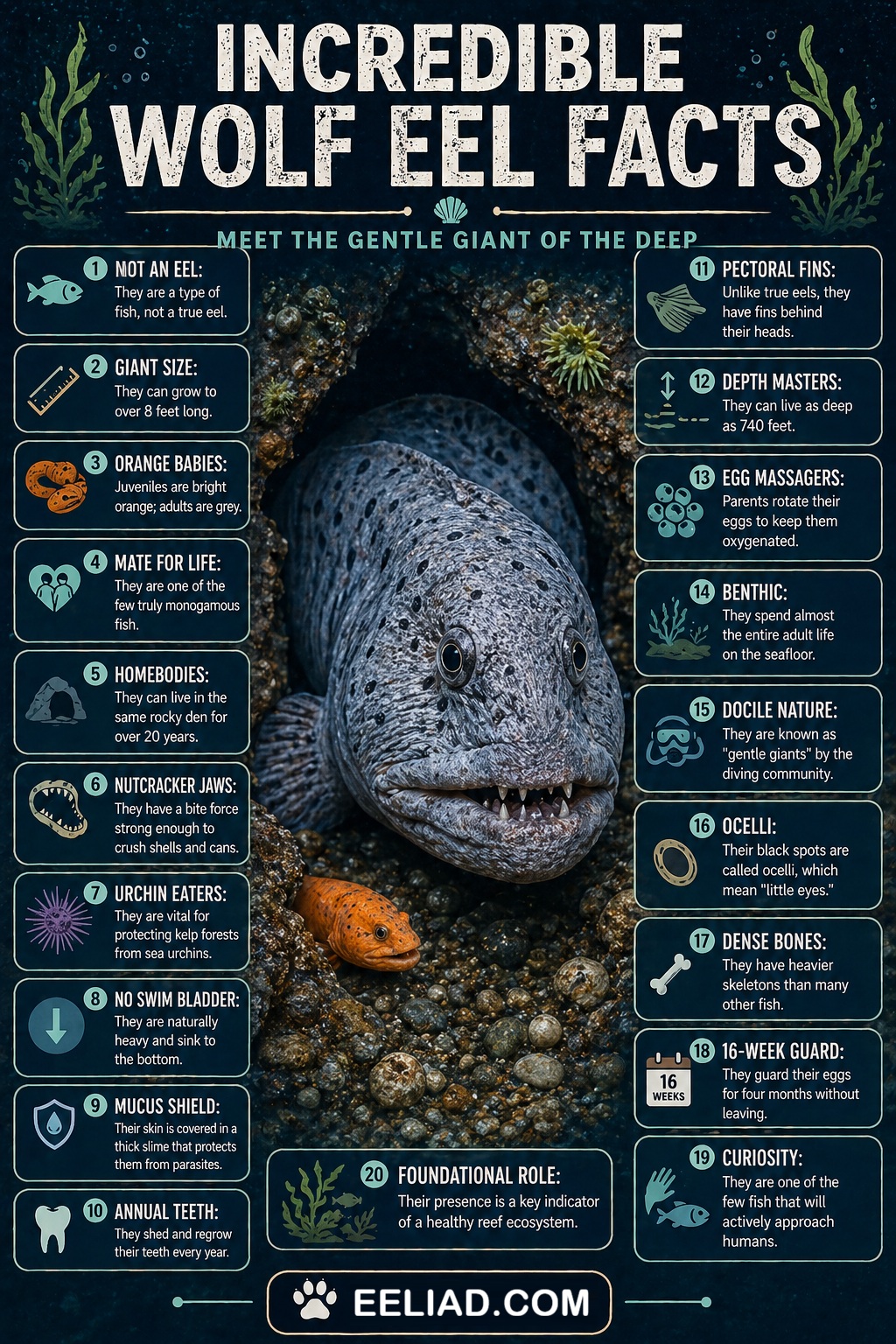
20 Incredible Wolf Eel Facts
- Not an Eel: They are a type of fish, not a true eel.
- Giant Size: They can grow to over 8 feet long.
- Orange Babies: Juveniles are bright orange; adults are grey.
- Mate for Life: They are one of the few truly monogamous fish.
- Homebodies: They can live in the same rocky den for over 20 years.
- Nutcracker Jaws: They have a bite force strong enough to crush shells and cans.
- Urchin Eaters: They are vital for protecting kelp forests from sea urchins.
- No Swim Bladder: They are naturally heavy and sink to the bottom.
- Mucus Shield: Their skin is covered in a thick slime that protects them from parasites.
- Annual Teeth: They shed and regrow their teeth every year.
- Pectoral Fins: Unlike true eels, they have fins behind their heads.
- Depth Masters: They can live as deep as 740 feet.
- Egg Massagers: Parents rotate their eggs to keep them oxygenated.
- Benthic: They spend almost their entire adult life on the seafloor.
- Docile Nature: They are known as “gentle giants” by the diving community.
- Ocelli: Their black spots are called ocelli, which mean “little eyes.”
- Dense Bones: They have heavier skeletons than many other fish.
- 16-Week Guard: They guard their eggs for four months without leaving.
- Curiosity: They are one of the few fish that will actively approach humans.
- Foundational Role: Their presence is a key indicator of a healthy reef ecosystem.
Frequently Asked Questions
Is a Wolf Eel dangerous to humans?
Generally, no. They are remarkably docile. However, you should never put your hand near their mouth—their crushing power is legendary, and they can easily snap a finger if they feel threatened or mistakingly think you’re a crab.
Where can I see a Wolf Eel?
They are popular in public aquariums due to their unique look and active nesting habits. In the wild, they are best spotted by scuba divers in the Pacific Northwest, particularly in the Puget Sound and around Vancouver Island.
Are they endangered?
Currently, they are not listed as endangered, but they are vulnerable to habitat destruction and bycatch (being accidentally caught in commercial fishing nets).
What eats a Wolf Eel?
While their powerful jaws protect them from most, they are occasionally preyed upon by Harbor Seals and large sharks. Their eggs are also a target for smaller fish and crabs if the parents aren’t vigilant.
Summary
The Wolf Eel reminds us that in the deep ocean, “monstrous” is just another word for “well-adapted.” Underneath that wrinkled exterior is a loyal partner and a vital guardian of our coastal ecosystems.