
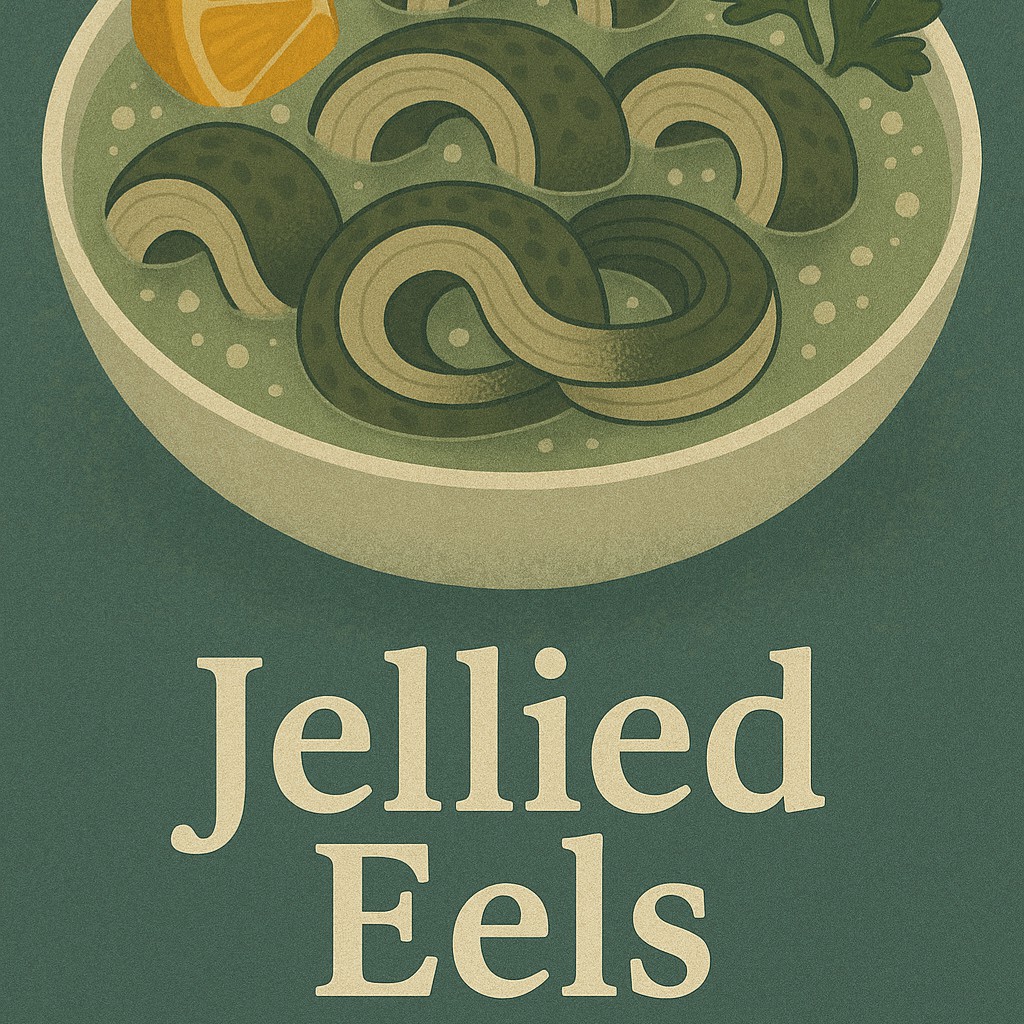
Jellied eels are a traditional British dish that has been enjoyed for centuries, particularly in London and the East End. This unique culinary creation consists of eels cooked in a spiced stock, which is then set into a jelly-like consistency.
They have a rich history and cultural significance, representing a bygone era of British gastronomy. In this article, we will explore the origins, preparation, and cultural context of jellied eels, as well as their current popularity and where to find them.
1. The History of Jellied Eels
- Origins: The dish rose to prominence in the 18th and 19th centuries, when the River Thames teemed with eels.
- East End Tradition: Affordable and nutritious, eels became a staple for dockworkers and families in London’s East End.
- Pie and Mash Shops: Jellied eels were often sold alongside pie and mash, cementing their place in working‑class cuisine.
- As eels were cooked and preserved in a jelly-like substance, they could be stored and consumed over several days, providing a convenient and hearty meal for the working-class families.

2. Eel Selection and Preparation
The key ingredient for these eels is, of course, the eel itself. Traditionally, freshwater eels, such as the European eel (Anguilla anguilla), were used. The eels are carefully cleaned, skinned, and cut into small pieces.
They are then simmered in a flavorful stock, typically made from ingredients like onions, herbs, vinegar, and spices. The long, slow cooking process allows the gelatin from the eel’s bones to infuse into the stock, creating the characteristic jelly consistency.
How Jelly Eels Are Made
- Preparation: Fresh eels are cleaned and chopped into pieces.
- Boiling: They are simmered in water with salt, bay leaves, and sometimes parsley.
- Gelatin Formation: As the eels cook, natural gelatin is released from their skin and bones.
- Cooling: The mixture is cooled until it sets into a jelly.
- Serving: Traditionally eaten cold, with vinegar or chili sauce.
3. Culinary Tradition and Cultural Significance
Jellied eels have a deep cultural significance, particularly in the East End of London. In the 19th and early 20th centuries, they were a staple of the working-class diet and were often sold from pie and mash shops or street stalls. They became associated with the cockney culture and were considered a hearty and nourishing meal for hardworking Londoners.
4. Decline and Resurgence
In recent decades, the popularity of jellied eels has declined, mainly due to changing tastes and the decline of eel populations in the Thames River. However, there has been a resurgence of interest in traditional British cuisine, leading to a renewed appreciation for jellied eels. Some dedicated eel and pie shops still serve this classic dish, and there are even annual events and festivals celebrating them.
5. Where to Try Jellied Eels Today
- London Pie and Mash Shops: Still serve authentic versions.
- Manze’s and F. Cooke: Traditional pie and mash shops, such as Manze’s and F. Cooke, continue to serve jellied eels alongside their iconic pies
- Markets: Borough Market and Billingsgate Fish Market often feature eel dishes.
- Restaurants: Modern British eateries occasionally revive the tradition.
6. Enjoying Jellied Eels
When it comes to eating jellied eels, there are a few things to keep in mind. The dish is typically served cold, with the jelly providing a unique texture. Some people enjoy the eels on their own, while others prefer to pair them with a squeeze of lemon juice, malt vinegar, or a sprinkle of chili flakes to add extra flavor. It’s a dish that may not appeal to everyone, but for those with an adventurous palate, jellied eels offer a taste of culinary history.
Nutritional Value
- Protein: High in lean protein, supporting muscle health.
- Omega‑3 Fatty Acids: Beneficial for heart and brain function.
- Vitamins & Minerals: Rich in vitamin A, vitamin B12, and phosphorus.
- Calories: Relatively low, making it a filling but light dish.
Cultural Significance
- Working‑Class Identity: Jellied eels symbolized resilience and resourcefulness.
- Cockney Heritage: Associated with Cockney culture, often served in traditional eel and pie shops.
- Modern Revival: Today, chefs reinterpret jellied eels in gourmet contexts, blending tradition with innovation.
Modern Variations
- Classic Style: Served cold with vinegar in East End shops.
- Gourmet Adaptations: Some restaurants serve warm eel dishes with refined sauces.
- Fusion Cuisine: Contemporary chefs experiment with eel in sushi, tapas, and fine dining menus.

Conclusion
Jellied eels are an iconic dish that harks back to a bygone era of British cuisine. With their historical origins in the working-class communities of London, they have become a symbol of tradition and cultural heritage. Although the popularity of jellied eels has waned in recent years, they still hold a special place in British culinary history and can be enjoyed as a nostalgic treat for those seeking to explore the rich gastronomic heritage of the East End.
FAQs (Frequently Asked Questions)
What do jellied eels taste like? Jellied eels have a unique taste and texture. The eels have a rich, slightly fishy flavor, while the jelly adds a gelatinous, savory element to the dish.
Are jellied eels still popular in London? While their popularity has declined over the years, there is still a niche market for jellied eels in London, particularly among those interested in traditional British cuisine.
Can I make jellied eels at home? Yes, it is possible to make jellied eels at home. However, it can be a labor-intensive process, and finding fresh eels may be challenging outside of certain regions.
Are jellied eels a healthy dish? Eels are a good source of protein and essential fatty acids. However, the jelly used in jellied eels can be high in salt, so it’s best to enjoy this dish in moderation as part of a balanced diet.
Are jellied eels only eaten in London? Jellied eels are most closely associated with London and the East End, but variations of jellied eel dishes can be found in other countries with a tradition of consuming eels, such as the Netherlands and Sweden.